







Table of Contents
Quick Summary
- Living room layouts with modular sofas offer flexible, space-smart solutions for modern homes.
- Small apartments benefit from L-shaped layouts that maximize corners and maintain walkable clearance.
- Open-plan spaces use U-shaped setups to define zones while keeping flow and functionality intact.
- Media rooms thrive with deep, pit-style modular seating for comfort and optimal viewing angles.
- Awkward rental layouts become manageable with adaptable modules that fit around unusual structures.
- Smart spacing, rug placement, and traffic flow are essential for balance.
- Modular sofas adapt over time, making them a long-term, practical investment for evolving lifestyles.
Living room layouts with modular sofas looks picture perfect. But there’s a familiar moment many homeowners face: as a homeowner you finally bring home a sofa you loved in the showroom, only to realise it doesn’t quite “belong” in your living room. It blocks a walkway, crowds a corner, or just feels… off.
In general, we spend over $180 billion on furniture each year, and homeowners searching for the right solutions still struggle to fit a standard sofa into a non-standard room. The traditional three-seater is a static block of wood and foam that refuses to negotiate with your floor plan. Modular systems change that dynamic by allowing the furniture to wrap around your life rather than forcing you to walk around the furniture.
It is a smart idea to stop viewing a couch as a single unit and start seeing it as a collection of building blocks, the architectural “rules” of your living room suddenly feel like suggestions. These pieces can be separated for parties, tucked into alcoves, or expanded as your family grows. Getting the layout right requires a mix of spatial math and an understanding of how you actually move through your home.
The Small Apartment Corner
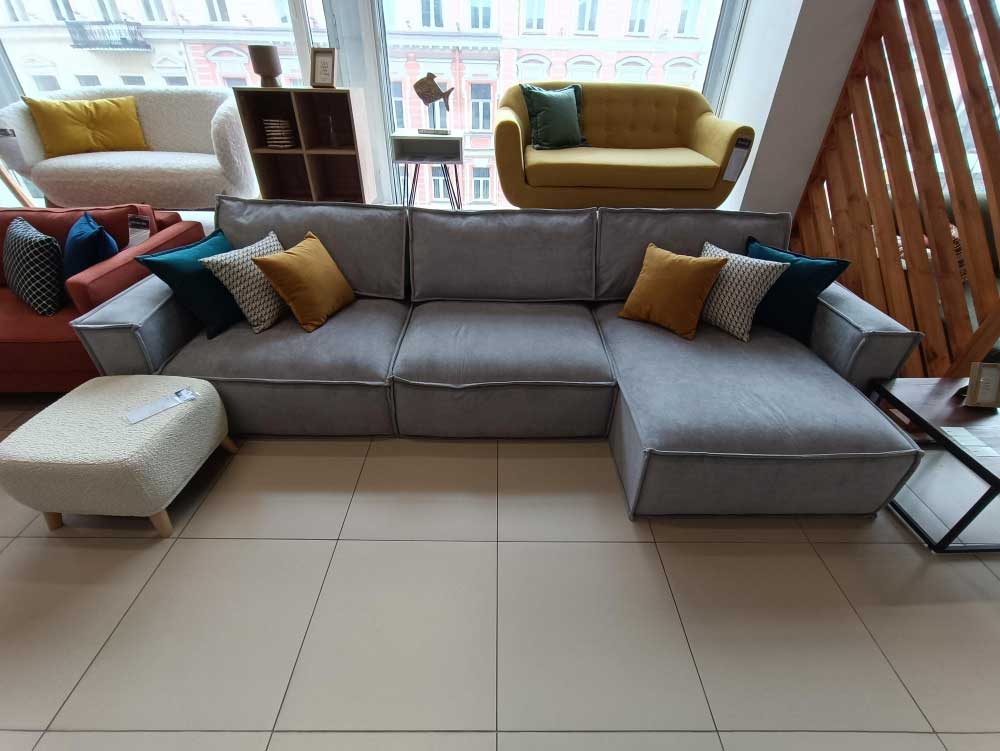
Living in a compact urban space usually means that every inch of floor space is under heavy scrutiny, and 39% of renters occupy apartments, so that’s a large market in need of advice. A modular L-shaped modular sofa layout ideas is the most efficient way to reclaim a dead corner, but it requires strict adherence to clearance rules to avoid a cramped feel. You should aim for 60 to 70 cm of clearance around the edges of the modular units to ensure the room remains walkable and doesn’t feel like a storage unit.
The beauty of a modular set in a small room is the ability to ditch the traditional coffee table in favour of an upholstered ottoman module. This modular sofa arrangement ideas for small living room serves as a footrest during movie nights and converts into an extra seat when guests arrive. Place your rug so that at least the front feet of each module sit on the fabric, which anchors the “island” and prevents the furniture from looking as if it is floating aimlessly.
Do your apartment display certain awkward architectural features like low windows or protruding radiators? if yes, modular pieces let you skip a section to keep those areas accessible. Keep it simple, the space opens up, and a small room feels much larger. This flexibility prevents the heavy, boxed-in sensation that often plagues studio apartments or narrow terrace houses.
The Open Plan Family Zone
Large, open-concept spaces often suffer from a lack of definition, feeling more like a gymnasium than a cosy home. You can use a massive U shape sectional sofa living room layout arrangement to act as a physical boundary between the kitchen and the lounging area. Creating a defined room within a room allows the family to gather in a protected hub without losing the airy feel of the open floor plan.
When choosing the best modular sofas for modern homes, look for pieces with finished backs so they look attractive from every angle of the room. Since these units sit in the center of the floor, you need to consider how people will circulate around them. Follow these layout rules to keep the traffic flowing naturally:
- Maintain a primary walkway of 90 cm between the back of the sofa and the nearest wall or kitchen island
- Position the longest side of the modular units to face the main focal point like a fireplace or window
- Align the edge of the modular grouping with a structural element like a pillar or a change in flooring
Proper zoning turns a chaotic “great room” into a series of intentional experiences. You might even consider a “back-to-back” layout where some modules face the TV while others face a bookshelf or a window. This modern living room design with modular sofa creates two distinct functional areas using the same furniture set, maximising the utility of a single large investment.
The Dedicated Media Room
A media room or home cinema requires a different logic to set. Here, comfort and sightlines take priority over formal conversation. In this scenario, a deep-seated modular “pit” configuration is the king, as it offers a lounge-like atmosphere that encourages sprawling.
1. Space Management
It is essential to maintain the premium experience here. Therefore, you must manage the gap between your seating and the table where you keep your snacks. Professionals recommend a 35 to 45 cm gap between the edge of the cushions and the coffee table to balance reachability with legroom.
2. Lighting
Lighting is the silent partner in a successful media room layout. Your objective should be the smart avoidance of placing modular sections directly under harsh overhead lights. These lights can cause glare on the screen. Instead, use the modules’ flexibility to leave a gap for a slim arc lamp that leans over the seating area, providing focused light for reading without disrupting the cinematic mood.
3. Customised Access
It is also essential to plan the cables, hide the wires, to make each movie night a perfect celebration. Because modular sofas sit low and wide, they often cover the very wall outlets you need to charge your devices or power side lamps. Try to position your modules so that at least one gap between units aligns with a wall socket, or choose a modular system with integrated power hubs built into the armrests.
The Unique Rental Alcove
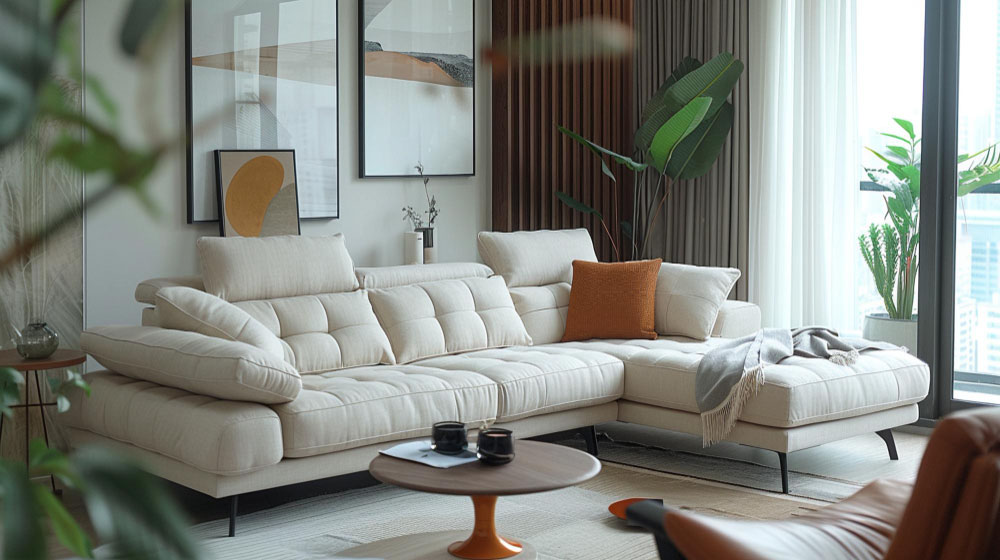
If you rent rather than own, you might face the challenge of “uncooperative” rooms filled with weird nooks, low ceilings, or poorly placed doors. A modular sofa is the ultimate “cheat code” for these spaces because you can snake the seating along a wall, then pop out a single “peninsula” module to create a chaise lounge that a standard sofa wouldn’t fit in. This adaptability is particularly useful if you follow Vastu Shastra or Feng Shui principles, which suggest placing heavy furniture against South or West walls to promote stability and positive energy flow.
In an awkward room, the rug is your most important tool for creating visual order. A rug that is too small will make the modular pieces look disjointed, like a puzzle that hasn’t been put together yet. Buy a rug that extends at least 20 cm beyond the sides of your modular arrangement to “lock” the pieces into a single, cohesive unit.
Don’t be afraid to break the set apart if the room has a strange protrusion like a chimney breast or a built-in cabinet. You can place four modules in a main grouping and use the fifth as a standalone accent chair in a corner.
Move the units, try new spots, and the layout grows with you. This ensures that you aren’t fighting the architecture of your rental, but rather working in harmony with its quirks.
Finding Your Perfect Setup
Choosing the right layout is less about following trends and more about analysing your daily habits. If you host large groups frequently, the open-plan U-shape is your best bet, but if you value quiet evenings with a book, the corner alcove setup offers more intimacy. The modular nature of space saving modular sofa layouts for apartments align with all modern furniture ranges, means you are never truly stuck with a decision you made on moving day.
Final Thought
At the end of the day, the “perfect” layout isn’t the one that looks best in a catalogue—it’s the one that quietly supports your everyday life. It’s where you stretch out after a long day, gather with friends on weekends, or simply sit with a cup of tea and a bit of silence.
If you are still unsure about how to optimise your home’s interior, our site has lots more tips and advice that you can apply to all sorts of domestic setups, so don’t go anywhere.
Also Read: Spaces That Leave a Mark: Top 7 Key Principles of Interior Designing
FAQs on Modular Sofa Living Room Layouts
1. What is the Best Modular Sofa Layout for Small Living Rooms?
An L-shaped modular layout works best. It has the ability of maximising corners, maintaining walking space, and creating a cozy yet functional seating arrangement.
2. How Do I Arrange a Modular Sofa in an Open-Plan Living Room?
Consider using a U-shaped or sectional layout to define zones, maintain 90 cm walkways, and position seating toward the TV’s focal points.
3. Can Modular Sofas Fit an Awkward or Irregular Room Layout?
Yes, modular sofas adapt easily by adding or removing sections, fitting alcoves, corners, and unusual layouts without compromising comfort or functionality.
4. What is the Ideal Spacing for Modular Sofa Placement?
You should maintain 60–70 cm clearance for walkways and 35–45 cm between sofa and table for comfortable movement and easy accessibility.
5. Are Modular Sofas a Good Long-Term Investment for Homes?
Yes, modular sofas offer flexibility, scalability, and adaptability, allowing you to reconfigure layouts as your space, needs, and lifestyle evolve.
Author & Expert Review
Written By:  Swagata Chatterjee | SEO Content Writer & Editor

| Credentials: MA (Calcutta University, Kolkata). Experience: Content Writer and Editor with 19 years’ experience of business content writing and editing, currently writing SEO-optimized, readers’-friendly articles for Gharpedia, part of SDCPL. Expertise: Specializes in writing well-researched content on lifestyle, home décor, , lifestyle, safety, home appliances and gadgets, on-site SEO Optimization, blending technical accuracy with general reader’s ability to learn the topics. Find her on : Linkedin |
Verified By Expert: Mansi Shah – Architect & Architectural Content Writer, SDCPL | B.Arch.
 Mansi Shah – Architect & Architectural Content Writer,
 This article has been reviewed for architectural and interior design accuracy by Mansi Shah, an Architect associated with Sthapati Designers & Consultants Pvt. Ltd. (SDCPL). With over 25 years of professional experience in architectural planning, design development, detailing, and on-site execution of residential, commercial, and institutional projects, she brings deep expertise in architecture and interior planning, material selection, construction practices, and building bylaws. Her review ensures the content reflects practical design principles, interior space efficiency, and industry-aligned architectural standards.
Find him on: LinkedIn