







Table of Contents
Quick Summary
- A growing number of architects are adopting CNC-milled metal for precision-driven design outcomes
- Explains how CNC milling ensures consistency, tight tolerances, and premium surface finishes
- Highlights applications such as jali-inspired screens, stair components, and bespoke hardware
- Covers the shift from traditional craftsmanship to digitally driven fabrication methods
- Discusses the design flexibility enabled by parametric modelling tools
- Explores cost advantages of sourcing CNC components internationally
- Outlines key documentation needed for successful fabrication and installation
- Shows how CNC metalwork enhances both aesthetic value and structural performance
There is a shift happening in how leading architects and interior designers approach custom metalwork. Where earlier generations of high-specification residential and commercial projects relied on skilled craftsmen to produce decorative grilles, custom door hardware, feature railings, and facade elements by hand, contemporary design studios are increasingly turning to CNC-milled metal components – and the results are redefining what precision, consistency, and material expression look like in built spaces.
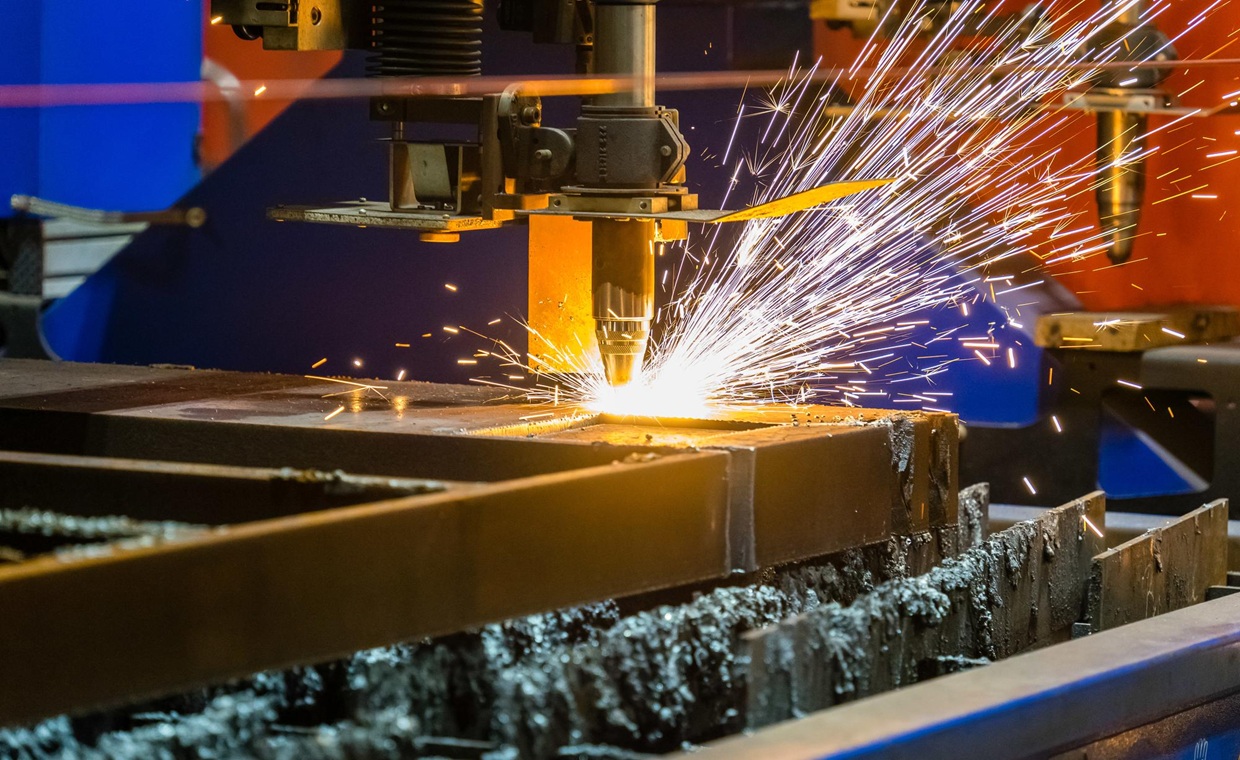
CNC milling – a process in which a computer-guided cutting tool carves precise geometry from a solid billet of aluminium, stainless steel, brass, or bronze – delivers something handcraft cannot reliably offer: identical repetition at scale, tolerances held to fractions of a millimetre, and surface quality that holds up to the most demanding architectural finishes. For design-conscious developers and architects working on projects where material detailing is a signature of quality, this matters enormously.
The accessibility of these components has also expanded. Globally operating design teams, procurement consultants, and specification architects now routinely work with CNC milling companies in China that produce architectural-grade metal components – from custom aluminium facade brackets to precision brass door furniture – at a fraction of what equivalent domestic fabrication costs, without compromising on dimensional accuracy or finish quality. Haizol’s verified CNC milling companies directory lists pre-screened Chinese factories with published machining capabilities, ISO certifications, material handling data, and surface treatment options, giving procurement teams a structured starting point for sourcing custom architectural components internationally.
But before getting to sourcing, it helps to understand where CNC-milled metal is making the most compelling design impact right now.
Custom Metal Screens and Jali-Inspired Partitions
Few architectural elements combine cultural resonance and contemporary craft as effectively as custom-milled metal screens. The traditional Indian jali – the geometric lattice used in Mughal architecture for light filtration and privacy – is being reinterpreted through CNC milling in ways that hand fabrication simply cannot match.
Designers are now specifying aluminium or mild steel screens milled to custom geometric patterns – hexagonal tessellations, parametric floral motifs, interlocking arabesque grids – with aperture sizes and material thickness calibrated precisely to control light transmission and privacy levels. A milled jali panel for a living room partition can achieve line widths of 2–3mm and depth profiles of 15–20mm that create dramatic shadow play at different times of day – effects that are only achievable when every cut is made with CNC precision.
These screens work in residential projects as room dividers, balcony privacy screens, and stairwell feature walls, and in commercial settings as lobby feature elements, restaurant partitions, and hotel corridor accents. The geometry can be designed parametrically in tools like Grasshopper and exported directly to CNC cutting programs – collapsing the design-to-manufacture distance significantly.
Bespoke Door Hardware and Lock Furniture
The front door is the first material statement of any well-designed home. Stock door hardware – the handles, escutcheons, hinges, and pull plates available through standard architectural hardware catalogues – is the fastest way to undermine an otherwise carefully curated material palette. Custom CNC-milled hardware is the alternative that top-tier residential and hospitality projects are increasingly adopting.
CNC milling allows hardware designers and architects to produce:
- Door handles in any cross-section profile – tapered, faceted, ergonomically curved, square-shouldered – with a surface finish matched to the door material, whether that is timber, lacquered steel, or stone
- Escutcheon plates recessed flush with the door face, milled to exact keyhole and latch geometry, finished in brushed brass, satin stainless, or powder-coated matte black
- Flush pull recesses for sliding doors and barn doors, milled to precise depth with radiused internal corners that hands naturally follow
- Hinge plates and pivot hardware for heavy pivot doors, with material specifications that meet structural load requirements
The shift from catalogue hardware to custom CNC-milled furniture elevates a project’s perceived quality measurably – and it is increasingly accessible at budgets that once reserved this level of specification for ultra-luxury schemes only.
Precision Metalwork in Contemporary Staircase Design
The staircase is arguably the most structurally and visually complex metalwork element in a residential or commercial building. Contemporary architectural staircases – floating treads, glass-and-steel assemblies, spiral forms in solid aluminium – depend on CNC-milled components for structural integrity as much as aesthetic precision.
Key staircase elements where CNC milling delivers measurable design value:
Balustrade post bases and glass clamps: A frameless glass balustrade system where post bases land misaligned by even 1–2mm is immediately visible and structurally compromised. CNC-milled post bases drilled and profiled to exact specification ensure the glass panels fall perfectly plumb and the sightlines remain clean.
Newel post and handrail end caps: The termination details of a handrail – where it meets the newel post, wraps a corner, or dies into a wall – are where the quality of metalwork is most legible. CNC-milled end caps and transition pieces eliminate the visible joins and filler that characterise fabricated alternatives.
Floating tread brackets: Where timber or stone treads cantilever from a central spine or from side stringers, the structural brackets that receive the tread must be dimensionally exact to ensure treads are level, parallel, and consistent across the full stair flight. CNC-milled brackets, produced from a single digital program, achieve this consistency in ways that welded or bent steel brackets cannot reliably match.
Feature Ceiling and Wall Panels
Coffered ceilings, feature wall panels, and three-dimensional tile effects are among the most visually impactful uses of CNC-milled aluminium in contemporary interior design. The process allows designers to produce panels with:
- Raised and recessed geometry that creates depth and shadow across large surface areas
- Integrated concealed fixing systems so panels appear to float without visible fasteners
- Consistent module sizes that tile precisely across irregular room dimensions
- Perforated patterns that double as acoustic treatment when backed with absorption material
For hotel lobbies, corporate boardrooms, luxury apartment living rooms, and high-specification retail environments, CNC-milled wall and ceiling panels have become a signature of material ambition that resonates with clients and photographers alike.
How Architects and Developers Source Custom CNC-Milled Components
The sourcing conversation for custom CNC-milled architectural components typically happens at two stages: during schematic design, when the architect confirms that the specified geometry is producible and what material and tolerance constraints apply; and during procurement, when the project manager or developer’s team identifies a qualified supplier, obtains samples, and places production orders timed to the installation programme.
For India-based projects, the cost case for internationally sourced CNC-milled aluminium and stainless steel components is compelling. Equivalent fabrication from domestic metalwork shops – where CNC milling capacity is concentrated in industrial hubs and waiting periods for architectural work can be long – often costs 40–60% more than sourcing from a verified overseas factory with the right capability, at volumes above 20–30 identical pieces.
The design documentation required to source custom CNC-milled components effectively:
- 3D CAD files (STEP format) for every custom component, with geometry finalised before supplier approach
- Fully dimensioned 2D drawings showing all tolerances, surface finish callouts, and material specifications
- Finish sample or reference: for anodized aluminium, specify colour, sheen level, and Type II or Type III hardness; for stainless, specify No. 4, No. 8, or brushed finish direction; for brass, specify lacquered or unlacquered
- Installation drawing showing how each component interfaces with adjacent materials – timber, glass, concrete, or stone – so the supplier understands the fit requirements
The more complete this package at the start of the sourcing process, the fewer revision cycles are needed and the lower the risk of a site-fit problem discovered during installation – the most expensive possible time to find a tolerance error.
Custom CNC-milled metal has moved from a specialist specification choice to a mainstream material language in contemporary Indian architecture and interiors. The combination of design freedom, manufacturing precision, and accessible international sourcing has made it viable for projects that previously would have settled for catalogue products or hand-fabricated approximations. The design statement it enables – material consistency, geometric exactness, finish quality – is now a benchmark expectation in any project where the brief calls for spaces that are genuinely well-made.
Also Read: Enhancing Custom Plastic Fabrication with CNC Routing
FAQs
1. What is CNC milled metal in architecture?
It refers to metal components shaped using computer-controlled machines to achieve precise geometry and consistent quality.
2. Why is CNC milling preferred over traditional metal fabrication?
CNC milling offers higher accuracy, repeatability, and cleaner finishes compared to manual or welded fabrication methods.
3. Where is CNC milled metal commonly used in interiors?
It is used in screens, door hardware, staircase components, wall panels, and ceiling features.
4. Is CNC milled metal expensive for residential projects?
Costs have become more accessible, especially when sourcing from international manufacturers for larger quantities.
5. Can CNC milling replicate traditional jali designs?
Yes, it can recreate and enhance jali patterns with greater precision and more complex geometries.
Author & Expert Review
Written By:  Gaurav Mishra | Civil Engineer & Content Writer

| Credentials: B.E. (Mahavir Swami College, Surat), Registered with Bhagwan Mahavir University (BMU). Experience: Civil Engineer with 5+ years of content writing experience, currently writing impactful articles for Gharpedia, part of SDCPL. Expertise: Specializes in writing well-researched content on residential construction, construction materials, design planning, on-site practices, and safety, blending technical accuracy with everyday clarity. Find him on: LinkedIn |
Verified By Expert: Ravin Desai – Co Founder – Gharpedia | Co Founder – 1 MNT | Director – SDCPL

This article has been reviewed for technical accuracy by Ravin Desai, Co-Founder of Gharpedia and Director at Sthapati Designers & Consultants Pvt. Ltd. With a B.Tech. in Civil Engineering from VNIT Nagpur and an M.S. in Civil Engineering from Clemson University, USA, and over a decade of international and Indian experience in the construction and design consultancy sector, he ensures all technical content aligns with industry standards and best practices.
Find him on: LinkedIn