Table of Contents
Quick Summary
- Breaks down why rising electricity costs and grid failures are impacting middle class homeowners
- Explains how power outages create hidden financial losses beyond inconvenience
- Shows why solar panels alone are not enough without battery storage
- Highlights how time of use pricing quietly inflates monthly power bills
- Positions home batteries as financial and lifestyle insurance
- Introduces modular battery systems as a budget friendly entry point
- Emphasises energy independence and long-term cost control
There used to be a time when getting a backup battery system felt like a luxury purchase-something for the tech enthusiast down the street or the survivalist prepping for the apocalypse. But in 2026, the conversation has shifted entirely.
If you are a homeowner in the suburbs of Texas, Florida, or California, you aren’t looking for luxury. You’re looking for stability.
We are all facing the same two headaches. First, the monthly utility bill has morphed from a manageable expense into a budget-wrecking shock every thirty days. Second, the grid itself has become temperamental. Between storm seasons that seem to drag on forever and infrastructure that struggles to handle heatwaves, paying more for electricity that is less reliable feels like a bad joke.
For the average middle-class family, this isn’t about “going green” to save the planet anymore. It’s about stopping the financial bleeding and making sure the food in the freezer doesn’t spoil when the lights go out.
Why We are Paying More for Less Reliability
Let’s be honest: The “social contract” with our utility companies is broken. We used to pay a fair rate, and in exchange, the power stayed on. Now, rates are climbing faster than wages, and outages are just part of the calendar.
The solution starts with taking control of the supply chain. Instead of renting unstable power, homeowners are realizing they need to generate their own. By harvesting solar energy for home use, you cut out the middleman. But here is the catch that most people miss: In 2026, solar panels alone aren’t enough to protect your wallet or your home.
As quoted by Rakesh Malhotra, roofing contractor,
“Home batteries have become just as important as a strong roof. When the power stays on during storms, families realise it is not luxury tech, it is basic protection.”
Without a battery, your solar panels usually shut off when the grid goes down (a safety requirement). And without a battery, you are still at the mercy of the utility company’s pricing games after the sun sets.
The Hidden Cost of Power Outages
For a wealthy household, a power outage is an annoyance. They go to a hotel. For a middle-class family, it’s a financial hit you didn’t budget for.
Throwing away $400 worth of groceries because the fridge sat warm for 12 hours hurts. Losing two days of income because you couldn’t log into your remote job hurts. Dealing with mold remediation because the sump pump failed during a storm really hurts.
We need to stop thinking of backup power as “cool tech” and start seeing it as insurance. You have insurance for your car and your health; a home battery is insurance for your lifestyle. It ensures that when the neighborhood goes dark, your life continues. The internet stays on, the fans keep spinning, and the food stays cold.
The “Time-of-Use” Robbery
If your electric bill is hovering between $200 and $500 a month, you are likely the victim of “Time-of-Use” (TOU) rates. This is the utility company’s favorite trick. They charge you a reasonable rate when you are sleeping, but skyrocket the price between 4 PM and 9 PM.
Coincidentally, that is exactly when your family is home. You are cooking dinner, running the dishwasher, and trying to cool the house down after work.
This is where a battery pays for itself, even when the grid is working perfectly. A smart system acts like a financial bodyguard. It stores cheap solar power during the day and deploys it automatically in the evening. You effectively “unplug” from the grid during the most expensive hours of the day. You are using your own free power while your neighbors are paying premium rates. Over five or ten years, that difference isn’t pennies-it’s thousands of dollars.
Modularity: The Budget-friendly Way to Start
Here is the biggest myth stopping people from upgrading: “I can’t afford a $30,000 whole-home system right now.”
The good news? You don’t have to. The market has finally realized that middle-class homeowners need options, not ultimatums.
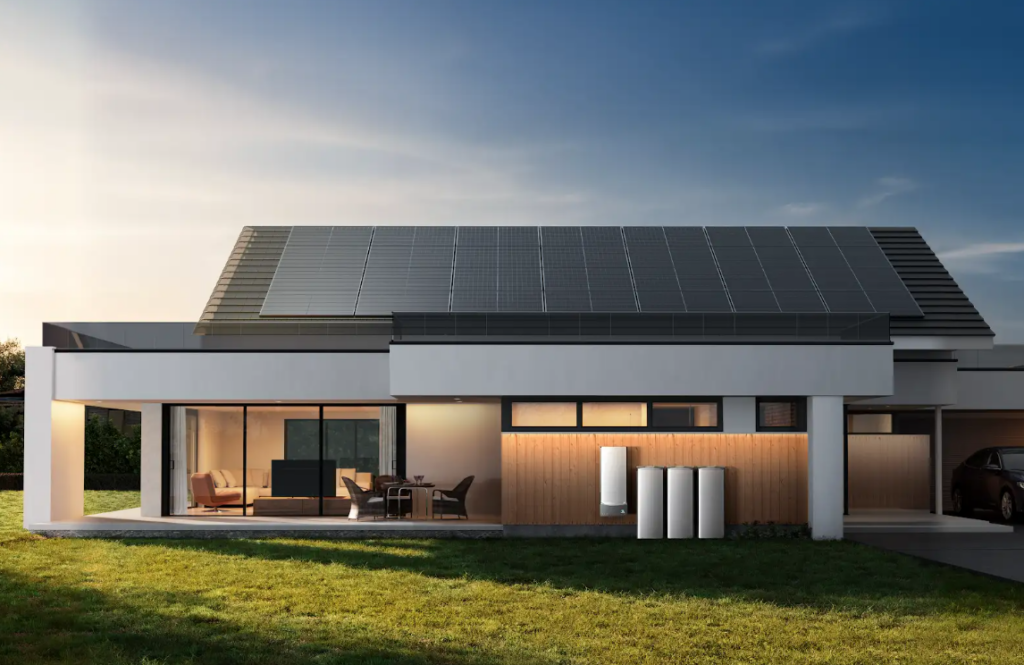
The smartest technology in 2026 is modular. You can see this approach with the EcoFlow OCEAN Pro Solar Battery System, which replaces the old “all-or-nothing” model with a scalable architecture. This isn’t a temporary fix; it provides immediate, robust power capable of running heavy-duty appliances-like refrigerators and central air conditioning-so your daily life continues uninterrupted during a blackout.
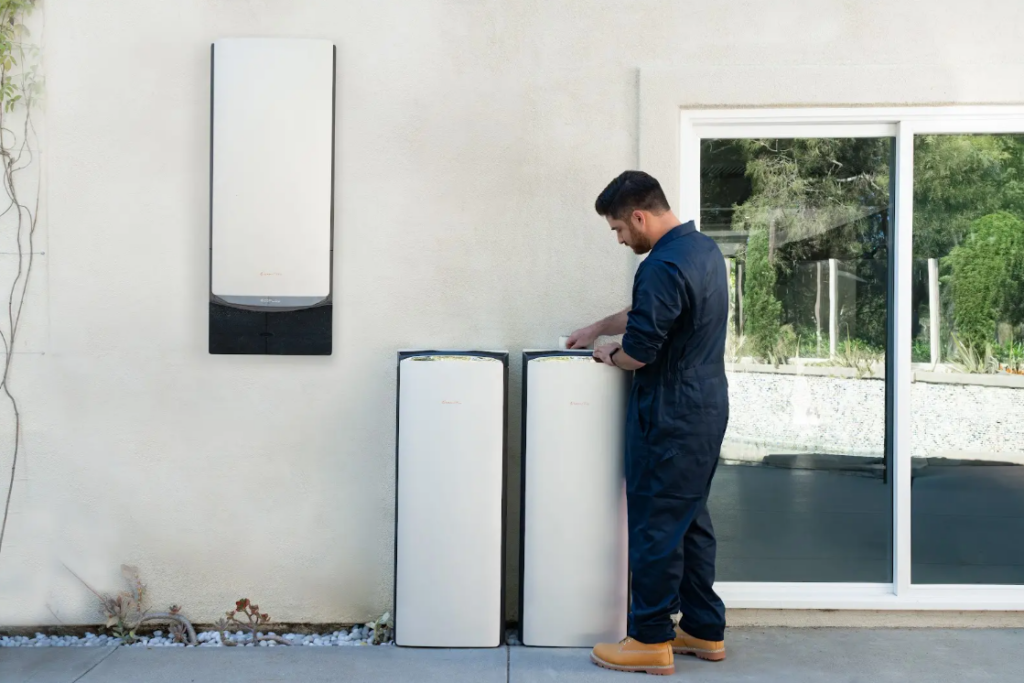
This approach secures your home against worst-case scenarios without the initial sticker shock. Then, as your budget opens up or your needs grow, you can simply stack more capacity on top, expanding seamlessly up to 80kWh. Maybe next year you add a unit to support an EV; the year after, you maximize your solar storage. You build true whole-home resilience at your own pace.
Conclusion: Stop Renting your Stability
At the end of the day, this is about independence. It’s about looking at that rising bill and knowing you have an exit strategy. It’s about watching the storm clouds roll in and knowing you won’t be scrambling for flashlights.
For the middle-class homeowner in 2026, energy storage isn’t a status symbol. It’s a shield. It protects your bank account from inflation and your family from instability. And in a world that feels a little more chaotic every year, that is an investment worth making.
Also Read: Fact Check: Debunking 5 Popular Myths About Inverter Batteries
Frequently Asked Questions – Home Battery Backup System
1. Why is backup power becoming essential for homeowners?
Because electricity costs are rising while outages are becoming more frequent, making grid dependence risky.
2. Can solar panels work during a power cut?
Most solar systems shut down during outages unless paired with a battery.
3. How does a home battery save money?
It stores low-cost energy and uses it during peak pricing hours to reduce expensive grid usage.
4. Are whole home battery systems affordable?
Modular systems allow homeowners to start small and expand over time.
5. Is a home battery only useful during blackouts?
No, it also protects against high electricity rates and improves daily energy efficiency.
Author & Expert Review
Written By:  Gaurav Mishra | Civil Engineer & Content Writer
| Credentials: B.E. (Mahavir Swami College, Surat), Registered with Bhagwan Mahavir University (BMU). Experience: Civil Engineer with 5+ years of content writing experience, currently writing impactful articles for Gharpedia, part of SDCPL. Expertise: Specializes in writing well-researched content on residential construction, construction materials, design planning, on-site practices, and safety, blending technical accuracy with everyday clarity. Find him on: LinkedIn |
Verified By Expert:  Ravin Desai – Co Founder – Gharpedia | Co Founder – 1 MNT | Director – SDCPL
This article has been reviewed for technical accuracy by Ravin Desai, Co-Founder of Gharpedia and Director at Sthapati Designers & Consultants Pvt. Ltd. With a B.Tech. in Civil Engineering from VNIT Nagpur and an M.S. in Civil Engineering from Clemson University, USA, and over a decade of international and Indian experience in the construction and design consultancy sector, he ensures all technical content aligns with industry standards and best practices.
Find him on: LinkedIn