Table of Contents
Quick Overview
Here is the quick summary on solar outdoor lighting:
- Residential lighting is shifting toward solar solutions that combine sustainability, security, and design.
- Consumer-grade solar lights fail quickly; industrial-grade specs deliver 5–7 years of performance.
- Solar lighting works during power outages, and reduces installation costs.
- Die-cast aluminium housings are essential for heat dissipation and long LED lifespan.
- Choose IP65–IP66 ratings for real outdoor weather resistance.
- Use solar street lights for driveways and solar flood lights for architectural accents.
- Warm, shielded lights reduce light pollution and support eco-friendly design.
The modern residential landscape is shifting. We are moving beyond simple curb appeal toward the “Off-grid” movement, where sustainability meets self-sufficiency. However, for many homeowners and landscape architects, the transition to solar lighting comes with a frustrating caveat: reliability.
Most consumer-grade solar lights purchased at big-box hardware stores tend to fail within six months. They dim prematurely, succumb to water ingress, or crack under UV exposure. The solution lies in looking beyond the garden aisle and adopting industrial standards for residential properties. Here is how to select lighting that offers the durability of municipal infrastructure with the aesthetics of luxury design.
Why Solar? The Intersection of Energy-Efficiency and Home Security
Solar lighting is no longer just about saving a few dollars on electricity; it is a critical component of property security and MEP (Mechanical, Electrical, and Plumbing) optimization.
By eliminating the need for trenching and hard wiring, solar solutions reduce installation costs significantly. More importantly, they provide autonomous security. In the event of a grid power outage, your perimeter remains illuminated. Modern units equipped with Smart Sensing technology further enhance this by maintaining a low-profile dim mode, only jumping to full brightness when motion is detected, startling potential intruders while conserving battery life.
Critical Technical Specifications for Long-Lasting Outdoor Lights
To ensure your lighting investment lasts 5-7 years rather than a single season, you must ignore vague marketing terms like “super bright” and focus on the technical datasheets.
1. The Importance of Heat Dissipation (Material Matters)
Heat is the silent killer of LED technology. While LEDs run cooler than incandescent bulbs, the electronic drivers and chips still generate significant heat. If this heat is trapped inside a plastic housing, it degrades the circuitry and drastically shortens the fixture’s lifespan.
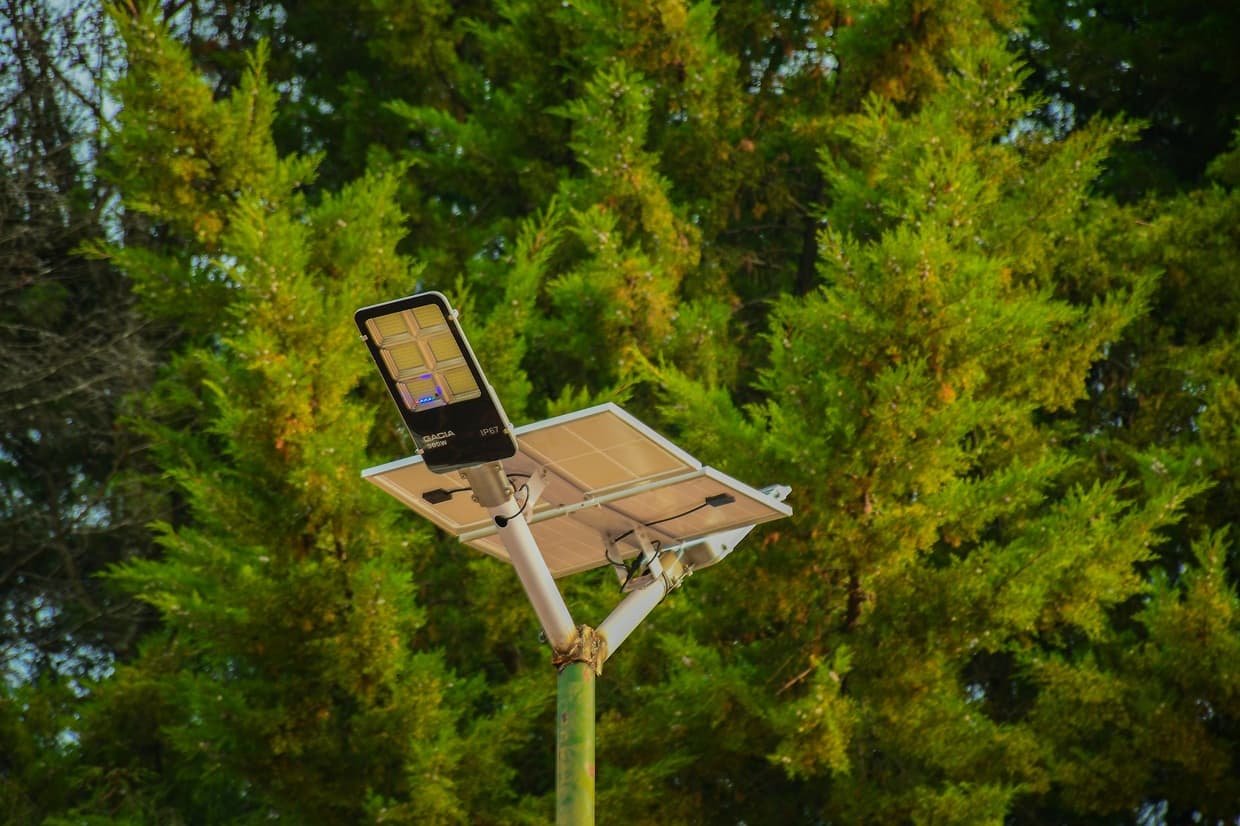
This is where material selection becomes non-negotiable. Die-cast aluminium is superior to ABS plastic because it acts as an active heat sink, pulling thermal energy away from the core components. Top-tier manufacturers like Wosen utilize high-purity ADC12 aluminium in their solar street and flood lights to ensure effective heat dissipation. This industrial-grade standard significantly extends the fixture’s lifespan compared to standard plastic consumer models, ensuring consistent performance even in high-temperature environments.
2. Understanding IP Ratings for Extreme Weather
For outdoor durability, the Ingress Protection (IP) rating is your primary metric. A rating of IP44 (common in cheap garden lights) is insufficient for heavy rain or dust storms.
- IP65: The minimum standard for outdoor durability, protecting against low-pressure water jets from any direction.
- IP66: Recommended for driveways and open areas exposed to heavy storms or coastal sea spray.
Strategic Placement for Maximum Impact
1. Driveways and Perimeters
Treat long driveways like mini-roadways. Instead of placing flimsy stake lights every two feet, utilize the “Solar Street Light” concept. These are pole-mounted fixtures that cast a wider beam angle, requiring fewer units to illuminate a larger path. This reduces visual clutter while increasing safety for vehicles.
2. Garden and Architectural Highlights
For the building exterior, precision is key. Use Solar Flood Lights to “wash” textured walls or highlight architectural columns. Opt for warmer colour temperatures (3000K-4000K) here; cool white light can look harsh and clinical against stone or brick, whereas warmer tones create an inviting atmosphere.
Maintenance and Longevity: What to Expect?
The heart of any solar light is the battery. Avoid older Nickel-Cadmium (NiCd) or standard Lithium-ion batteries if possible. Look for LiFePO4 (Lithium Iron Phosphate) batteries, which offer 2000+ charge cycles compared to the 500-800 cycles of standard options.
Furthermore, proper outdoor lighting shouldn’t just be durable; it should be responsible. According to the International Dark-Sky Association, using shielded fixtures with warmer color temperatures reduces light pollution, protecting local wildlife while still providing adequate security. Aligning your lighting choices with these standards ensures your property is eco-friendly in every sense.
Key Takeaways
| Area | Key Takeaway | Impact/Data |
| Material | Mandate die-cast aluminium (ADC12); reject plastic | Prevents heat damage; ensures 5-7 year life |
| Battery | Require LiFePO4 chemistry exclusively | Delivers 2000+ cycles (vs. 500-800 standard) |
| Protection | Enforce IP65 minimum; IP66 for harsh zones | Blocks water/dust ingress completely |
| Security | Utilize grid-independent, smart-sensing units | Maintains perimeter security during power outages |
| Design | Use 3000K-4000K “street light” pole concepts | Reduces trenching costs; eliminates visual clutter |
Conclusion
The gap between industrial capability and residential design is closing. By prioritizing die-cast aluminium housings, checking IP ratings, and understanding battery chemistry, homeowners can invest in solar lighting that is a permanent asset rather than a disposable accessory. Quality specifications upfront mean fewer replacements and a more secure, beautiful home for years to come.
Also Read: Solar-Powered Home Design Trends: A Green Future Ahead
FAQs on Solar Outdoor Lighting
01. What Makes Industrial-Grade Solar Lighting Good for Homes?
Industrial-grade fixtures use die-cast aluminium housings for heat dissipation, higher IP weather ratings, and advanced battery chemistry. These standards are designed for continuous outdoor exposure and multi-year operation.
02. Do Solar Lights Work During Power Outages?
Yes. Because solar lights operate independently of the electrical grid, they continue to function during outages, ensuring uninterrupted security and pathway illumination.
03. How Long Should High-Quality Solar Lights Last?
With proper materials, IP ratings, and LiFePO4 batteries, well-built solar fixtures can reliably operate for 5 to 7 years with minimal maintenance.
Author & Expert Review
Written By:  Kinjal Mistry | Civil Engineer & Senior Content Writer
| Credentials: B.E. (Dharmsinh Desai University, Nadiad, Gujarat). Experience: Civil Engineer with 9 years of content writing experience, currently writing impactful articles for Gharpedia, part of SDCPL. Expertise: Specializes in writing well-researched content on home improvement, sustainability, building materials, home interior, DIY, and plumbing technology with everyday clarity. Find her on: LinkedIn |
Verified By Expert: Avni Desai Environmental Engineer, SDCPL | M.E. (Environmental Engineering)
This article has been reviewed for environmental, MEP, and building services accuracy by Avni Desai, an Environmental Engineer at Sthapati Designers & Consultants Pvt. Ltd. (SDCPL). With over 8 years of experience in water supply, wastewater management, infrastructure design, and building services, she brings practical expertise in MEP services, sustainable solutions, design planning, and on-site practices. Her professional services include planning and design of water supply systems, sewage and wastewater treatment systems (STP/WTP), drainage, rainwater harvesting, and other sustainable building services. Her review ensures the content aligns with environmental standards, efficient services planning, and real-world applicability.
Find her on: LinkedIn