Table of Contents
Quick Overview
Here is the quick summary on how to choose a statement table lamp:
- A good table lamp can add height and warmth with minimal effort.
- Choosing the table according to their usage such as task lighting, ambient, or accent lighting.
- Lamp shade choice highly impacts both style and light quality.
- Linen, pleated, or oversized shades tend to look more high-end.
- Ceramic, stone, warm metals and natural fibres materials looks expensive.
- Sculptural shapes create visual interest in neutral rooms.
- Warm bulbs and dimmers make lighting feel cozy and flexible.
- Cheap lamps can look luxury with a better shade, warm bulb, and tidy cords.
- Common mistakes to avoid: lamps too small, wrong shade size, shiny finishes, over-styling.
A great table lamp does more than add light, it adds height, warmth, and that “this room is complete” feeling even if nothing else changes. If a space looks mostly done but still feels a little flat, upgrading a lamp (or simply sizing up) is one of the quickest, least disruptive ways to elevate the whole room.
Start with what the Lamp Needs to do
Before picking a style, decide what the lamp is for. Most rooms feel best with layered lighting, and table lamps typically support one (or two) of these goals:
- Task lighting: reading, homework, focused light by a sofa or bed
- Ambient lighting: soft glow that makes a room feel cozy
- Accent lighting: highlighting a console, styling a corner, adding depth
If the room feels harsh at night, more ambient light is usually the fix. If it’s hard to read comfortably, task lighting is the priority. If everything feels “fine” but not finished, accent lighting is often what’s missing.
Scale is the Difference Between “Nice” and “Designer”
Most lamps look off for one of two reasons: they’re too small, or the shade proportions are wrong. Getting the scale right instantly makes a lamp look more intentional.
Quick Sizing Guidelines
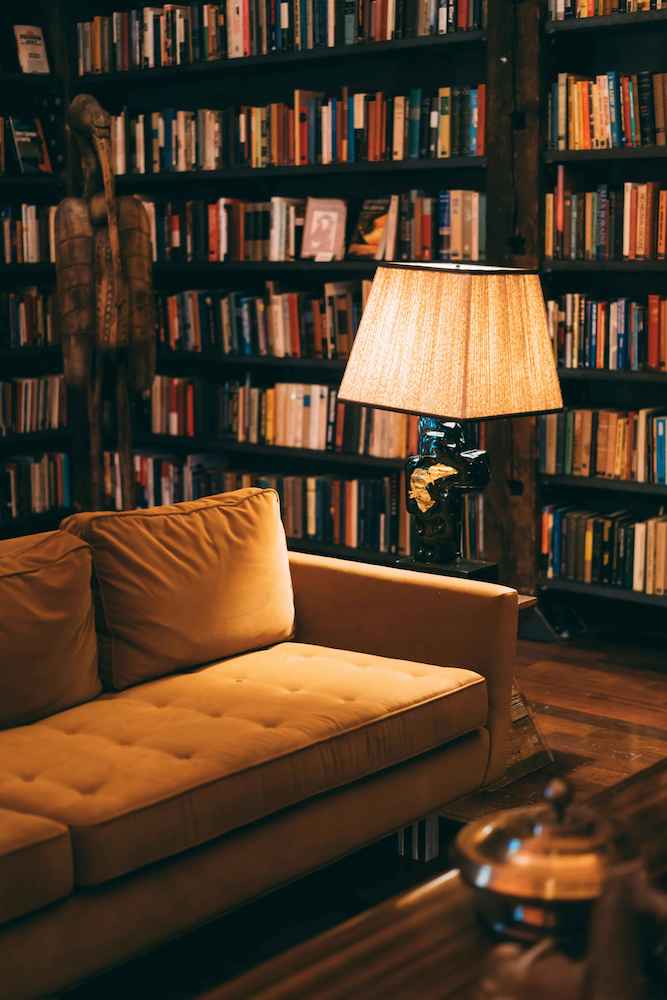
- Next to a sofa: the bottom of the shade should land around eye level when seated (so the bulb doesn’t glare).
- On a nightstand: the shade should hit around chin-to-shoulder height when sitting up in bed.
- On a console or entry table: taller lamps often look best, especially when paired with a mirror or artwork.
When deciding between two sizes, going slightly larger usually looks more elevated.
Shade Choice Matters More Than Most People Think
The shade affects both the style and the quality of the light. A simple base can still feel high-end with the right shade.
- Linen drum shades feel clean and timeless
- Tapered shades lean classic and traditional
- Pleated shades add softness and texture (great in minimal spaces)
- Oversized shades create a more editorial, designer look
A helpful rule: if the base is sculptural or patterned, keep the shade simpler. If the base is classic, the shade can carry more personality.
Materials that Read High-End Even on a Budget
Certain finishes tend to look more expensive because they feel substantial and photograph well:
- Ceramic with matte or lightly textured glaze
- Stone or faux-stone bases that look weighty
- Warm metals (aged brass, antique gold, bronze) over super shiny finishes
- Natural fibres and linen shades that diffuse light softly
A small detail that matters: a lamp with a solid base and a thicker-looking stem often reads higher-end than something thin and lightweight.
In a Neutral Room, Shape Becomes the Statement
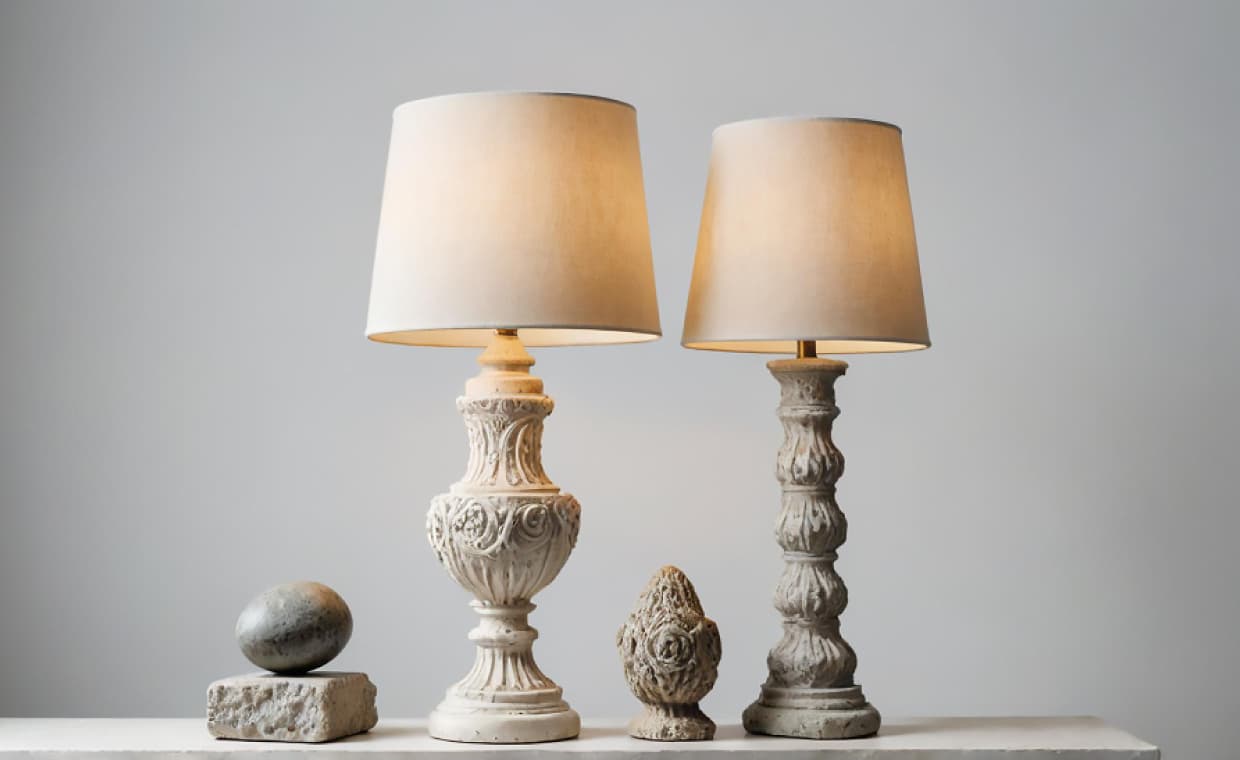
When the palette is calm, silhouette is what creates interest. Sculptural lamps add personality without needing bold colour; perfect for consoles, built-ins, and nightstands where one intentional “design moment” makes the space feel curated.
For anyone who likes playful, artsy silhouettes, an Anthropologie Doodle Lamp dupe is a great option if you’re a dog lover.
Where Statement Lamps Work Best?
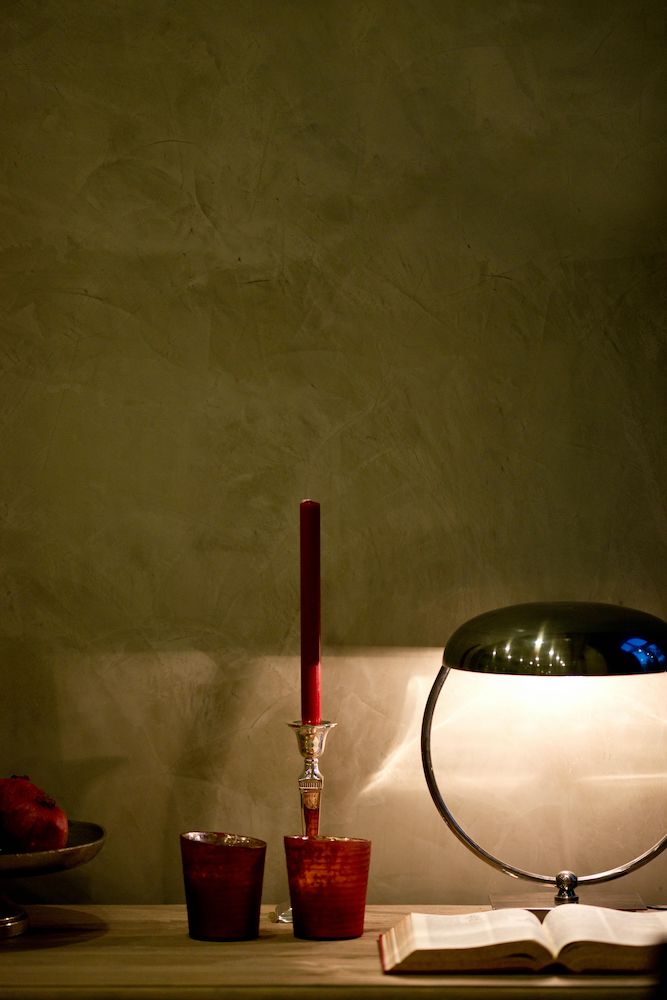
Statement lighting doesn’t have to be loud. Often it just means a lamp with strong scale, an interesting shape, or a textured finish.
1. Living Room
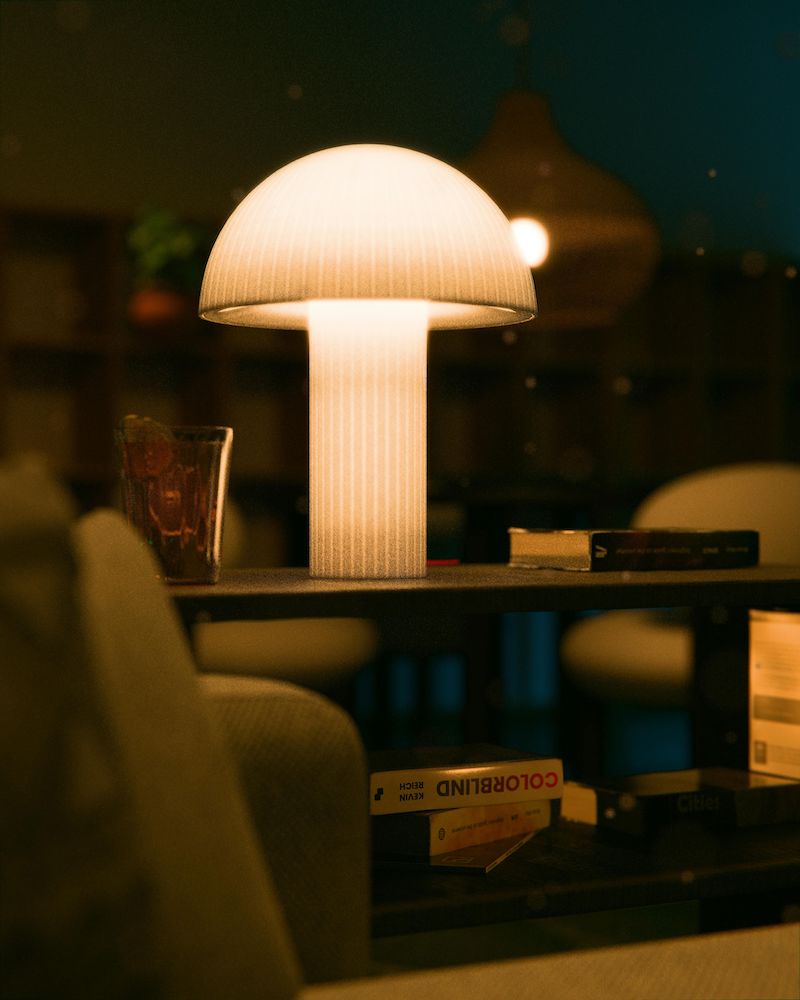
A living room almost always looks better with at least two “pools” of light instead of relying on overhead lighting. Good spots for a table lamp include:
- End tables beside a sofa
- A console behind a sofa
- A sideboard near a dining/living boundary
This adds depth and makes the room feel warmer at night.
2. Bedroom
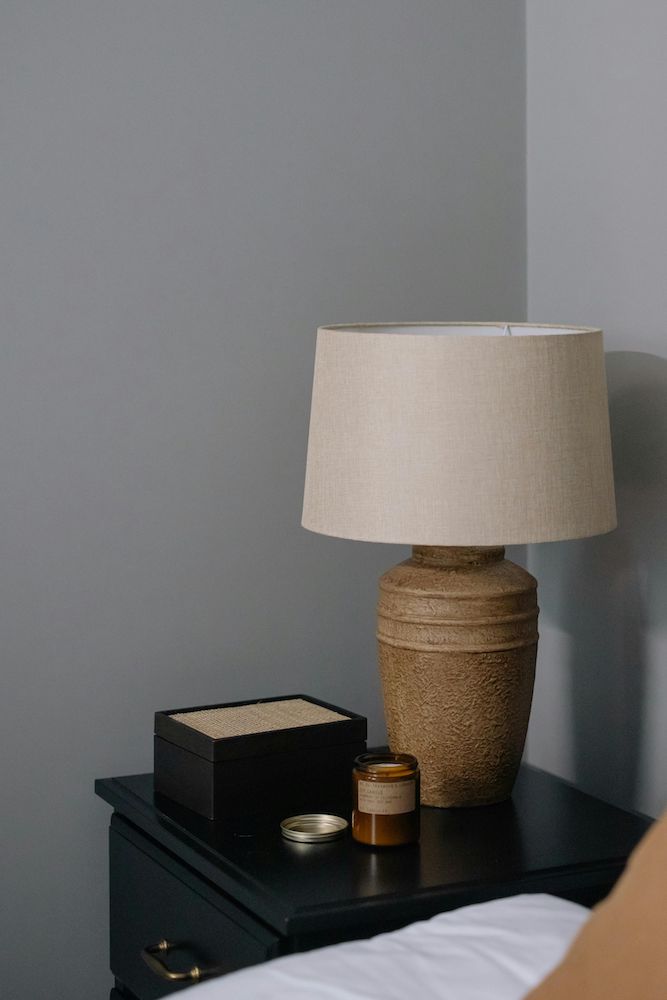
Bedside lamps do a lot of visual heavy lifting. If a headboard is tall, taller lamps (or larger shades) usually look more balanced. Options that work well:
- Matching lamps for symmetry
- One oversized lamp for a modern, simplified look
- Coordinating lamps (same height/finish family, different bases) for a collected feel
3. Entryway
An entry table with a lamp instantly makes a home feel welcoming. It’s also a great place for a sculptural lamp because it reads as a quick “wow” moment.
4. Home Office
A statement lamp can soften a workspace, especially if the rest of the room is practical. Just make sure it’s not the only light source, pair it with brighter task lighting when needed.
A Simple Styling Formula That Always Works
Once the lamp is in place, styling around it should feel intentional, not cluttered. A reliable formula:
- Lamp
- One low layer (a small stack of books, tray, or shallow bowl)
- One small accent (bud vase, candle, or simple object)
Keep accessories lower than the shade so the lamp stays the focal point. If the base is sculptural, the surrounding styling should be quieter.
Bulbs Can Make a Beautiful Lamp Feel Wrong
The wrong bulb can make any lamp feel harsh. A few easy guidelines:
- Warm bulbs create a cozy, flattering glow (especially for bedrooms and living rooms).
- If a brighter look is preferred, stay warm-leaning rather than cool/blue.
- A dimmer or smart bulb makes one lamp work for multiple moods and times of day.
Shade material matters too; linen and fabric soften light, while some plasticky shades can feel stark.
How to Make an Inexpensive Lamp Look More Expensive?
These upgrades elevate the look without replacing the whole lamp:
- Swap to a higher-quality linen or pleated shade
- Choose a warmer bulb
- Add a decorative finial
- Hide cords (cord covers help a lot in photos)
- Pair the lamp with one elevated accessory (stone tray, ceramic vase, framed art)
Often, what reads “budget” isn’t the lamp; it’s the shade and the details around it.
Common Table Lamp Mistakes to Avoid
- Choosing a lamp that’s too small for the table.
- Using a shade wider than the nightstand/side table.
- Pairing a shiny finish with otherwise warm, soft decor.
- Over-styling the base so the vignette feels busy.
- Relying on overhead lighting only.
Also Read: 10 Best Floor Lamps Ideas to Enhance Your Ambience
FAQs on How to Choose a Table Lamp
01. How Many Table Lamps Should a Living Room Have?
Usually at least two sources of softer, lower light (table lamps and/or floor lamps) make a living room feel layered and comfortable.
02. What’s the Fastest Way to Make a Cheap Lamp Look Expensive?
Upgrading the shade is typically the biggest impact, especially to linen or pleated styles.
03. Should Bedside Lamps Match?
Matching looks classic and symmetrical, but coordinating (same height and finish family, different shapes) can look more custom.
04. What Size Lamp Works Best on a Nightstand?
The goal is for the shade to land around chin-to-shoulder height when sitting up; taller headboards usually need taller lamps.
05. Can a Statement Lamp Still Feel Timeless?
Yes, statement through shape and texture tends to age better than overly trendy patterns.
Author & Expert Review
Written By:  Kinjal Mistry | Civil Engineer & Senior Content Writer
| Credentials: B.E. (Dharmsinh Desai University, Nadiad, Gujarat). Experience: Civil Engineer with 9 years of content writing experience, currently writing impactful articles for Gharpedia, part of SDCPL. Expertise: Specializes in writing well-researched content on home improvement, sustainability, building materials, home interior, DIY, and plumbing technology with everyday clarity. Find her on: LinkedIn |
Verified By Expert:  Ravin Desai – Co Founder – Gharpedia | Co Founder – 1 MNT | Director – SDCPL
This article has been reviewed for technical accuracy by Ravin Desai, Co-Founder of Gharpedia and Director at Sthapati Designers & Consultants Pvt. Ltd. With a B.Tech. in Civil Engineering from VNIT Nagpur and an M.S. in Civil Engineering from Clemson University, USA, and over a decade of international and Indian experience in the construction and design consultancy sector, he ensures all technical content aligns with industry standards and best practices.
Find him on: LinkedIn