









Table of Contents
Quick Summary
- Outdoor AC units are bulky and may spoil your exterior aesthetics, so hiding them creatively is an artistic endeavour.
- Leave enough room for maintenance and ensure proper ventilation when positioning the unit.
- Avoid planting shrubs too close and protect the unit from direct sunlight to improve efficiency.
- Creative hiding ideas include a simple wooden cover, decorative covers, or planter boxes placed at a safe distance.
- Large green bushes can conceal the unit while adding beauty to your garden.
- Decorative showpieces, door screens, and lattice screens offer stylish concealment options without blocking airflow.
- Building a cement or paver-block wall or creating a storage area provides safety, weather protection, and added utility.

When there is an air conditioner in your home, there will always be an outdoor unit installed outside the house. While this unit is essential for cooling, it often affects the exterior appearance of your home. Very often, air conditioner cover outdoor concealing becomes a concern for the homeowners, especially when the AC is mounted on the ground floor.
You may wonder why people prefer hiding the outdoor AC unit. The main reason is to improve the visual harmony of the premises by reducing clutter and preserving clean architectural lines.
On the ground floor, it helps maintain façade balance, supports landscape design, etc., besides enhancing natural aesthetics and space management. So, it is important to know how to hide ac unit outside without hampering aesthetics.
So, it becomes important to explore ideas on how to hide your air conditioner unit outside without causing any functional problems. Whether it is a split, window, or portable air conditioner, there are several ways to conceal it, provided you follow some necessary precautions for hiding air conditioning unit.
Precautions to Take Before Installing the Outdoor AC Unit
Hiding an outdoor AC unit is a creative idea, but it must be done cautiously because minor mistakes, like restricting airflow, can cause overheating, higher energy consumption, compressor damage, reduced cooling efficiency, costly repairs, and even potential warranty voidance. All these issues can shorten the life of your air conditioner.
Let’s take a closer look at the essential precautions before planning for an outside air conditioner cover.

Courtesy - pxhere
1. Keep Room for Maintenance
There should be enough scope for maintenance when placing or covering the outdoor AC unit. Easy access ensures better servicing and maintenance of air conditioner unit. Maintain at least 2-3 feet of clearance around the unit.
2. Ensure Adequate Ventilation
Sufficient ventilation is crucial because proper air flow prevents overheating and allows smooth heat exchange. Then how to hide outside ac unit? Do not completely enclose the unit. Instead, use lattice or slatted designs.
3. Avoid Planting Shrubs Around It
If you plan to keep the air conditioner unit in your garden, don’t plant shrubs too close to it. They can block airflow and increase maintenance requirements.
4. Avoid Direct Sunlight
Place the air conditioner unit in a shaded area, as shading improves its performance and reduces energy consumption, without restricting airflow.
5. Bonus Points
Avoid placing heavy decorative items directly against it. Keep inflammable materials away. Pay attention to exhaust airflow and do not ignore the drainage space.
Amazing Ideas to Hide Outside AC Unit
If you are confused about how to hide the air conditioner unit outside, don’t worry; we have some amazing ideas for you. With these tips, you can hide the outside AC unit like a pro. Have a look.
01. Simple Wooden Cover to Hide outside AC Unit
Courtesy - thumbor
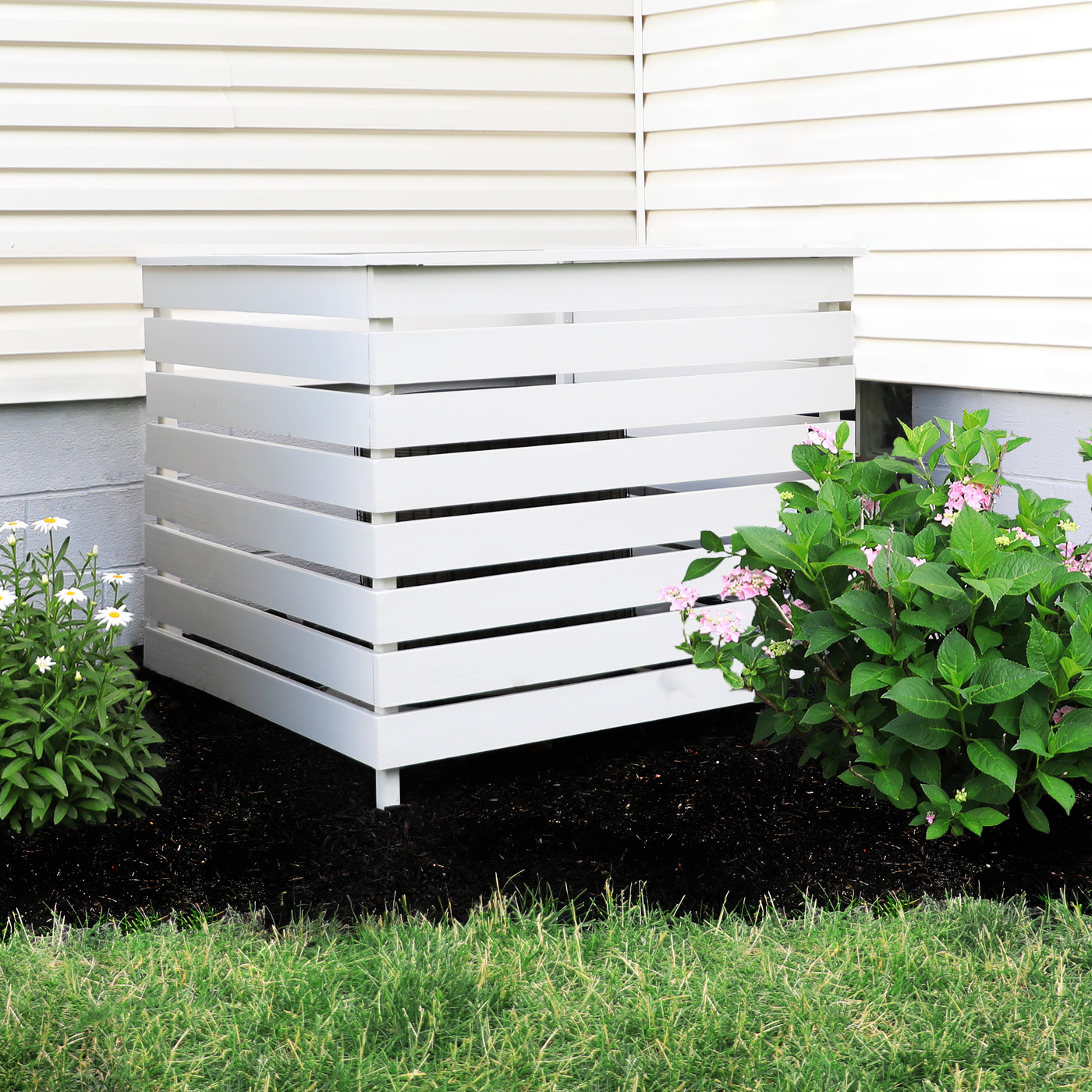
A wooden box is by far one of the best outdoor AC unit covers. You can easily make it as a DIY project or ask a local carpenter to do it. Just make sure there are enough gaps for air circulation.
- Pros: Wood is non-toxic and natural. You can colour wood in the desired hue.
- Cons: Wood needs frequent maintenance, and it can deteriorate due to weather conditions.
02. Decorative AC Unit Cover to Embellish
Courtesy - hearstapps
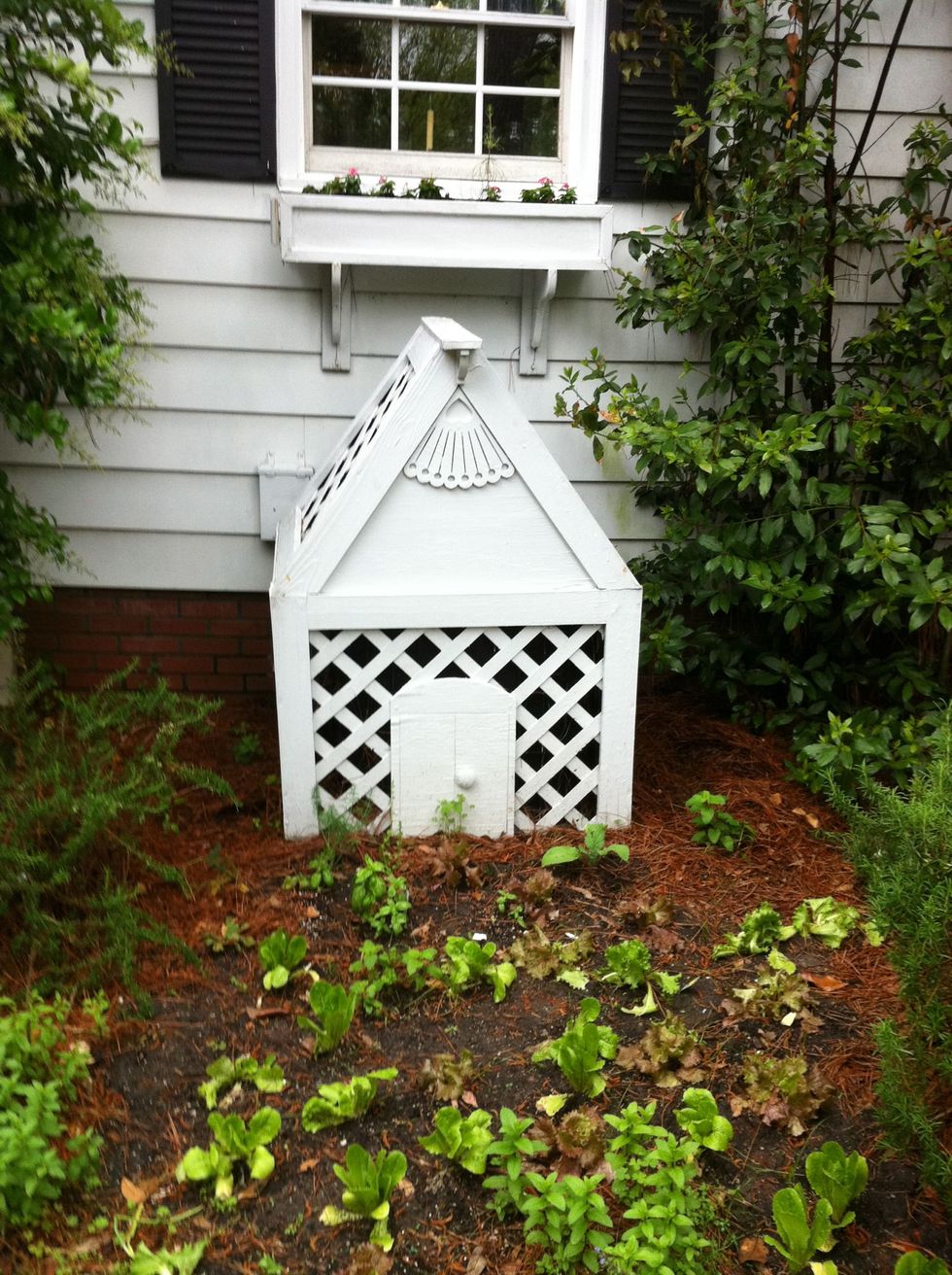
How to hide an air conditioner unit artistically? Instead of making a simple wooden cover, you can build a decorative outdoor AC unit cover in the shape of a small house or artistic enclosure. This adds elegance and charm to your home exterior.
- Pros: Enhances the look of the premises with stylish appeal.
- Cons: The wooden cover may wither in outdoor conditions.
03. Big Green Bushes Will Hide It Nicely

You may plant large bushes, but maintain a safe distance of 2-3 feet. This ensures proper airflow and prevents plant damage from the hot air discharge.
Pros: Brings in greenery and improves air quality.
Cons: If not pruned regularly, the bushes may obstruct air circulation.
04. Planter Boxes Also Works Well

Courtesy - Pintrest
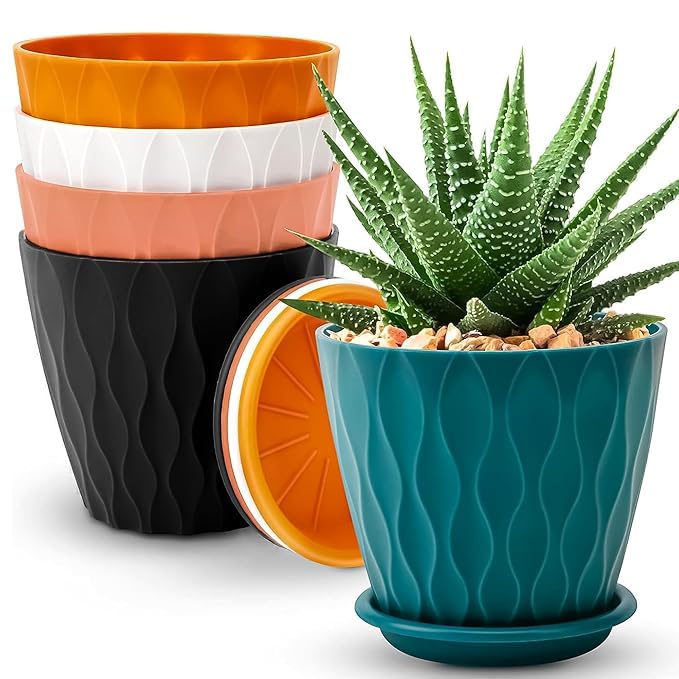
You can alternatively use planter boxes as your outdoor AC unit cover. However, it is better to place artificial plants and shrubs here because hot air flow does not support natural plant growth. Trellis structure made of wood or bamboo also goes well.
Pros: Decorative and easy to maintain; wash-friendly option.
Cons: The synthetic planters may not be an eco-friendly option.
05. Decorative Showpieces Will Elegantly Hide Your Outside AC Unit

Courtesy - pxhere
The use of decorative ornaments and showpieces in front of your air conditioner unit outside can also help in hiding it. Decorative pieces like big vases, fairies, decorative statues, etc enhance the appearance of your home exteriors by diverting the attention towards them.
- Pros: Easy and creative decor option, which you can be changed frequently.
- Cons: It requires frequent cleaning.
06. Door Screensto Hide AC Unit

Courtesy - pxhere
Still wondering how to hide an ac unit? Door screens are also helpful to hide the AC unit. You can join two-door screens together and hide the air conditioner unit. However, you need to ensure enough opening and distance to maintain the proper airflow.
Pros: Attractive, cost-efficient.
Cons: Airflow can easily be obstructed if the openings are blocked.
07. Lattice Screen Gives Covering with Beauty

Courtesy - architectureartdesigns
Lattice screens can work as a decorative outside air conditioner cover, and are an excellent way for hiding outdoor AC units. Even plain wooden planks can be arranged in a lattice pattern.
- Pros: Budget-friendly option and easy to install.
- Cons: Lower durability compared to solid materials.
08. Make A Wall Around It

Courtesy - Pintrest
You can construct a cement wall or paver block wall around the air conditioner unit. This protects it from the sun and rain while improving its appearance.
- Pros: Durable and customisable; offers noise deflection.
- Cons: Poor ventilation may damage the compressor.
09. Storage Area- Solution to More Than One Problems

Courtesy - hearstapps
How to hide ac unit outside with better space management? A storage enclosure can hide the AC unit and also provide space for gardening tools or household items. However, design the walls to allow airflow.
- Pros: Complete visual concealment, extra storage, and protection from weather.
- Cons: Risk of heat accumulation, may have warranty & manufacturer compliance issues.
How to Hide a Wall AC Unit
You can easily conceal a wall AC unit by blending it with interior design:
- Use decorative vent covers to match your décor.
- Build a custom cabinet around the unit with ventilation gaps.
- Use folding screens or curtain panels.
- Paint surrounding panels to match wall colour.
However, ensure the AC unit remains reachable and gets good airflow at all times.
Conclusion
The above ideas to hide an outside AC unit can help you conceal your air conditioner unit in a decorative and creative manner. However, safety measures and ventilation should always be given priority so that your air conditioner unit is not harmed. Make use of the wooden planks available in and around the house, use a little bit of paint, and you can hide your air conditioner unit outside effortlessly without affecting its performance.
Also Read: Getting Your Air Conditioner Ready for Summer: What Homeowners Should Know
FAQs on How to Hide an Outdoor Air Conditioner Unit
1. How Do I Hide My Outdoor AC Unit Without Blocking Airflow?
You can use lattice screens, wooden covers with gaps, or door screens that allow ventilation while concealing the unit.
2. Can Plants Be Used to Hide an AC Unit?
Yes, but keep plants or bushes at least 2–3 feet away to prevent overheating and maintenance issues.
3. Does Shading the Outdoor AC Unit Improve Efficiency?
Yes, placing the unit under shade (without restricting airflow) reduces heat load and improves performance.
4. What Materials Are Best for an Outdoor AC Cover?
Weather-resistant wood, metal screens, PVC lattice, or cement/paver walls work well.
5. Is It Safe to Build a Box Around the AC Unit?
Yes, if the box has proper ventilation, maintenance access, and does not trap heat, then it is absolutely safe.
Author & Expert Review
Written By:  Swagata Chatterjee | SEO Content Writer & Editor

| Credentials: MA (Calcutta University, Kolkata). Experience: Content Writer and Editor with 19 years’ experience of business content writing and editing, currently writing SEO-optimized, readers’-friendly articles for Gharpedia, part of SDCPL. Expertise: Specializes in writing well-researched content on lifestyle, home décor, , lifestyle, safety, home appliances and gadgets, on-site SEO Optimization, blending technical accuracy with general reader’s ability to learn the topics. Find her on : Linkedin |
Verified By Expert: Avni Desai Environmental Engineer, SDCPL | M.E. (Environmental Engineering)
 Avni Desai Environmental Engineer, SDCPL | M.E. (Environmental Engineering)
 This article has been reviewed for environmental, MEP, and building services accuracy by Avni Desai, an Environmental Engineer at Sthapati Designers & Consultants Pvt. Ltd. (SDCPL). With over 8 years of experience in water supply, wastewater management, infrastructure design, and building services, she brings practical expertise in MEP services, sustainable solutions, design planning, and on-site practices. Her professional services include planning and design of water supply systems, sewage and wastewater treatment systems (STP/WTP), drainage, rainwater harvesting, and other sustainable building services. Her review ensures the content aligns with environmental standards, efficient services planning, and real-world applicability.
Find her on: LinkedIn