Table of Contents
Quick Summary
- This article explores how interior design education becomes more practical through client based projects.
- It explains the shift from classroom creativity to solving real design problems for actual people.
- The article highlights the importance of communication, budgeting, and presentation skills in design work.
- It discusses how business awareness helps students understand branding, cost planning, and project management.
- The content also explains how constraints like budget or space can improve creative thinking.
- Common challenges such as client feedback, revisions, time management, and self doubt are also addressed.
Interior design education is often seen as a creative path full of sketches, mood boards, and stylish concepts. That image is partly true, but it is not the full picture. Behind every attractive space, there is planning, communication, budgeting, and problem-solving. This becomes especially clear when students start working on client-based projects.
These projects change the learning process in a big way. Instead of designing for an imaginary person, students must respond to real needs, real opinions, and real limitations. It is one thing to build a concept that looks good in class. It is another to shape a space for someone who has a budget, a timeline, and clear expectations. That is where design education becomes more practical and more honest.
Client-based projects also show students that interior design is not only an art. It is a service and a business. A designer must create beautiful solutions, but those solutions also need to work in everyday life. In many ways, this is where students stop being dreamers alone and begin learning how to act like professionals.
Why Client-Based Projects Matter in Interior Design Education

Client-based projects help students connect theory with practice. In class, they may learn about lighting, furniture layout, color harmony, ergonomics, and materials. All of that knowledge matters. Still, knowledge without application is like a toolbox that never gets opened.
When students work on real or realistic client briefs, they learn how design decisions affect actual people. A living room for a young family needs different choices than a small office or a boutique café. The goal is no longer to impress a teacher only. The goal is to solve a problem.
This kind of work also builds decision-making skills. Students must ask better questions, identify priorities, and justify their ideas. Why should the space be open rather than divided? Why is one material better than another? Why does this layout support the client’s routine? These questions turn design from decoration into strategy.
Another important benefit is confidence. The more students face realistic design situations, the less shocking the professional world feels after graduation. Real projects are like rehearsals before a live performance. They do not remove pressure, but they make students more prepared to handle it.
The Business Side of Interior Design Education
Interior design is creative, but it is also commercial. Students need to understand that early. Every project involves cost, value, deadlines, communication, and presentation. A strong concept is important, but so is the ability to explain it clearly and manage it professionally. This is why business awareness should be part of interior design education. Students benefit from learning how to present ideas to clients, how to defend decisions, and how to connect design to broader goals. For commercial interiors especially, design supports branding and customer experience. A café interior should express identity. A retail space should guide attention. An office should reflect company culture. Some design students turn to marketing assignment help to build a clearer understanding of audience needs, brand strategy, and the business side of client-focused work. Budgeting is another area students cannot ignore. In school, ideas can seem free. In real projects, every choice has a price. Materials, labor, installation, and time all affect the final result. Students who understand this begin to think like professionals, not only artists.
From Classroom Ideas to Real Responsibility

In early design education, students often enjoy more freedom. They can explore unusual concepts, test bold styles, and focus on self-expression. That stage is useful because creativity needs space. However, client-based work introduces responsibility. Suddenly, the design must answer real conditions, not only personal taste.
A professional designer cannot say, “I chose this because I liked it,” and stop there. The design must support a need. It must fit the client’s goals, habits, and budget. This shift can feel uncomfortable at first, but it is necessary.
Designing Within Limits
Many students think limits hurt creativity. In fact, limits often improve it. A tight budget, a small room, or a difficult client brief can push students to think more clearly. Constraints do not always block ideas. Sometimes they shape better ones.
For example, a student may want premium materials and custom pieces for every concept. But what happens when the client can afford only practical solutions? The student has to adapt. They compare options, revise choices, and search for value. This teaches flexibility, which is one of the most useful skills in design.
Handling Feedback and Revision
Feedback is another major lesson. In academic work, students often present an idea once and move on after grading. In client-based projects, revision is part of the process. Clients may reject a concept, request changes, or ask for something more functional and less dramatic.
That can feel frustrating, especially when a student is emotionally attached to the design. Yet this experience teaches an important truth. Revision is not failure. It is collaboration. Designers are not creating for themselves alone. They are building something for someone else.
Common Challenges Students Face
Client-based projects are valuable, but they are not easy. One common challenge is communication. A student may have a smart idea but struggle to explain it in simple language. If the client does not understand the concept, even a good design can lose support.
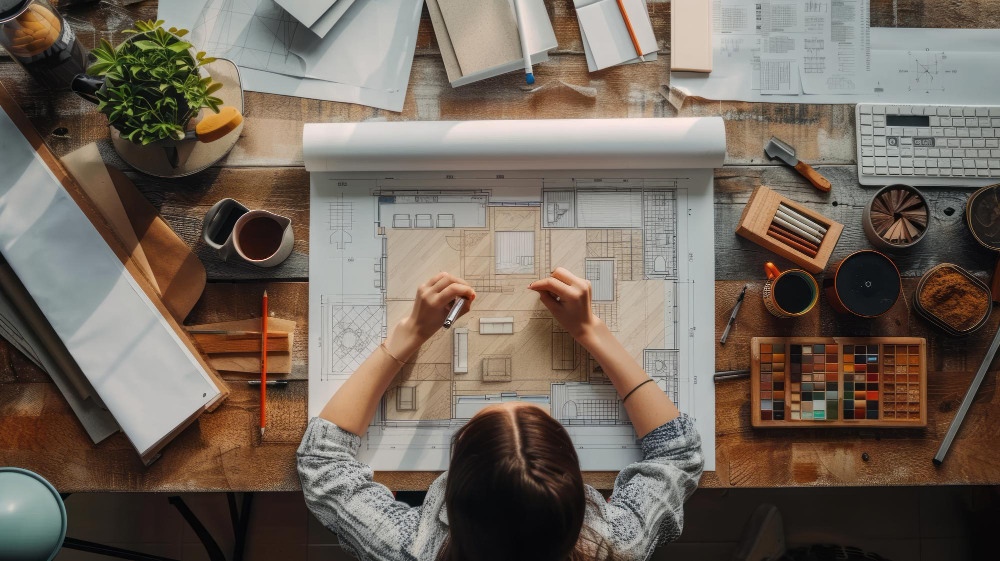
Time management is another problem. Interior design projects often include research, sketches, digital models, sourcing, revisions, and presentations. Without a clear process, students can feel buried under tasks. In this sense, a timeline acts like a map. Without it, the project can quickly lose direction.
Students also struggle with compromise. Sometimes the most creative idea is not the one the client chooses. That can be disappointing. Still, it teaches maturity. Design is not a solo performance. It is a shared process with practical goals.
Finally, many students face self-doubt. Their first real client interaction may feel intimidating. They may worry about sounding inexperienced or making mistakes. That fear is natural. However, growth often begins in uncomfortable situations. Every meeting, revision, and presentation adds another layer of confidence.
Conclusion
Interior design education becomes much stronger when it includes the business reality of client-based projects. These projects teach students far more than style and visual taste. They teach listening, flexibility, budgeting, communication, and responsibility. They also show that design is not just about making spaces look beautiful. It is about making them useful, meaningful, and suited to real people. When students learn this early, they leave school with more than creative ideas. They leave with practical skills and a clearer sense of what the profession truly demands.
Also Read: Common Mistakes in Private Home Design That Often Show Up Too Late
FAQs – Interior Design Education
1. Why are client based projects important in interior design education?
They help students apply classroom knowledge to real situations. Students learn how to work with real needs, budgets, and expectations.
2. What business skills should interior design students learn?
Students should understand budgeting, project timelines, client communication, and professional presentations.
3. How do client projects prepare students for real work?
They expose students to realistic design challenges, feedback, and revisions which are common in professional projects.
4. Do design limitations reduce creativity?
No. Limitations like budget or space often encourage smarter and more innovative design solutions.
5. What is the biggest challenge students face in client based design projects?
Many students struggle with communication, time management, and accepting revisions from clients.
Author & Expert Review
Written By:  Gaurav Mishra | Civil Engineer & Content Writer
| Credentials: B.E. (Mahavir Swami College, Surat), Registered with Bhagwan Mahavir University (BMU). Experience: Civil Engineer with 5+ years of content writing experience, currently writing impactful articles for Gharpedia, part of SDCPL. Expertise: Specializes in writing well-researched content on residential construction, construction materials, design planning, on-site practices, and safety, blending technical accuracy with everyday clarity. Find him on: LinkedIn |
Verified By Expert:  Farhan Shaikh – Senior Manager – Architect, SDCPL | Associate Member – IIA
This article has been reviewed for architectural and interior design accuracy by Farhan Shaikh, Senior Manager – Architect at Sthapati Designers & Consultants Pvt. Ltd. As the lead for all architectural and interior projects at SDCPL and an Associate Member of the Indian Institute of Architects (IIA), he brings hands-on experience in architectural planning, interior design, project coordination, and sustainable strategies. His review ensures the content reflects practical design considerations, industry best practices, and real-world applicability across both architecture and interior spaces.
Find him on : Linkedin