Table of Contents
Quick Summary
- Kitchen Window Blinds are important furnishing elements that influence daily comfort, light balance, privacy, and overall kitchen aesthetics.
- Well-chosen blinds manage glare, reduce heat, and improve visibility on countertops.
- Moisture-resistant materials like vinyl, polyester, and aluminium are essential for longevity.
- Easy-clean blinds save time and handle grease, steam, and splashes efficiently.
- Roller and zebra blinds offer flexible light control without darkening the space.
- Venetian and vertical blinds work well for durability and large openings.
- Honeycomb blinds add insulation, helping regulate kitchen temperatures.
- Style matters: modern, traditional, minimalist, or colourful kitchens need matching designs.
- Cordless or motorized options improve safety, hygiene, and convenience.
- Accurate measurement, proper installation, and regular maintenance ensure long-term performance.
Kitchen window blinds on Kitchen windows are often overlooked in home décor. Still, they’re one of the most functional and visible furnishing elements in your home. Whether you’re cooking breakfast, washing dishes, or simply enjoying your morning coffee, your kitchen window blinds shape both the ambiance and the practicality of the room. The best window treatment can transform your kitchen from an ordinary to an exceptional space in your home.
Many homeowners struggle with kitchen window challenges: harsh afternoon sunlight creating glare on countertops, steam and moisture from cooking damaging blinds, or simply finding blinds that complement a modern kitchen design.
This is exactly where the right choice in kitchen blinds comes in focus. Quality kitchen blinds aren’t just about aesthetic. These blinds are an investment in functionality, durability, and the overall enjoyment of your space.
In this contemporary guide, we’ll explore all info you need to know about choosing kitchen window blinds: the different types available, key features to prioritize, how to match blinds to your kitchen style, and practical tips for maintenance and installation. By the end, you’ll have the knowledge to select blinds that perfectly suit your kitchen’s needs.
Why Kitchen Blinds are Essential?
1. Light Control
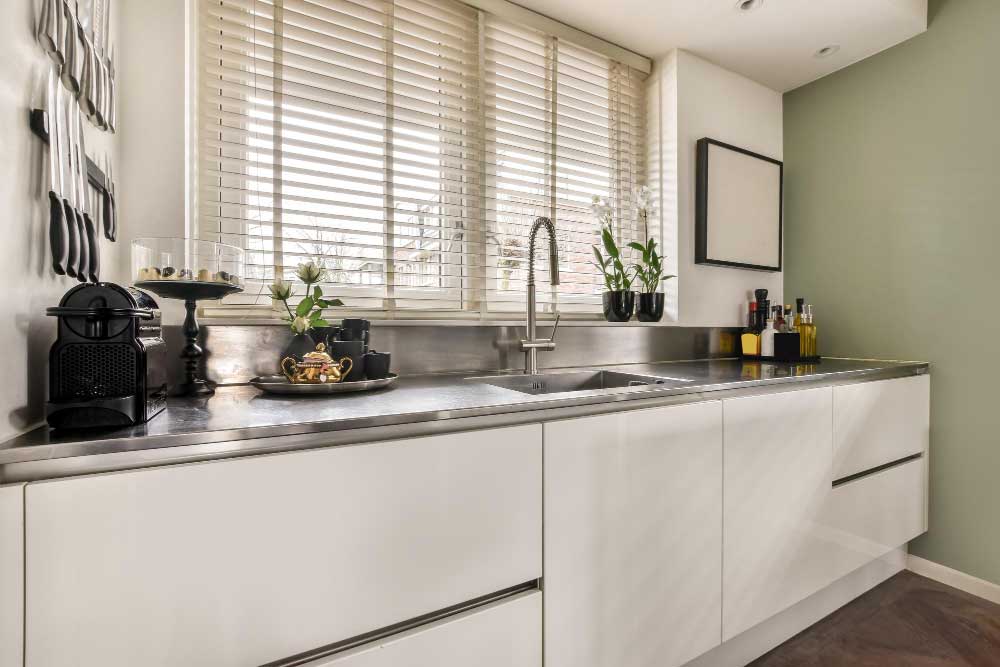
Kitchens need thoughtful light management. Unlike living rooms where you might want dramatic natural light, a balanced illumination is a necessity in a kitchen. Harsh midday sun often induces uncomfortable glare on your stove. It creates unwanted heat during cooking, and make it difficult to see what you’re preparing on the counter.
The right blinds give you precise control over how much light enters your kitchen at different times of day.
Roller blinds and zebra blinds (which feature alternating sheer and solid strips) are particularly effective for kitchens because they allow you to adjust light gradually. You can have partial coverage that lets in gentle morning light while blocking the intense afternoon sun, all without closing the blinds completely.
2. Moisture Resistance
Kitchens are steamy environments. Whether you’re boiling pasta, running the dishwasher, or taking a hot shower nearby, kitchens generate significant moisture and steam. Standard fabrics deteriorate quickly under these conditions—they absorb moisture, develop mould or mildew, and eventually fail.
Kitchen-appropriate blinds are made from moisture-resistant materials like vinyl, polyester, or specially treated fabrics. These materials don’t absorb water, won’t warp or swell, and resist the humid conditions that are unavoidable in any kitchen. This durability means your investment lasts longer and maintains its appearance despite constant exposure to steam and humidity.
3. Easy Maintenance
Kitchens are working spaces. Cooking involves splashes, splatters, and inevitable grease particles that can accumulate on your window treatments. Fabric curtains in a kitchen are impractical—they’d require constant washing and never quite look clean. Blinds, by contrast, can be wiped down with a damp cloth or hose, making maintenance quick and easy.
Modern kitchen blinds can be cleaned in minutes. A simple wipe with a slightly damp microfiber cloth can remove dust and light grease efficiently. For deeper cleaning, many blinds are wipeable or even machine-washable, ensuring they stay looking fresh despite regular kitchen activity.
4. Privacy without Darkness
Kitchens are often at the front of homes, facing neighbourhood streets or shared gardens. You want privacy – especially during meal times or when you’re in pyjamas- but you don’t want to sacrifice natural light and the connection to the outside world.
Adjustable blinds solve this perfectly. You can open slats to maintain views and light while preventing people from seeing directly into your kitchen. Zebra blinds are especially effective for this because you can position the sheer and solid sections to control both light and privacy independently.
5. Design Integration
Your kitchen is one of the most-used rooms in your home. It is a common instance that visitors naturally gravitate there. The right blinds contribute significantly to your kitchen’s overall aesthetic. No matter if your kitchen is ultra-modern with sleek minimalist lines, warmly traditional with farmhouse charm, or vibrant and colourful, window blinds are a visible design element that should complement your style.
Well-chosen blinds can tie together color schemes, echo materials used elsewhere in the kitchen, and either create a statement or blend seamlessly into the background—whatever works best for your design vision.
Types of Kitchen Blinds
1. Roller Blinds
Roller blinds are the modern workhorse of kitchen window treatment. They consist of a single panel of fabric that rolls up into a compact cylinder at the top of the window, operated by either a pull chain or motorized control.
Why They Work for Kitchens:
- Extremely easy to clean: just wipe or even hose down the fabric
- Sleek, contemporary look that suits modern kitchens
- Excellent light control options (blackout, light-filtering, or sheer)
- These blinds are made with moisture-resistant materials like polyester or vinyl
- Cordless options are available, which are safer and cleaner-looking
- Smooth operation: moving parts that could jam with dust or grease
Roller blinds are particularly popular in contemporary kitchens where minimalism and functionality are the priorities. They occupy minimal space when fully rolled up. These blinds provide complete coverage when pulled down.
2. Venetian Blinds
Venetian blinds feature horizontal slats (traditionally made of aluminium or wood) suspended by fabric or cord tapes. You adjust the angle of the slats using a wand or cord, providing precise control over light and privacy.
Why They Work for Kitchens:
- Exceptional light control: you can angle slats to direct light where you want it
- Easy to clean slats with a quick wipe
- Available in moisture-resistant aluminium or synthetic materials
- Classic style that works in both traditional and contemporary kitchens
- More affordable than many other blind options
- Durable: metal slats withstand kitchen conditions well
Aluminium Venetian blinds are particularly practical for kitchens because the slats genuinely shed water and moisture. They’re commonly seen in commercial kitchens for exactly this reason—they’re virtually indestructible in wet environments.
3. Vertical Blinds
Vertical blinds consist of vertical slats suspended from a top track, typically wider than horizontal blinds and commonly used for sliding glass doors or very large windows.
Why They Work for Kitchens:
- Excellent for wide windows or sliding doors that open onto patios
- Space-efficient—they don’t reduce the usable space around windows
- Easy to stack to one or both sides
- Simple cleaning—run a cloth down each slat
- Available in moisture-resistant materials
- Allow flexibility for furniture placement
Vertical blinds work particularly well in kitchens with sliding doors that lead to patios or gardens, as they can be fully retracted to create complete visual access while maintaining thermal efficiency.
4. Honeycomb or Cellular Blinds
Honeycomb blinds feature fabric formed into cellular pockets (single or double cell), providing a distinctive modern appearance while offering excellent insulation.
Why They Work for Kitchens:
- Superior thermal insulation—the air pockets trap heat, reducing energy costs
- Soft, elegant appearance that suits contemporary and transitional kitchens
- Available in moisture-resistant materials
- Good light filtering options
- Cordless varieties are available for safety
- Quieter operation than hard blinds
The main consideration with honeycomb blinds in kitchens is ensuring they’re moisture-resistant (avoiding traditional fabric versions). When specified correctly, they provide excellent energy efficiency for kitchens with large windows.
5. Roman Blinds
Roman blinds fold into horizontal pleats when raised, creating an elegant, tailored appearance. They’re essentially a soft fabric shade that stacks neatly at the top of the window.
Why They Work for Kitchens:
- Sophisticated, finished appearance
- Good for medium to small windows
- Available in moisture-resistant fabrics
- Excellent light-blocking options
- Create a custom, high-end look
- Can be coordinated with kitchen fabrics and colours
Roman blinds work best in kitchens where you want a more formal, designed look—perhaps in traditional kitchens or open-concept spaces where the window treatment is visible from the dining or living area.
6. Zebra Blinds (Day-and-Night Blinds)
Zebra blinds feature alternating bands of solid fabric and sheer fabric, creating a unique “striped” appearance. As the blind moves, the solid and sheer sections align, allowing you to transition from complete transparency to full coverage.
Why They Work for Kitchens:
- Exceptional versatility—continuous light control from full light to complete darkness
- Modern, stylish appearance of the blinds suit contemporary kitchens
- Can achieve privacy while maintaining light by aligning sheer sections
- Easy to clean—wipe the fabric bands with a damp cloth
- Available in moisture-resistant materials
- Cordless options available
- Provides insulation benefits similar to cellular blinds
Zebra blinds are increasingly popular in kitchen designs because they offer the best of both worlds: the clean aesthetic of roller blinds combined with the light-control versatility of adjustable options. They’re particularly effective in kitchens where light requirements change throughout the day.
Key Features to Look in Kitchen Blinds
1. Moisture-Resistant Materials
This is a non-negotiable factor for kitchen blinds. Look for:
- Vinyl or PVC: Impervious to moisture, and won’t absorb water
- Polyester with water-resistant coating: Maintains softness while resisting moisture
- Aluminium or metal components: Won’t rust or corrode in humid environments
- Avoid: Natural wood (unless specifically treated) and untreated natural fabrics, which will warp and deteriorate
2. Cordless or Motorised Options
Modern kitchens increasingly favour cordless or motorized blinds for several reasons:
- Safety: Dangling cords are a hazard around children and pets
- Cleanliness: No cords mean fewer places for dust and grease to accumulate
- Aesthetics: Motorized blinds with remote control or app operation feel contemporary and convenient
- Quiet operation: Motorized blinds operate smoothly without mechanical noise
3. Light Filtering vs. Blackout
Consider what you actually need:
- Light-filtering: Allows soft, diffused light while maintaining privacy. Ideal for kitchens where you want natural light while cooking
- Blackout: Blocks virtually all light. Less common in kitchens but useful if your kitchen has exposure to late afternoon or sunset light that creates heat and glare
Most kitchen blinds should offer light-filtering options. Complete blackout is rarely necessary unless you cook at night or want to minimize light for energy savings.
4. Easy-Clean Slats and Fabrics
Look for:
- Wipeable Surfaces: Can be cleaned with a damp cloth
- Machine-Washable Options: Fabric panels that can be removed and washed is a better option
- Slat Design: Smooth blinds and flat slats without crevices are better. crevices are the places where grease accumulates
- Anti-Stain Treatments: It is an optional feature, but it’s useful in kitchens, which is prone to splatters.
5. Durable Hardware
Kitchens see heavy use. Quality blinds have:
- Sturdy Mounting Brackets: These brackets will not loosen or bend with regular operation
- Smooth Mechanical Operation: Blinds which are easy to draw, roll, or can be tilted smoothly without sticking is a better choice.
- Quality Materials: Stainless steel or coated metal components that won’t rust is a smart choice.
- Reliable Mechanisms: This is a friendly feature and for it the blinds will operate smoothly for years without requiring adjustment
6. Thermal Insulation
Kitchen windows are often significant sources of heat loss or unwanted heat gain:
- Cellular Blinds: Excellent insulation through air-filled pockets
- Thick Fabrics: Provide some insulation benefit
- Reflective Coatings: Available on some roller blinds to reflect heat
- Consider Orientation: Windows facing east or west benefit more from insulation, which is not that required for than north-facing windows
Matching Blinds to Your Kitchen Style
1. Modern Kitchens
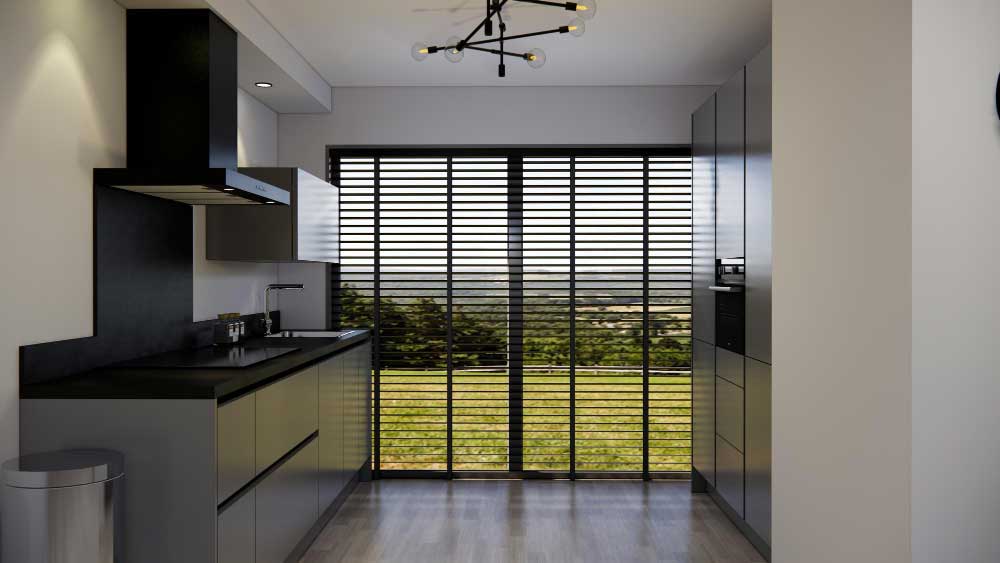
Modern kitchens typically feature clean lines, minimal ornamentation, and a focus on functionality. Window treatments should emphasise on the simplicity and sleek design of the blinds to accentuate its simplicity.
01. Best Choices:
- Roller blinds in neutral colours (white, grey, black, or soft beige)
- Motorized or cordless options for a high-tech appearance
- Minimalist profiles with hidden mechanisms
- Zebra blinds for a subtle patterned effect
02. Colors and Materials:
- White or off-white fabric; it helps to create a clean canvas
- Graphite grey for subtle sophistication
- Matte finishes rather than shiny
- Consider the kitchen’s dominant color palette—blinds should either match or provide subtle contrast
2. Traditional or Farmhouse Kitchens
Traditional kitchens embrace warmth, classic details, and sometimes a touch of ornamentation. Window treatments of kitchen blinds should feel established and comfortable for the eyes.
01. Best Choices:
- Roman blinds in natural or warm-toned fabrics
- Wooden venetian blinds or faux-wood options
- Roman shades with subtle patterns or textures
- You may consider pairing with complementary curtains for a layered look
02. Colours and Materials:
- Warm whites, creams, or soft yellows
- Natural textures or subtle patterns (checks, stripes, or small florals)
- Linen-look fabrics (though ensure moisture-resistant)
- Consider architectural details of your kitchen—cornices, crown moulding, or cabinetry styles
3. Minimalist Kitchens
Minimalist design takes the “less is more” philosophy to its logical conclusion. Window treatments should be almost invisible. The invisible feature renders proper function of the blinds, but do not create visual clutter.
01. Best choices:
- Roller blinds in monochromatic colours matching walls or trim
- Motorized options that disappear when raised
- Zebra blinds for subtle texture without pattern
- White or neutral tones that blend seamlessly
02. Practical Considerations:
- Install blinds within the window frame rather than outside. It creates cleaner lines.
- You may choose between cordless and motorized options exclusively
- Avoid patterns or textures
- Focus on functionality and clean operation
4. Bright and Colourful Kitchens
Some kitchens embrace color and personality. Window treatments can be statement pieces or subtle complements; however, it depends on your design direction.
01. Best Choices:
- Roller blinds in colours matching your kitchen’s palette
- Patterned roller blinds or roman shades
- Zebra blinds in trendy colours or subtle patterns
- These Options to mix and match or coordinate with kitchen textiles
02. Colours and Materials:
- Match accent colours from kitchen cabinetry, splashbacks, or appliances
- Consider bold, saturated colours for statement impact
- Softer pastels offer subtle color shades, but these blinds do not create any overwhelming effect
- Test samples in your kitchen’s actual light. It helps ensuring colours coordinate
5. Small Kitchens
Space efficiency is critical in small kitchens. Window treatments should maximize available space without visual clutter.
01. Best Choices:
- Roller blinds can fully retract into compact cylinders
- Vertical blinds, which can stack completely to sides
- Cordless options that don’t need operating space
- Light colours to visually expand the space
02. Practical Considerations:
- Avoid bulky roman shades or heavy drapes
- Choose blinds, which can retract fully. It allows the window space to be used for decoration or light
- You can Keep colours light and space-expanding
- Also, you may consider motorised options if wall space is limited
Installation & Measurement Tips
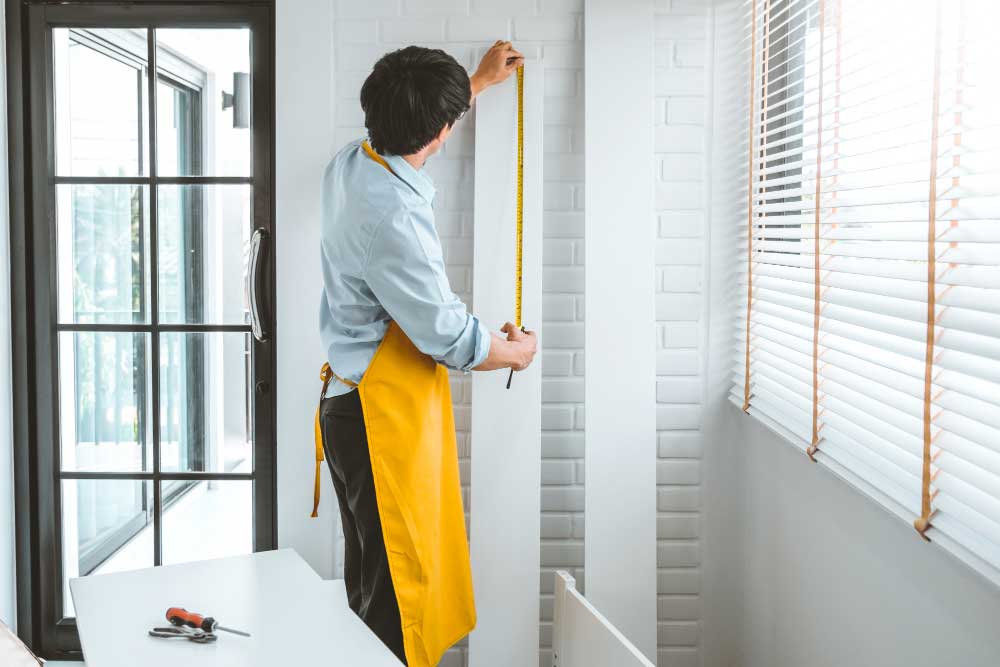
Getting the Right Measurements
Accurate measurements are essential for blinds that fit properly and operate smoothly:
- Measure the Width at three points (top, middle, bottom) to account for any window frame inconsistency if any. Always use the smallest measurement for inside mount, the largest for outside mount.
- Measure the Height at three points (left, middle, right). Again, use the smallest for inside mount.
- Inside Mount vs. Outside Mount:
- Inside mount: Blinds fit within the window frame, creating a clean, custom look
- Outside mount: Blinds cover the window frame and wall, providing better light blocking and a bolder statement
- Consider Obstacles: Look for handles, locks, or other hardware that might interfere with blind operation.
- Use a Metal Measuring Tape: Cloth measuring tapes can stretch, leading to inaccurate measurements.
- Document Everything: Write down measurements multiple times to ensure accuracy.
Professional Installation vs. DIY
1. Professional installation:
- Guarantees proper fit and operation
- Ensures brackets are level and securely mounted
- Often included in the purchase price with quality blinds
- Recommended for motorized options or complex installations
2. DIY installation:
- Most roller blinds can be installed in 15-30 minutes with basic tools
- Requires a level, drill, and appropriate wall anchors
- Save installation costs if you’re comfortable with basic home improvement
- Recommended for non-motorized options
3. Budget Considerations
Kitchen blinds range widely in price:
- Budget options: $50-150/ window
- Mid-Range: $150-400/ window
- Premium: $400+/window
Factors affecting price include:
- Custom Sizing: Larger or non-standard windows cost more
- Motorisation: Adds $100-300+ per window
- Premium Materials: Natural fabrics or specialty finishes cost more than basic polyester
- Warranty & Service: Extended warranties and professional service add to cost
For kitchens, mid-range options typically offer the best value—balancing quality, durability, and cost.
Maintenance & Care

1. Regular Dusting
Dust accumulates on blinds weekly, especially in kitchens with cooking activity:
- Use a microfiber cloth or soft brush to wipe slats or fabric weekly
- Dust in the direction of the slats to avoid pushing particles into crevices
- For roller blinds, dust both sides of the fabric by gently wiping
2. Cleaning Grease and Food Splatters
Kitchen-Specific Cleaning:
- Use a damp microfiber cloth, rinsed with warm water for light grease removal
- For stubborn splatters, add a tiny drop of mild dish soap to the cloth
- Wring out the cloth well so it’s damp, not wet – excess water can damage some materials
- Wipe individual slats or carefully wipe fabric sections
- Dry with a soft cloth immediately. It will prevent the formation of water spots
3. Deep Cleaning Methods
Depending on Blind Type:
- Roller Blinds: Some are machine-washable if removable. Check manufacturer instructions. Otherwise, spray with a fabric cleaner and allow to air dry.
- Venetian Blinds: Soak in a bathtub with warm water and mild dish soap, scrub gently, rinse thoroughly, and air dry standing upright.
- Fabric Blinds: Use a handheld steamer or carefully apply fabric cleaner and allow to air dry completely.
Avoid: Harsh chemicals, abrasive cloths, or high-pressure washing, which can damage materials or finishes.
4. Longevity Tips
Tips to Extend your blinds’ lifespan:
- Clean Regularly: Practice Cleaning to prevent buildup that wears materials
- Operate Gently: Don’t force stuck blinds or yank cords
- Keep Away from Direct Water Spray: You can hose them down on the frame, not directly into mechanisms.
- Lubricate: Lubrication for mechanical parts occasionally with silicone spray. It will remove the stiffness.
- Check & Tighten: Check mounting brackets annually and tighten if needed.
- Control Exposure to Temperature Flux: Avoid exposing to extreme temperature fluctuations if possible
Common Kitchen Window Scenarios and Solutions
1. Large Windows or Sliding Glass Doors
01. Challenge:
Large openings need blinds that provide both function and clean aesthetics.
02. Solutions:
- Vertical blinds that stack completely to one side
- Motorized roller blinds that retract fully
- Bifold or accordion blinds for sliding doors
- Consider motorization for easier operation of wide spans
2. Windows Above Sinks
01. Challenge:
These windows are close to water sources and constant activity.
02. Solutions:
- Motorised or cordless blinds to keep away from splashing
- Roller blinds specifically chosen for moisture resistance
- Venetian blinds with aluminium slats that shed water easily
- Consider inside-mount installation to keep blinds away from splashing
- Lightweight fabric that dries quickly if it does get wet
3. Corner Windows or Angled Ceilings
01. Challenge:
Non-standard window shapes need specialised solutions.
02. Solutions:
- Custom roller blinds that can be shaped to fit angles
- Individual roller blinds for each window section
- Motorized options for hard-to-reach windows
- Consult with specialists for complex shapes
4. Open-Concept Kitchens
01. Challenge:
Kitchens, which are visible from living or dining areas need treatments that look good from multiple angles.
02. Solutions:
- High-quality, attractive blinds can coordinate with adjacent spaces
- Consider motorised options for flexibility throughout the day
- Coordinating blinds across multiple windows for a cohesive look
- Roman blinds or quality roller blinds that appear finished and designed
- Neutral or sophisticated colours that work in multiple spaces
Conclusion
If you want to choose the right kitchen blinds, it involves balancing practical requirements like moisture resistance, easy cleaning, durability with aesthetic preferences to make your space enjoyable. Your kitchen deserves window treatments that work as hard as you do.
The type of blinds you choose should reflect how you actually use your kitchen. Modern and busy kitchens benefit from roller blinds or motorised options as the variant maximise efficiency. Traditional kitchens come alive with the tailored elegance of Roman blinds. Contemporary kitchens perfectly showcase the versatile light control of zebra blinds.
Kitchens that demand both aesthetic appeal and practical performance, kitchen blinds like roller or zebra options are the best options here. The selection provides the perfect balance of light control, easy maintenance, and modern design. Explore our kitchen blinds collection to find the ideal solution for your space. No matter you need precise light control, complete privacy, or simply a fresh aesthetic, the right blinds will enhance your kitchen for years to come.
Ready to upgrade your kitchen windows? It’s time to measure your space, consider your style preferences, and explore options that match your vision. Your kitchen—and your mornings – will thank you.
Also Read: Window Curtains vs Blinds vs Shades: Make the Correct Choice
FAQs on Kitchen Window Blinds
1. What Are the Best Blinds for Kitchen Windows?
Roller, zebra, and aluminium Venetian blinds are best due to moisture resistance, easy cleaning, and flexible light control.
2. Are Fabric Blinds Suitable for Kitchens?
Only moisture-resistant or coated fabrics work well; untreated fabrics absorb steam and grease and develop stains quickly.
3. Which Kitchen Blinds are Easiest to Clean?
Vinyl roller blinds and aluminium Venetian blinds are easiest, requiring only a quick wipe with a damp cloth.
4. Do Kitchen Blinds Help Reduce Heat and Glare?
Yes, quality blinds control sunlight, reduce glare on countertops, and limit excess heat during peak daylight hours.
5. Should Kitchen Blinds be Inside – or Outside-Mounted?
Inside mounts suit modern kitchens for clean lines, while outside mounts block light with better efficiency and suit uneven window frames.
Author & Expert Review
Written By:  Swagata Chatterjee | SEO Content Writer & Editor
| Credentials: MA (Calcutta University, Kolkata). Experience: Content Writer and Editor with 19 years’ experience of business content writing and editing, currently writing SEO-optimized, readers’-friendly articles for Gharpedia, part of SDCPL. Expertise: Specializes in writing well-researched content on lifestyle, home décor, , lifestyle, safety, home appliances and gadgets, on-site SEO Optimization, blending technical accuracy with general reader’s ability to learn the topics. Find her on : Linkedin |
Verified By Expert:  Farhan Sheikh – Senior Manager – Architect, SDCPL | Associate Member – IIA
This article has been reviewed for architectural and interior design accuracy by Farhan Shaikh, Senior Manager – Architect at Sthapati Designers & Consultants Pvt. Ltd. As the lead for all architectural and interior projects at SDCPL and an Associate Member of the Indian Institute of Architects (IIA), he brings hands-on experience in architectural planning, interior design, project coordination, and sustainable strategies. His review ensures the content reflects practical design considerations, industry best practices, and real-world applicability across both architecture and interior spaces.
Find him on : Linkedin