Table of Contents
Quick Summary
- Return air pathways in HVAC systems can make Rooms many a times feel uncomfortable even when the supply vent is working properly.
- The real issue may be poor return airflow rather than insufficient supply air.
- HVAC systems must circulate air in a complete loop. Air must enter the room, move through it, and return to the system to maintain balanced temperatures.
- If return pathways get blocked, undersized, or missing, rooms can develop pressure imbalances that affect comfort and airflow.
- Closed doors often worsen the issue: they prevent air from returning through hallways.
- Weak airflow can make rooms feel stuffy, stale, too hot, or too cold.
- Fixing return air pathways often restores balanced temperatures. Also, it improves overall HVAC performance.
Return air pathways in HVAC systems are critical factors in room’s comfort level. The room could have a working supply vent and still not feel right. It’s at this point that many people mistakenly assume the room isn’t receiving enough air and fail to consider that the room lacks adequate means for the air to leave.
In property management, facility management, and building ownership, this mistake leads to complaints about the building’s comfort level and unnecessary service calls. Complaints about inconsistent room temperatures are sometimes attributed to equipment age, thermostat settings, and inadequate airflow at the register, but the return air is sometimes the culprit. Heating and cooling equipment must not only deliver air but also circulate it. When the return air is restricted, blocked, or improperly designed, some rooms can become pressure pockets that resist comfortable temperatures, no matter how hard the equipment works.
Room Temperature Problems Often Circulate

1. Uneven Rooms often Signal Circulation Problems
Sometimes one bedroom stays warmer than the rest of the house in summer. Or a back office feels colder every winter morning, the first instinct is usually to question the supply side. Owners check the vent, adjust the thermostat, or assume the equipment is undersized wondering why some rooms are hotter or colder HVAC. Those steps are understandable, but they miss an important reality: conditioned air has to complete a full loop through the room and back to the system.
That is why contractors handling work such as Phoenix AC Repair often look beyond the visible supply register when rooms stay persistently off target. A room can receive conditioned air and still perform poorly if return pathways are weak, blocked, or absent. The feeling of comfort depends on movement through the space, not just air arriving at one grille. When that circulation loop breaks down, room temperatures begin to drift.
2. Return Air Keeps the System Balanced
An HVAC system is intended to circulate a particular volume of air within a house. There are supply ducts that deliver conditioned air to various rooms, and return ducts that return the air to the air handler. Without an equally effective supply side, an HVAC system becomes imbalanced. Air can easily enter a room, but it cannot easily leave.
HVAC air circulation problems in home is not a minor aspect of an HVAC system. A return path provides necessary pressure, airflow, and stability within a house. Without a return path, particular rooms may start behaving differently from others. They may feel stuffy, stale, or even slow to cool or warm. Although the system may still be running, it is no longer circulating air within that particular room as intended.
3. Closed Doors can Change Room Comfort
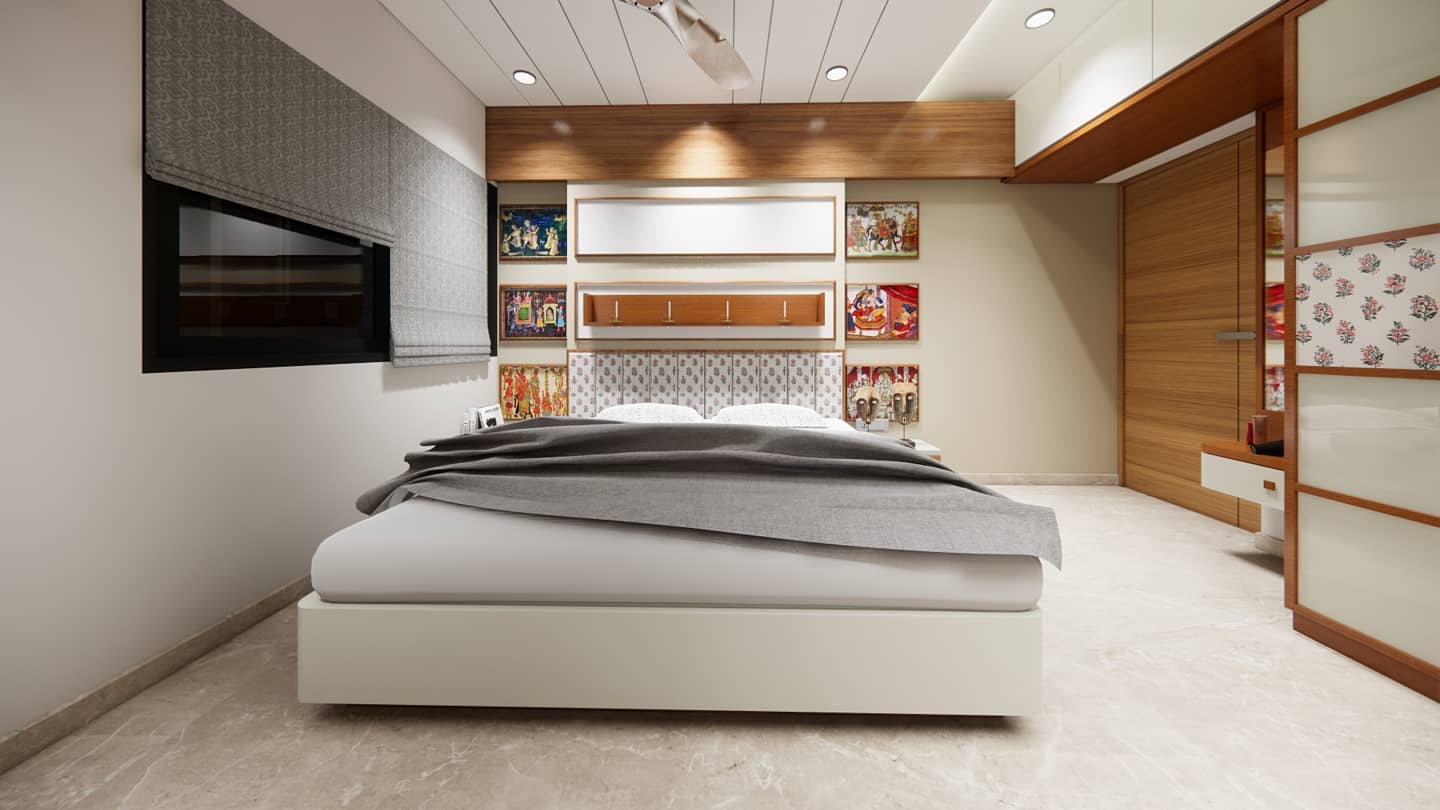
One of the simplest examples of return air problems comes from a bedroom or an office door. It is not uncommon for a home to have a room with a supply of air but no return. The return air will often come back through the hallway when the door is open. The problem comes when the door is closed. The room’s pressure and comfort level change.
This is an important consideration because many comfort problems stem from the actual use of the home. The bedroom is closed at night. The home office is closed during the day. The guest bedroom, the nursery, the bathroom—these are places where the amount of relief for the return of the air is lessened when the door swings shut. The return air problem is something an HVAC contractor will investigate. The problem is not necessarily the amount of air the room receives. It is the amount of air the room can return or a return air vent problems in HVAC.
4. Pressure Imbalances Distort Temperature Control
This means that the return pathways are not strong enough. As a result, the rooms become either positively or negatively pressurized compared to the rest of the home. Pressurization occurs when the supply of air enters the system faster than it leaves. Pressurization becomes negative when the return pressure is stronger elsewhere. As a result, the air is pulled away from the adjacent spaces. This is not always easy to identify from a technical standpoint. It is just the feeling of having rooms that never match the rest of the home.
Pressurization imbalances also affect the rate at which the room responds to the thermostat. The system works adequately at the central temperature, but the problem rooms remain out of range. This is because the airflow inside the problem rooms is not circulating creating HVAC airflow imbalance in rooms. The HVAC contractor will identify this, as temperature inconsistencies are a symptom of air balance failure. The problem arises when the room cannot interact normally with the rest of the system.
5. Returns are Often Undersized or Missing
In many older and retrofitted homes, the return-air design was never intended to accommodate today’s home-use patterns. Some homes may have a single central return serving large areas. Others may have returns that are too small to accommodate the amount of supply air that is being provided. Changes to the home, such as additions and relocations of walls and rooms, may highlight design inadequacies.
A change in a guest room to a daily office and a bonus room used as living space may highlight a design weakness that wasn’t as obvious before. This is why the contractor checks the return air path rather than necessarily looking at the supply side as the problem. This is because the room may not have had a viable return design to start with. Or the original design may have had the path changed due to changes in the room and its doors.
6. Stale Rooms Usually Need more than Cooling
These issues may be described in general terms rather than in technical terms. The occupants may say the room feels stuffy, as if the air is trapped, or heavy. They may also say that the air in the room doesn’t move, even when the HVAC equipment is running. Additionally, they may complain that the room smells longer than usual, or that it takes longer to return to normal after the door has been closed for a while.
A contractor should listen to these descriptions because the occupants may be describing a problem with the room’s airflow. Even if the supply side is working well, the lack of a proper return side may be the cause of the problem. Temperature is one factor in this problem, and the contractor should also consider the room’s air quality and responsiveness.
7. Return Pathways affect Supply Performance too
A poor return path does not just affect that particular room. It can also affect how well that side of the system operates. If we are trying to blow more air into a room that cannot relieve that pressure, we may see the airflow in that room decrease or even become unstable. The supply register may seem to be working, but that room may not be benefiting as well as it could because we cannot provide it with proper airflow.
This is one reason why, in hot-and-cold room problems, increasing that side of the system may not always cure the problem. Increasing that particular side of the system may actually increase that pressure, but without that particular return path, we are missing part of that loop. The contractor checks that particular return path because, as previously stated, both sides of that system are interconnected. A weak return path may continue to be a problem even after changes are made to that branch, balancing, and the thermostat.
Comfort Depends on a Complete Air Loop

For a heating and/or cooling system to operate correctly, air must be able to enter the room, circulate throughout, and return to the system without any unusual resistance. When this is not the case, certain rooms in the home begin to stand out from the others. These rooms are overheated, too cold, stale, or sluggish, even though the rest of the HVAC system is running correctly. How to fix uneven room temperatures in a house? The problem is not necessarily what the HVAC system is doing; it is whether the room is participating in the process correctly. As HVAC expert/company can take necessary actions.
Final Thoughts
For the property manager, the facility manager, or the property owner, the above is the main reason why an HVAC contractor checks the return air pathways. It is not a secondary concern; it is a primary concern for diagnosing why the rooms are not comfortable. The supply vents are important, but the return pathways are often the reason the rooms never seem to settle correctly. Once the return pathways are corrected, the entire home will often feel more balanced, the HVAC system will run more correctly, and temperature issues will be easier to resolve without the need for replacements.
Also Read: 5 Tips for Buying a Good Heating and Cooling System for Your Home!
FAQs on Return Air Pathways in HVAC Systems
1. Why Does One Room Stay Hotter or Colder Than the Rest of the House?
The problem of uneven temperature control often occurs when the room has poor airflow returning to it. Without a proper return path, conditioned air cannot circulate back to the HVAC system.
2. What Happens If Return Air Vents Are Blocked or Undersized?
If there is any blocked or small return vents restrict airflow, it creates a pressure imbalance, and make rooms feel stuffy, warmer, or colder than other areas.
3. Can Closing Bedroom Doors Affect HVAC Airflow?
Yes. When a door is closed in a room without a return vent, air cannot easily return to the system, which can change the pressure and temperature.
4. How Do HVAC Contractors Diagnose Uneven Room Temperatures?
HVAC Contractors inspect supply vents, duct design, airflow balance, and especially return air pathways. The professional inspection helps them to identify restrictions or pressure issues.
5. Can Fixing Return Air Pathways Solve Hot and Cold Room Problems?
In many cases, yes. Improving return airflow restores circulation, balances pressure, and helps maintain consistent temperatures across rooms.
Author & Expert Review
Written By:  Swagata Chatterjee | SEO Content Writer & Editor
| Credentials: MA (Calcutta University, Kolkata). Experience: Content Writer and Editor with 19 years’ experience of business content writing and editing, currently writing SEO-optimized, readers’-friendly articles for Gharpedia, part of SDCPL. Expertise: Specializes in writing well-researched content on lifestyle, home décor, , lifestyle, safety, home appliances and gadgets, on-site SEO Optimization, blending technical accuracy with general reader’s ability to learn the topics. Find her on : Linkedin |
Verified By Expert: Avni Desai Environmental Engineer, SDCPL | M.E. (Environmental Engineering)
This article has been reviewed for environmental, MEP, and building services accuracy by Avni Desai, an Environmental Engineer at Sthapati Designers & Consultants Pvt. Ltd. (SDCPL). With over 8 years of experience in water supply, wastewater management, infrastructure design, and building services, she brings practical expertise in MEP services, sustainable solutions, design planning, and on-site practices. Her professional services include planning and design of water supply systems, sewage and wastewater treatment systems (STP/WTP), drainage, rainwater harvesting, and other sustainable building services. Her review ensures the content aligns with environmental standards, efficient services planning, and real-world applicability.
Find her on: LinkedIn