Table of Contents
Quick Overview
Here is the quick overview on tread and riser dimensions:
- Staircase design mainly relies on tread and riser dimensions for safe and comfortable use.
- Standard Dimensions for Residential: Riser – 150 to 190mm and Tread – 250 to 300mm
- Incorrect size can lead to fall, discomfort, and fatigue especially for elderly and children.
- Code compliance varies regionally but ensures safety and legal approval.
- Staircase design should be such that you need to consider traffic, user age, aesthetics, lighting, and handrails.
- Common mistakes while designing staircase include uneven risers, shallow treads, steep stairs, and slippery finishes.
- Rule of thumb: 2 riser heights + 1 tread depth ≈ 600 to 630 mm for comfortable stair design.
Everyone needs to get from one floor to the next, and if you have multiple levels, you probably do so up and down countless times. Hence, a staircase is a crucial feature of any home or building that facilitates movement, comfort, and safety. One element of staircase design that is essential yet often overlooked in the design process is the sizing of treads and risers. When treads and risers are correctly measured and sized, the structural evolution of each step feels natural and safe. Conversely, when measurements or sizing are poor, it can make the whole staircase uncomfortable to climb, or worse, dangerous. The focus of this guide is to provide safer and more usable stair designs.
Understanding Tread and Riser in Staircase Design
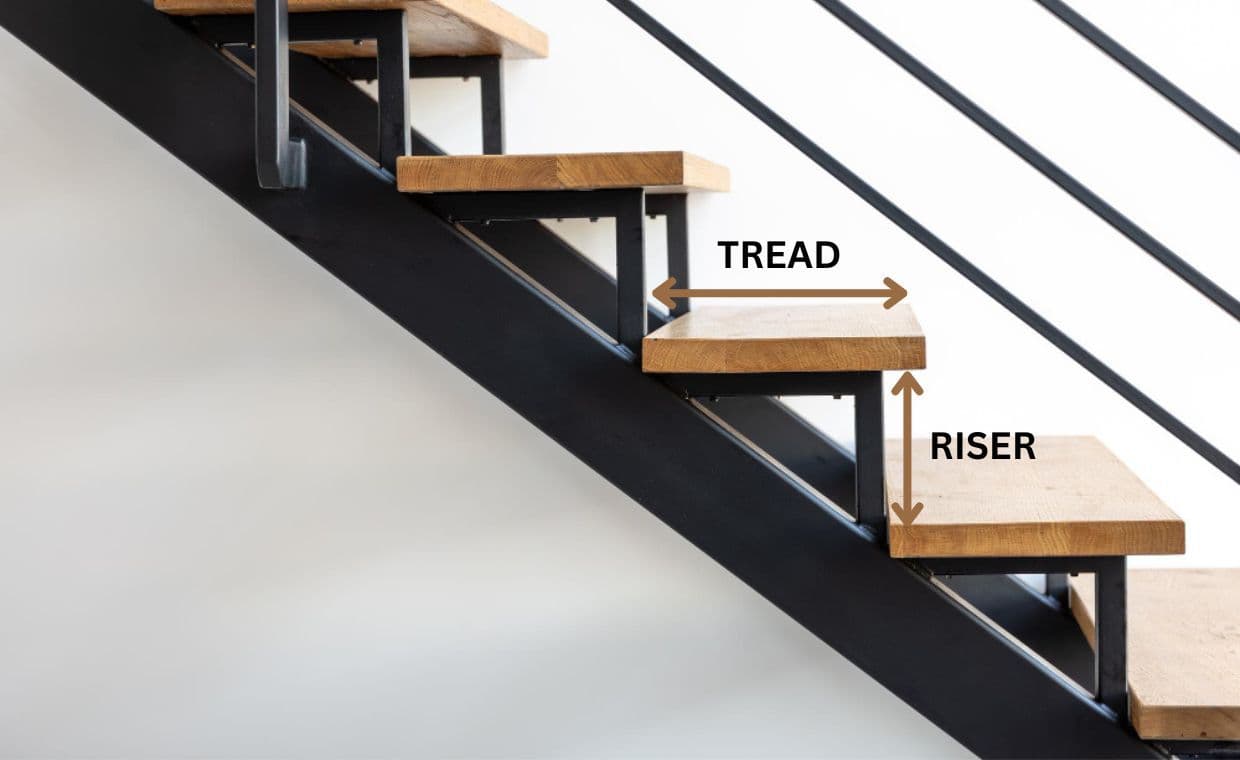
The tread and rise are the basic components of a stair. The tread is the horizontal surface where your foot lands, and the riser is the vertical face that separates one step from the next. Planning the size of the tread and rise properly is fundamental in creating a consistent rhythm while someone is ascending or descending the stairs, as this is a critical element for accessibility and safety. Any discrepancies in tread and riser will influence the user’s rhythm and could cause the user to trip or lose their balance, especially in high-traffic areas.
Importance of Proper Tread and Riser Dimensions
Well-proportioned treads and risers contribute to a smooth walking experience, reducing strain on the knees and ankles. An optimal stair tread and riser size help maintain natural gait, making the staircase easier to use for people of all ages. Whether it’s a small internal staircase in a home or a large flight in a public building, accurate sizing supports user comfort, reduces injury risk, and aligns with building code requirements.
1. Standard Tread and Riser Measurements for Safe Stairs
In most residential settings, the standard size of the riser and tread is carefully calculated for safety. According to the National Building Code Guidelines, a typical riser height ranges between 150 mm and 190 mm, while the tread depth usually falls between 250 mm and 300 mm. For consistency, each riser in a flight must be equal in height. The standard size of treadand riser for residential buildings aims to balance step height and foot placement, ensuring that people of varying heights can use the stairs comfortably.
2. How Incorrect Dimensions Can Lead to Safety Hazards?
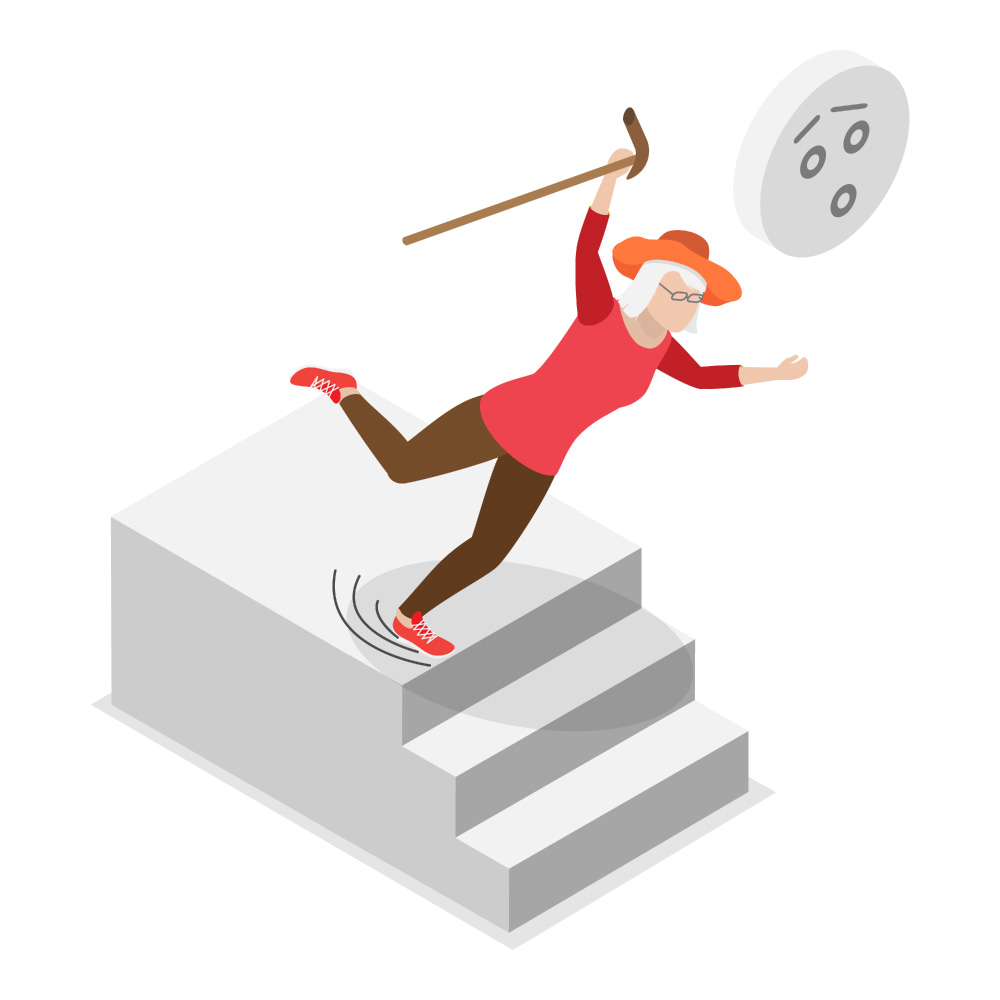
If the tread and riser widths and sizes are inconsistent, then the stairs can be dangerous. A riser that is too high can lead to fatigue in old people, and a tread that is too narrow, often described as “shallow,” can increase the risk of slipping, missing a step, etc. Studies have shown that an irregularity as little as 0.25 inches between adjacent risers can disrupt a person’s step enough to cause a fall.
In commercial settings, measurement errors are detrimental because they may make the steps non-compliant with codes. Consistency is crucial, and even small deviations in the size of the tread and riser between steps can result in the potential for tripping and falling.
3. Design Considerations for Comfortable Staircases
When planning a staircase, it’s important to consider user behaviour, available space, and traffic flow. In areas with heavy usage or children and elderly occupants, lower risers and deeper treads are recommended. Open staircases or floating steps should be designed with particular attention to stair tread size, ensuring that aesthetics do not compromise safety. Adding handrails and non-slip surfaces further improves usability.
If you want to know more about staircase design consideration, you may refer to the following blog:
Key Considerations for Staircase Design You Must Know
4. Building Codes and Regulations for Stair Tread and Riser

Building codes provide detailed specifications on tread and riser size to ensure safe construction practices. These codes vary by region but typically define the maximum and minimum limits for riser height and tread depth. For example, according to the NBC Guidelines, in India, most regulations suggest a riser height not exceeding 190 mm and a tread depth not less than 250 mm. Adhering to these standards ensures safety but and helps with obtaining permits and passing inspections.
5. Common Mistakes to Avoid in Staircase Tread and Riser Construction
One of the common issues in stair construction is incorrect measurements. Not taking the tread and riser measurements correctly can result in you ending up with treads that are too short and risers that have a different height.
There are also cases in which the stairs are too steep or present awkward step-ups to other surfaces. When measuring for tread depth and riser height, measure from the finished floor level. It is easy to choose the wrong materials and specify riser heights without including anti-slip measures, for shiny treads are another example. In an attempt to save space or reduce costs, some homeowners narrow the staircase width.
6. Tips for Safe Stair Design
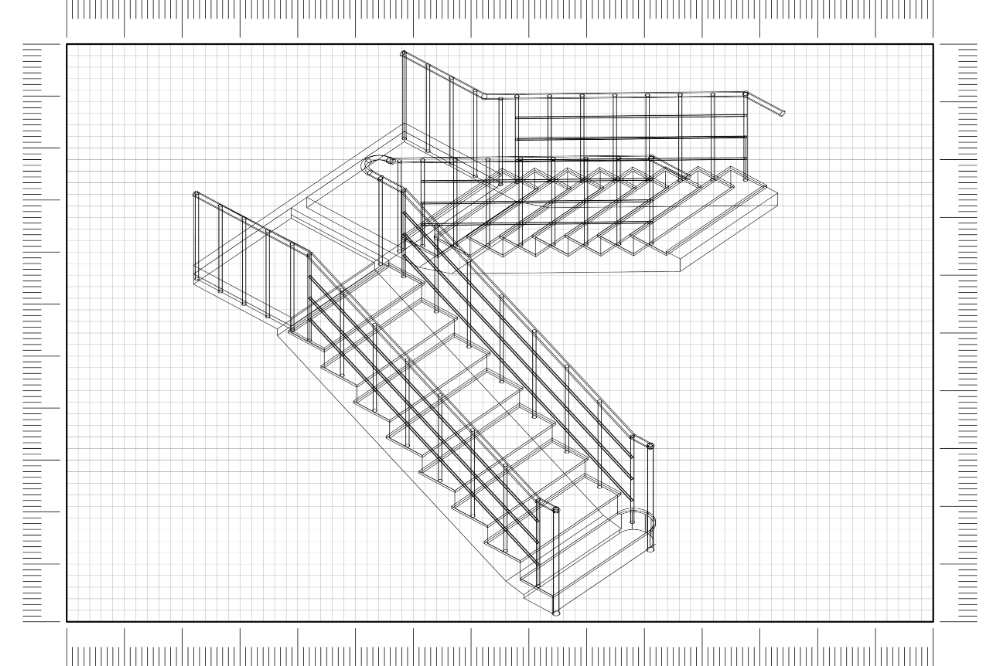
To make functional and safe stairs, the first task is to ascertain how high the total rise is and figure out the number of risers to make an even division. The treads can be calculated after knowing the number of risers. A rule of thumb to use is that 2 riser heights plus 1 tread depth will measure around 600 to 630 mm. Do consider lighting and where railings may go as part of your design process. As a precaution for measuring purposes, it is suggested that you get the final stair tread and riser height checked with an accredited architect or builder and avoid guesswork.
Also Read: Standard Stair Riser Height: Guidelines and Best Practices
FAQs on Tread and Riser Dimensions
1. What is the Ideal Tread and Riser Size for Residential Staircases?
The ideal riser is 150 to 180 mm, and the tread depth is 250 to 300 mm. These dimensions support comfort and safety.
2. How Do Improper Tread and Riser Dimensions Impact Safety?
Uneven or poorly sized treads and risers can cause tripping, fatigue, or missteps, especially in poorly lit or busy areas.
3. Are There Different Tread and Riser Standards for Commercial Buildings?
Yes, commercial buildings often require lower risers and wider treads to accommodate higher traffic and ensure compliance.
4. How Can I Modify an Existing Staircase to Improve Safety?
You can add riser extensions, anti-slip strips or reconfigure the slope. Always consult a professional before making structural changes.
References
Bureau of Indian Standards (1983), SP 7 Group 1, National Building Code of India (1983), New Delhi, BIS.
Cohen, Joseph & LaRue, Cindy & Cohen, H. (2009). Stairway Falls An Ergonomics Analysis of 80 Cases. Professional Safety. 54. Available from: https://www.researchgate.net/publication/254508963_Stairway_Falls_An_Ergonomics_Analysis_of_80_Cases
Author & Expert Review
Written By:  Kinjal Mistry | Civil Engineer & Senior Content Writer
| Credentials: B.E. (Dharmsinh Desai University, Nadiad, Gujarat). Experience: Civil Engineer with 9 years of content writing experience, currently writing impactful articles for Gharpedia, part of SDCPL. Expertise: Specializes in writing well-researched content on home improvement, sustainability, building materials, home interior, DIY, and plumbing technology with everyday clarity. Find him on: LinkedIn |
Verified By Expert:  Ravin Desai – Co Founder – Gharpedia | Co Founder – 1 MNT | Director – SDCPL
This article has been reviewed for technical accuracy by Ravin Desai, Co-Founder of Gharpedia and Director at Sthapati Designers & Consultants Pvt. Ltd. With a B.Tech. in Civil Engineering from VNIT Nagpur and an M.S. in Civil Engineering from Clemson University, USA, and over a decade of international and Indian experience in the construction and design consultancy sector, he ensures all technical content aligns with industry standards and best practices.
Find him on: LinkedIn