Table of Contents
Quick Overview
- Vintage wallpaper patterns are timeless.
- Today they can be digitally produced from historical archives.
- Adding vintage wallpaper patterns in modern rooms casts a spell over the entire room.
- Vintage wallpaper patterns are natural fits for powder rooms and half baths, bedrooms, dining rooms, living rooms, and family rooms.
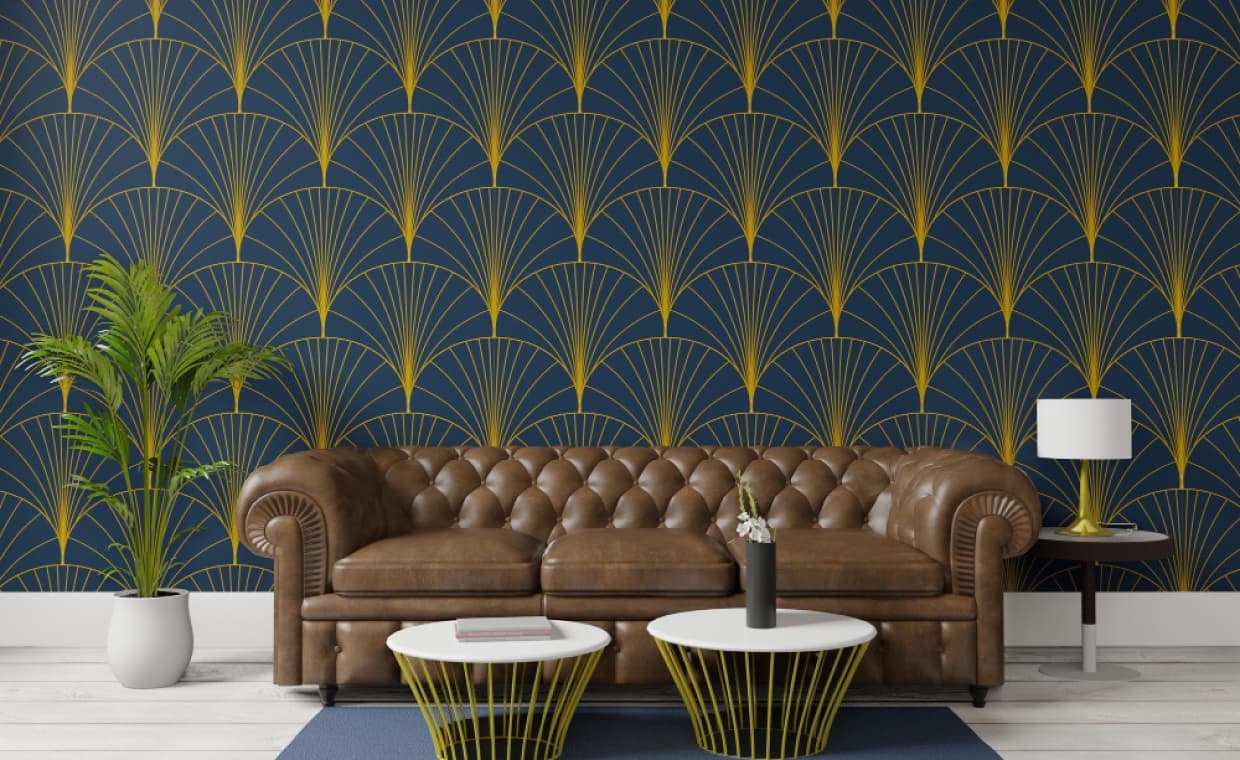
- Applying Art Deco wallpaper behind furniture gives a balanced look of modern and old styles.
- Create a connection between wallpaper and interiors by adding throw pillows, a rug, or a piece of art.
- Opt for textured vintage wallpaper instead of patterned ones.
- Peel-and-stick wallpapers are removable and repositionable.
- Today, companies print their peel-and-stick wallpapers digitally.
- These wallpapers work best on glossy and satin paint finishes.
- Wallpaper installation tips include preparing the wall surface, starting from the most visible corner, and seeking help when needed.
Wallpaper goes in and out of fashion, but vintage patterns are timeless.
Art Deco geometrics from the 1920s, soft trailing florals from the 1930s, bold mid-century abstracts are still visible in contemporary interiors. And it is not just nostalgia driving the trend. There is something about a pattern with eighty or ninety years of history behind it that gives a room a quality you cannot get from painting alone.
The bigger shift, though, is practical. Twenty years ago, if you wanted an authentic vintage wallpaper pattern, you were either hunting through salvage yards for brittle, faded rolls, or settling for a modern interpretation that missed the point of the original design. Today, manufacturers are digitally reproducing patterns from historical archives and printing them on substrates that are washable, durable, and far easier to install than anything available in the 1930s. The old compromise between beauty and practicality is mostly gone.
What has not changed is that using vintage wallpaper well takes some thought. A pattern that looks gorgeous in a product photo can overwhelm a room if you use too much of it or fall flat if you pair it with the wrong furniture. This is less about rules and more about understanding what makes vintage patterns behave differently from contemporary ones.
Vintage Patterns Carry More Visual Weight
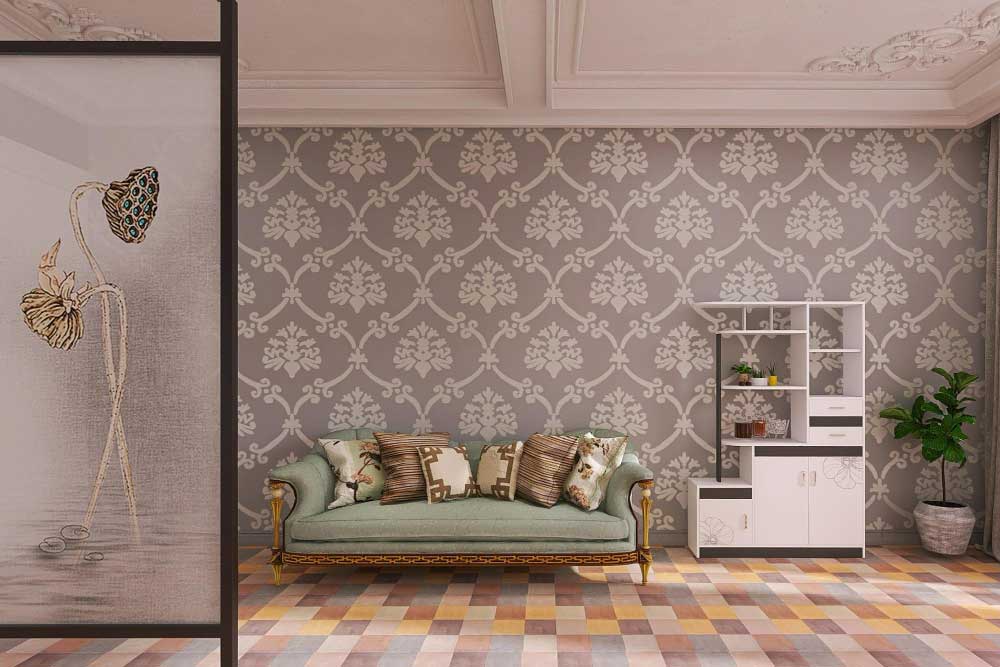
This is the single most useful thing to know before you start shopping. A vintage wallpaper pattern from the 1920s or 1930s was designed for rooms that had crown moldings, picture rails, wainscoting, heavy drapery, and furniture with carved details. Those rooms were already visually busy. The wallpaper was meant to hold its own in that environment.
But if you put that same pattern in a modern room with clean drywall, simple baseboards, and a flat ceiling, and it becomes the loudest thing in the space by a wide margin. That is not a problem – it is actually an opportunity – if planned precisely and wisely.
The practical takeaway: vintage patterns almost always work better on fewer walls rather than more, unless you are choosing a design with a tight repeat and low contrast (a tone-on-tone damask, for example, where the pattern reads more as texture than as a graphic element).
Where Vintage Patterns Make the Most Sense?
Some rooms are natural fits. Others take more work.
1. Powder Rooms and Half Baths
Small rooms with short visits are the places where you can go bold and gaudy. A dramatic Art Deco geometric or a richly colored 1930s floral in a powder room feels like a deliberate design moment. You walk in, you notice it, you walk out. Moreover, these spaces with small square footage also means you are buying two or three rolls instead of twelve, which makes it easier to justify a premium pattern.
2. Bedrooms
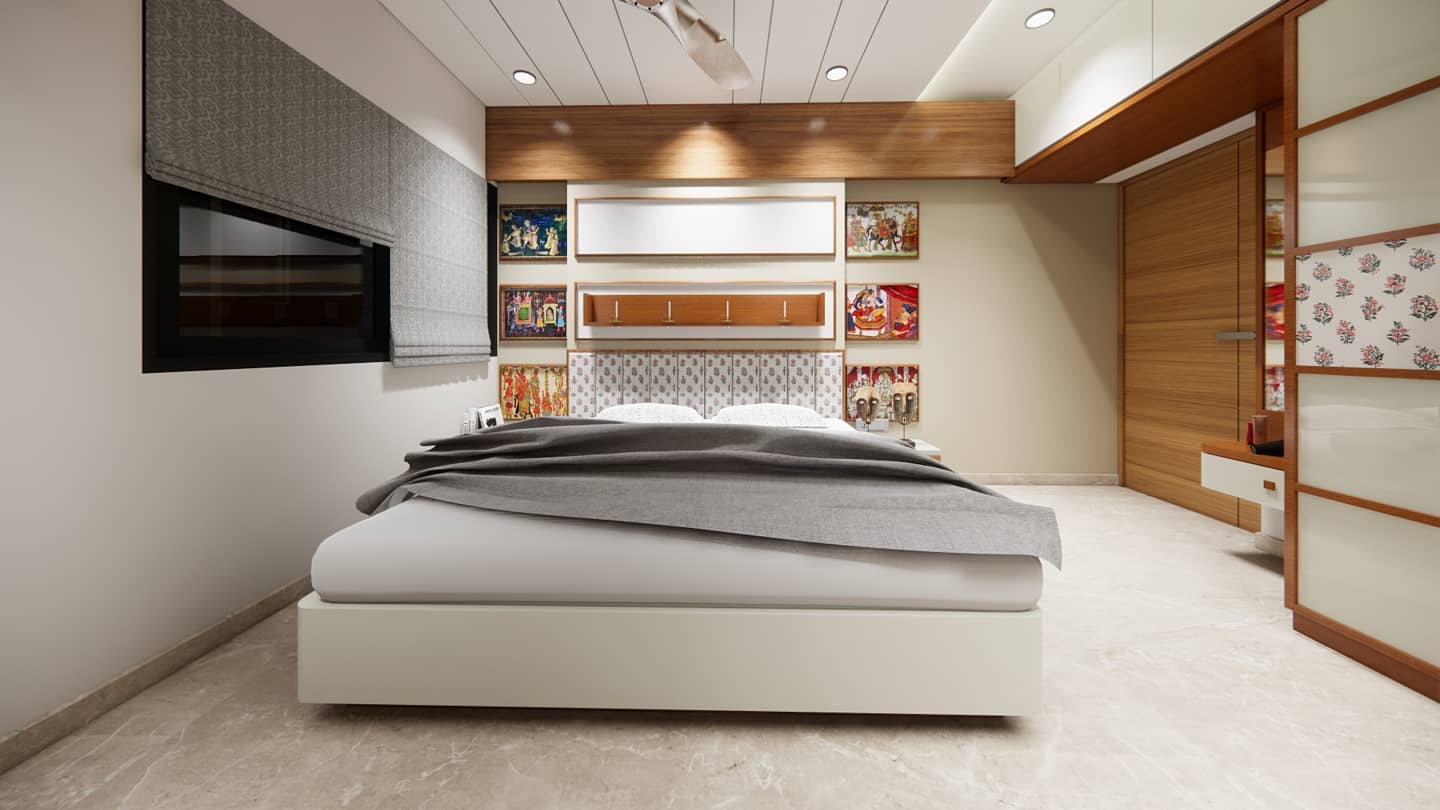
Bedrooms are the most common place where vintage wallpaper patterns work well. A single wall behind headboard is best for vintage pattern. Bedrooms are private, personal spaces where you can be more expressive than you might be in a living room that guests see first. Softer vintage patterns, like the naturalistic florals common in the 1930s, suit bedrooms particularly well because they read as warm rather than formal.
3. Dining Rooms
There is a long history of wallpaper in dining rooms, and vintage patterns feel right at home there. You use a dining room for relatively short stretches, usually in the evening under warm lighting, which is exactly the condition where patterns with metallic touches or deep, saturated colors look their best. A full-room treatment can work in dining rooms where it might overwhelm the living room.
4. Living Rooms and Family Rooms
These are the trickiest because you spend the most waking time in them. An accent wall with a vintage pattern works well as long as the other three walls stay quiet. The mistake people make is trying to “tie in” the wallpaper with too many matching accessories. Matching throw pillows, matching lampshade, matching curtain fabric – suddenly you are living inside a catalog spread, and it feels suffocating. Let the wallpaper stand out and keep everything else restrained.
Mixing Old Patterns with New Furniture
The rooms where vintage wallpaper looks the most dated are the ones where someone tried to match period furniture to a period pattern. A 1920s Art Deco wallpaper behind a full set of Art Deco reproduction furniture does not look curated. It looks like a theme restaurant. Or a movie set. Either way, not great.
The better approach is contrast. Put a geometric Art Deco pattern behind a simple modern sofa with clean lines. The tension between old and new makes both look more interesting. The wallpaper gains context by not being surrounded by matching pieces, and the modern furniture gains personality from having a backdrop with some history.
A few things that help:
Pull two or three colors from the wallpaper and repeat them sparingly in the room through throw pillows, a rug, or one piece of art. This creates connection without making it matchy.
Lean on texture instead of more pattern for your soft furnishings. Linen, wool, natural wood, and matte ceramics all complement vintage wallpaper without competing with it.
Be thoughtful about lighting. Vintage patterns, especially those with any metallic printing or raised texture, change dramatically depending on how light hits the wall. A pair of wall sconces casting light sideways across the surface will bring out dimension that overhead lighting flattens entirely.
The Case for Peel and Stick Wallpaper
One of the biggest barriers to using wallpaper has always been commitment. Paste goes on. Paste does not come off easily. If you have never lived with a bold vintage pattern before, it is hard to know whether you will love it on Tuesday the same way you loved it on Saturday when you picked it out.
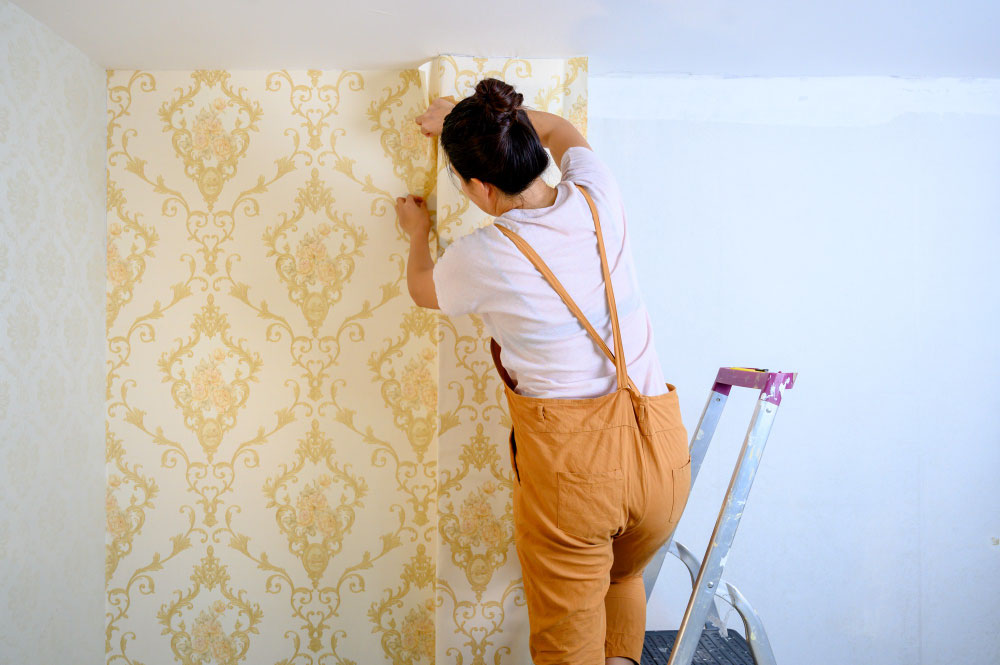
Peel and stick wallpaper changes that calculation entirely. Self-adhesive wallpaper is removable and repositionable, which means you can test a vintage pattern on your bedroom wall for a few months and take it down cleanly if you change your mind. No paste, no steamer, no skim-coating the wall afterward.
This is especially useful for renters, who have historically been locked out of the wallpaper conversation entirely. A lease that prohibits permanent alterations does not prohibit peel and stick. It is also a practical choice for spaces where you might want to rotate looks over time, like a child’s room, a home office, or the inside of a closet or bookcase where a punch of pattern adds a lot of personality for very little effort.
The quality of peel and stick products has come a long way. Some companies digitally print their peel and stick wallpaper to order in 26-inch by 20-foot rolls, and many of their digitally printed designs can be produced on self-adhesive material by selecting it as a material option. That means the vintage pattern you love in a traditional paste-the-wall format might also be available as peel and stick from the same manufacturer, printed on the same equipment, with the same color accuracy.
One practical note: standard peel and stick adhesive works best on glossy and satin paint finishes. Some manufacturers also offer an “anywhere” adhesive formulation that sticks to matte paint as well, which matters because a lot of modern homes are painted in matte or eggshell finishes. Check the adhesive type before you order.
How to Source Authentic Vintage Patterns?

There is a real difference between “vintage-inspired” wallpaper and actual reproduction vintage wallpaper. Vintage-inspired designs take general cues from a period – Art Deco shapes, 1930s color palettes – but they are new patterns drawn by contemporary designers. They can be very good, but they are interpretations.
Reproduction of vintage wallpaper starts with an original historical pattern and digitally reproduces it on modern materials. The geometry, the color relationships, the scale of the repeat – all of it comes from a pattern that was produced and hung in homes decades ago. The result has an authenticity that is hard to fake.
Companies that specialize in this process typically work from archived pattern books and original wallpaper samples. Astek Home, for example, carries a collection of authentic 1920s and 1930s wallpaper patterns that are digitally reproduced from period originals. The patterns are printed on modern substrates, so you get the visual character of the original design with the performance and installation ease of a contemporary product.
When shopping for vintage reproduction patterns, pay attention to the scale. Original vintage wallpapers were often designed with repeat lengths and pattern scales that suited rooms with higher ceilings than most modern homes have. A pattern with a 24-inch repeat designed for a 10-foot ceiling may feel overwhelming in a room with 8-foot ceilings. Some manufacturers can adjust scale during the digital printing process, which is worth asking about.
Installation Tips That Actually Matter
Most wallpaper installation guides are longer than they need to be. The information that prevents problems fits in a few short paragraphs.
Wall Prep is the Whole Game
Nobody actually wants to hear this and it is boring, moreover, it adds a day to the project and feels unnecessary when you are staring at a wall that looks perfectly fine. But ninety percent of wallpaper failures come from hanging on a wall that was not properly prepared. Fill holes. Sand rough spots. Wipe the surface down so it is free of dust. If you are using paste-the-wallpaper, apply a wallpaper primer first – it helps the paper adhere cleanly and makes future removal much easier. If you are using peel and stick, make sure the paint is fully cured, which takes at least 30 days on fresh paint.
Order More than you Think you Need
Vintage patterns tend to have larger repeats than contemporary designs, and larger repeats mean more waste during pattern matching. An extra 15 percent over your measured square footage is a reasonable cushion. Running short midway through a wall is a much worse outcome than having one leftover roll.
Start From the Most Visible Corner
Start from the visible corner of the room and work outward. This way, any mismatch where your last strip meets your first strip lands in the least visible spot.
Get Help for Full Rooms
A single accent wall with peel and stick is a reasonable DIY project. Four walls of paste-the-wallpaper with a vintage pattern that demands precise alignment is a job for someone who has done it before. Professional wallpaper hangers are not expensive relative to the cost of the paper itself, and the difference in the finished result is usually obvious.
One Wall, One Pattern, Start There
If you take nothing else from this, take this. Pick one wall. Pick one vintage pattern that you like – not one you think you should like, one that you keep coming back to. Hang it. Live with it for a while.
The rooms that look the most put-together are never the ones where someone wallpapered everything at once. They are the rooms where someone started with one decision and let the space grow around it.
Also Read: 10+ Types of Wallpaper for your Home Interior!
Vintage Wallpaper Patterns FAQs
01. Do vintage wallpaper patterns suit modern homes?
Yes, vintage wallpaper patterns paired with modern furniture and soft furnishings suits modern home interiors.
02. Which rooms can have vintage wallpaper?
Powder rooms, half baths, bedrooms, and dining rooms are ideal. These rooms will encourage bold patterns as they are used for shorter durations.
03. Are peel-and-stick wallpapers good option?
Yes, peel-and-stick wallpapers are easy to apply, remove and reposition. Hence, they are good choice for renters and those who change wallpapers timely inspired by trends.
04. Are digitally reproduced vintage wallpapers durable?
Yes, digitally reproduced vintage pattern wallpapers are printed on washable, durable materials that are easier to maintain than original historical wallpapers.
05. Can vintage wallpaper be installed as a DIY project?
Accent walls can be a peel-and-stick wallpaper DIY project. However, full-room installations should be given to professionals for flawless finish.
Author & Expert Review
Written By:  Nidhi Patel | Civil Engineer & Content Writer
| Credentials: B.E. (Mahatma Gandhi Institute of Technical Education and Research Centre), Registered with Gujarat Technological University (GTU). Experience: Civil Engineer with 3+ years of content writing experience, currently writing blogs for Gharpedia, part of SDCPL. Expertise: Specializing in SEO-optimized blogs and long-form articles focused on home improvement, construction, interiors and architect topics. I create well-researched, reader-focused content that balances technical accuracy with clarity, making complex subjects easy to understand. Find her on: LinkedIn |
Verified By Expert:  Farhan Sheikh – Senior Manager – Architect, SDCPL | Associate Member – IIA
This article has been reviewed for architectural and interior design accuracy by Farhan Shaikh, Senior Manager – Architect at Sthapati Designers & Consultants Pvt. Ltd. As the lead for all architectural and interior projects at SDCPL and an Associate Member of the Indian Institute of Architects (IIA), he brings hands-on experience in architectural planning, interior design, project coordination, and sustainable strategies. His review ensures the content reflects practical design considerations, industry best practices, and real-world applicability across both architecture and interior spaces.
Find him on : Linkedin