







Table of Contents
Quick Summary
- A gully trap is an external plumbing fitting that collects household wastewater before it enters the main sewer.
- It maintains a water seal to block foul gases, odours, and pests from re-entering the building.
- Common types include the P-trap gully, bottle gully, back inlet gully, and Overflow Relief Gully (ORG).
- Standard depth should be at least 30 cm, with a minimum water seal of 50 mm.
- Smells usually mean the water seal has dried out, is blocked, or the chamber is damaged.
- Regular cleaning – clearing debris and flushing with water – keeps a gully trap working properly.
- It differs from a plain drain by adding a protective sealing barrier, and from a Nahni trap by its outdoor location.
Courtesy - Magnific
A gully trap is an external plumbing fitting that collects wastewater from sinks, baths, and kitchens before it enters the underground sewer line. Its main job is to maintain a water seal that stops foul gases, odours, and pests from travelling back into the building through the drainage pipes. Unlike a standard drain, a gully trap serves as both a collection point and a protective barrier.
What is a Gully Trap?
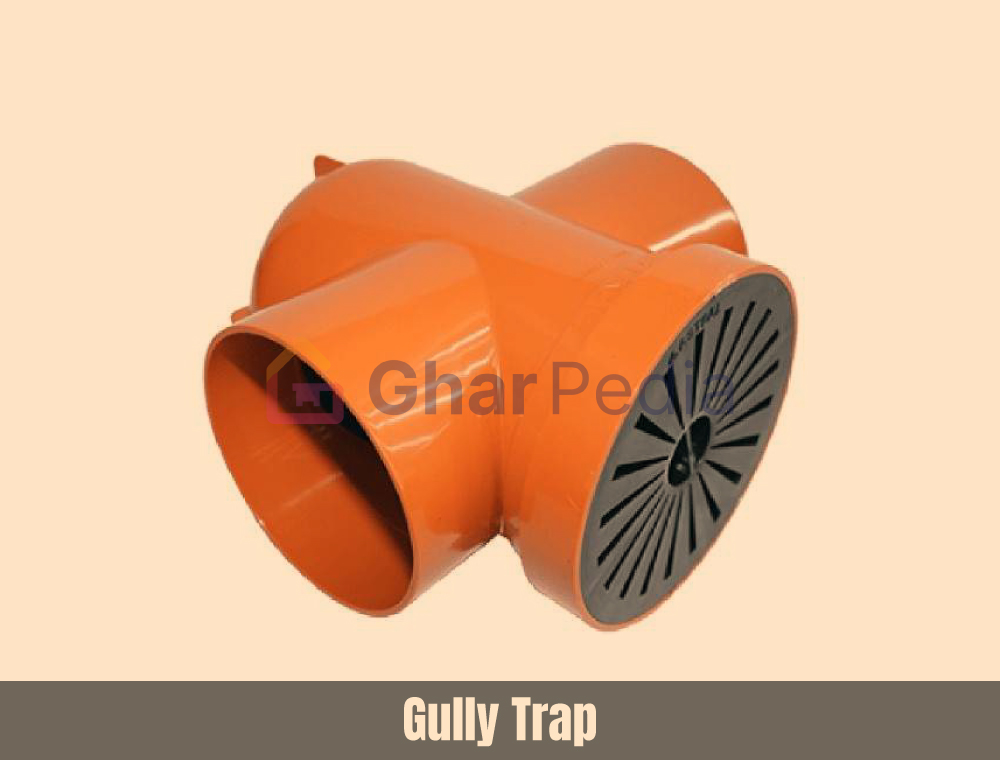
Courtesy - Astralpipes
A gully trap is provided outside the building, just before the drainage pipes connect to the external sewer line. It collects what is known as “sullage” – wastewater from kitchen sinks, wash basins, baths, and wash areas that does not contain human waste. Because this water drains to a single collection point outside the building, you don’t always need separate traps under every fixture, though many homes still install them as an added precaution.
The gully trap essentially disconnects the household’s sullage drainage from the main sewer line carrying discharge from WCs (water closets), preventing cross-contamination and keeping sewer smells well away from living spaces.
For properties that rely on on-site wastewater treatment, the wastewater may ultimately be directed to a septic tank and soak pit, which treats and disposes of it when a conventional sewer connection is unavailable.
How Does a Gully Trap Work?
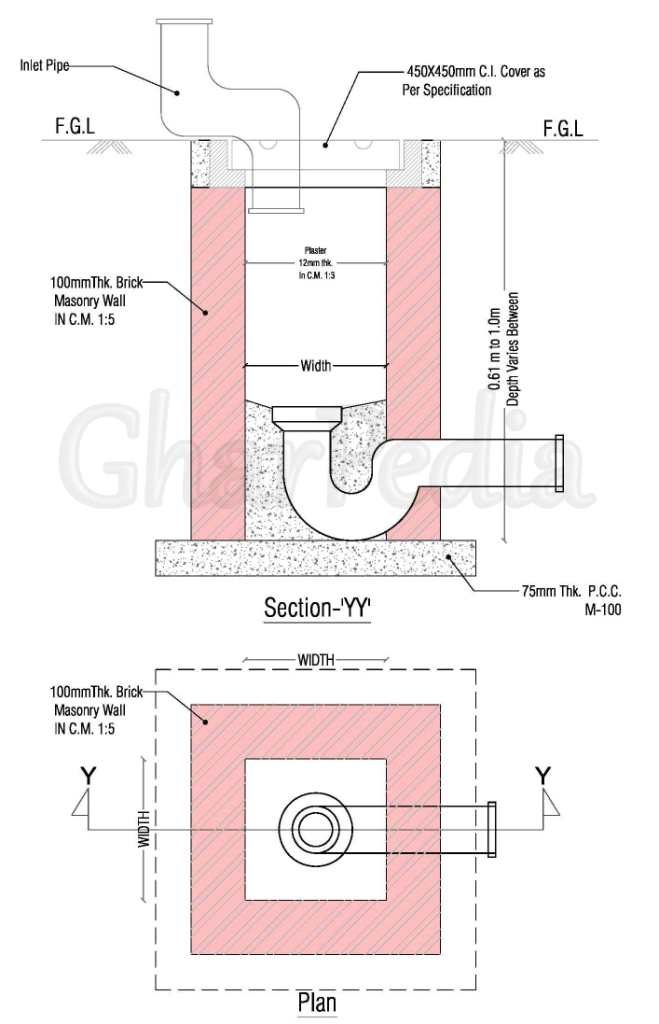
The working principle is simple but effective. Wastewater enters the gully trap through an inlet pipe and collects in a small basin or chamber at the base. This standing water forms a “water seal” or barrier of water that blocks gases rising from the sewer line while still allowing new wastewater to flow through and out via the outlet pipe.
A cast iron or similar grating sits over the top of the chamber, catching solid debris such as food scraps, leaves, or grit before it can enter the drainage system and cause blockages further down the line. As long as the water seal is maintained, gases simply cannot pass back through the trap.
Where is a Gully Trap Installed?
Gully traps are fitted outside the building, typically close to an external wall, near the points where waste pipes from the kitchen, bathroom, or wash area exit the house. They are set at ground level and housed in a small brick or concrete chamber with a removable cover, allowing easy access for inspection and cleaning of the plumbing system and drain connections.
Positioning matters: a gully trap should be kept away from doors, windows, or anywhere it might later be obstructed, since regular access is essential for upkeep.
Gully Trap vs Drain – What’s the Difference?
Courtesy - Mobicast , Magnific
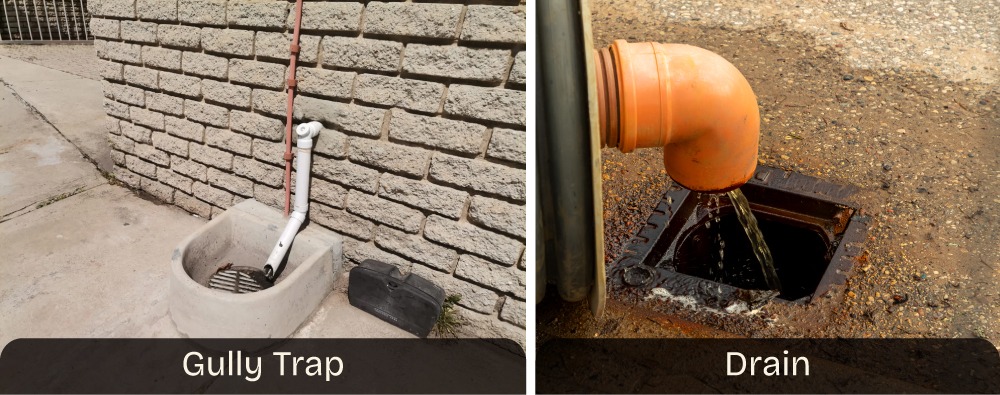
It’s easy to assume a gully trap is simply a type of drain, but the two serve different purposes. A drain’s job is purely to carry wastewater away from the building. A gully trap does that too, but it adds a crucial extra function: the water seal barrier that stops gases, insects, and odours from travelling back up the pipe and into the home.
In short, every gully trap performs a draining function, but not every drain includes the trapping and sealing mechanism that defines a gully trap.
Types of Gully Traps
P-trap Gully
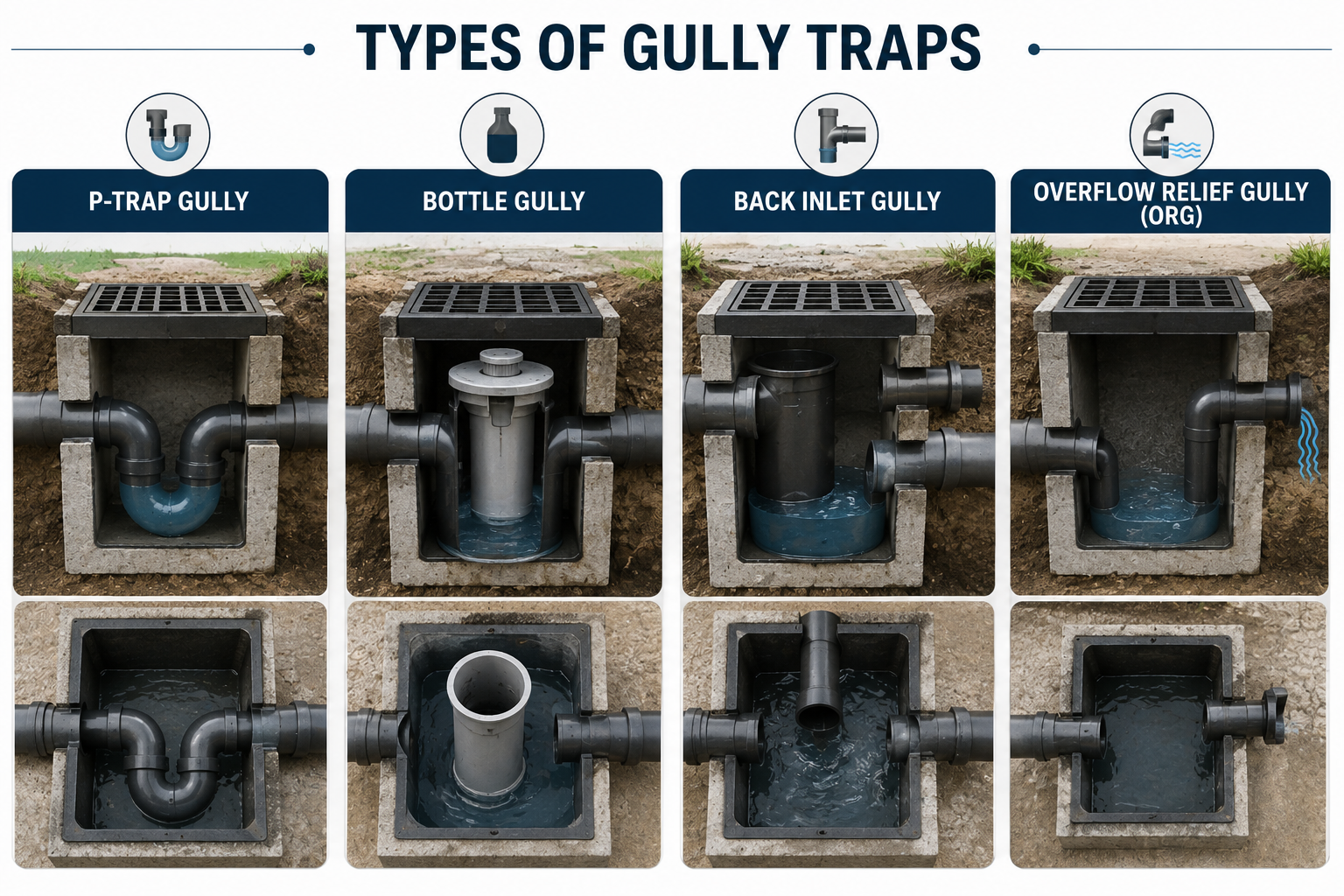
Named for its P-shaped bend, this is the most widely used type. The curved pipework naturally holds water at its lowest point, forming the seal. It’s a reliable, well-established design, though its shape makes it trickier to clear if blocked, sometimes requiring specialist rodding equipment.
Bottle Gully
This design uses a removable internal sleeve to direct wastewater into the outlet pipe, with some water retained around the sleeve to form the seal. Because the sleeve simply lifts out, bottle gullies are generally easier to inspect and clean than P-trap versions.
Back Inlet Gully
Used where wastewater needs to enter from more than one pipe at different heights – useful in properties with several connections feeding into a single external gully point.
Overflow Relief Gully (ORG)
A variation designed to give blocked wastewater an escape outside the building, rather than backing up indoors. It combines the standard sealing function with a relief role during blockages.
Standard Size and Specifications
While exact requirements can vary by local building regulations, some generally accepted norms apply:
- Total depth of the gully trap chamber should not be less than 30 cm.
- The depth of standing water should not be less than 15 cm, with a minimum water seal of around 50 mm.
- A cast iron grating of roughly 15 cm x 15 cm is fitted over the opening.
- The gully should be embedded in a proper concrete foundation and housed within a well-plastered brick masonry chamber.
- An airtight and watertight cover, typically around 30 cm x 30 cm, is fitted over the chamber frame.
These specifications ensure the trap functions reliably and remains structurally sound over time.
Why Do Gully Traps Smell? (Common Problems)
A smelly gully trap almost always points to a broken water seal. The most frequent causes are:
- Evaporation: During hot weather or long periods without use, the water in the trap can dry out, breaking the seal and letting gases escape.
- Blockages: A build-up of debris, grease, or silt can restrict flow, sometimes causing wastewater to back up or overflow near the trap.
- Physical damage: Cracks in the chamber or grating can let gases bypass the water seal entirely.
If you notice a foul smell, the first step is to check whether there’s water sitting in the trap; if it’s dry, topping it up may solve the problem immediately.
How to Clean and Maintain a Gully Trap?
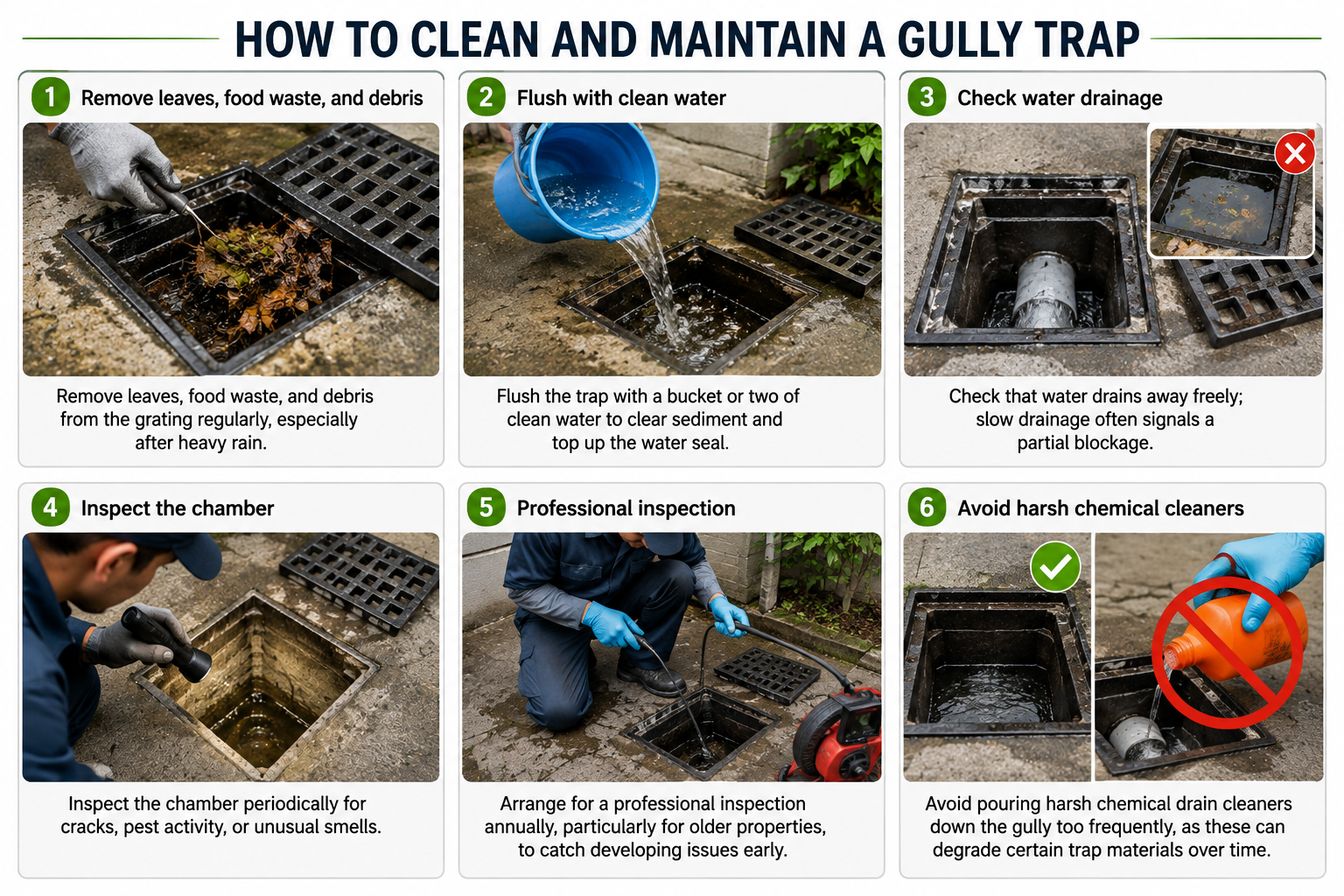
Regular gully trap cleaning and maintenance keep it working as intended and help avoid costly repairs later. Regular cleaning involves removing debris, flushing the trap, and checking for blockages or damage:
- Remove leaves, food waste, and debris from the grating regularly, especially after heavy rain.
- Flush the trap with a bucket or two of clean water to clear sediment and top up the water seal.
- Check that water drains away freely; slow drainage often signals a partial blockage.
- Inspect the chamber periodically for cracks, pest activity, or unusual smells.
- Arrange for a professional inspection annually, particularly for older properties, to catch developing issues early.
Avoid pouring harsh chemical drain cleaners down the gully too frequently, as these can degrade certain trap materials over time.
Gully Trap vs Nahni (Floor) Trap
These two are often confused because both rely on a water seal to block gases. The key difference is location and application. A Nahni trap (also called a floor trap) is fitted indoors, typically in bathroom or wash areas, to collect wastewater at floor level. A gully trap, by contrast, sits outside the building at the point where wastewater exits into the main sewer connection. Both perform a similar sealing function, but they operate at different stages of the drainage journey.
Conclusion
A gully trap may be a small, easily overlooked part of a home’s plumbing, but it plays a genuinely important role in keeping a house free of sewer gases, odours, and pests. By understanding what it is, how it works, and the simple maintenance it needs, homeowners and builders alike can avoid the common problems – bad smells, blockages, and backflow – that arise when a gully trap is neglected. Choosing the right type for a property, ensuring it’s built to proper specifications, and keeping up with regular cleaning will keep this quiet workhorse of the drainage system doing its job for years to come.
Also Read: What are the Different Types of Traps in Plumbing?
Learn more about gully traps, their purpose, and how they help prevent foul gases from entering a building in this quick visual guide.
Gully Traps: First Line of Defence Against Foul Smell
FAQs on Gully Trap
1. What is the minimum depth of a gully trap?
The total depth of a gully trap chamber should not be less than 30 cm, with a minimum water seal of around 50 mm to remain effective.
2. Can a gully trap be installed inside a building?
No, gully traps are designed to be fitted outside the building, close to an external wall, before the connection to the main sewer line. Indoor equivalents, such as Nahni traps, are used within the building.
3. Why does my gully trap smell even though it has water in it?
Even with visible water, the seal can fail due to cracks in the chamber, a partial blockage causing stagnant water, or grating damage allowing gases to bypass the seal. A thorough inspection will usually reveal the cause.
4. Is a gully trap compulsory in residential construction?
Requirements vary by local building codes, but in most residential plumbing standards, a gully trap (or an equivalent sealing device) is required wherever sullage water discharges into an external drainage system.
5. How often should a gully trap be cleaned?
Routine debris removal should be done every few weeks, or after heavy rainfall, with a more thorough professional inspection recommended at least once a year.
Author & Expert Review
Written By:  Gaurav Mishra | Civil Engineer & Content Writer

| Credentials: B.E. (Mahavir Swami College, Surat), Registered with Bhagwan Mahavir University (BMU). Experience: Civil Engineer with 5+ years of content writing experience, currently writing impactful articles for Gharpedia, part of SDCPL. Expertise: Specializes in writing well-researched content on residential construction, construction materials, design planning, on-site practices, and safety, blending technical accuracy with everyday clarity. Find him on: LinkedIn |
Verified By Expert: Avni Desai Environmental Engineer, SDCPL | M.E. (Environmental Engineering)
 Avni Desai Environmental Engineer,
 This article has been reviewed for environmental, MEP, and building services accuracy by Avni Desai, an Environmental Engineer at Sthapati Designers & Consultants Pvt. Ltd. (SDCPL). With over 8 years of experience in water supply, wastewater management, infrastructure design, and building services, she brings practical expertise in MEP services, sustainable solutions, design planning, and on-site practices. Her professional services include planning and design of water supply systems, sewage and wastewater treatment systems (STP/WTP), drainage, rainwater harvesting, and other sustainable building services. Her review ensures the content aligns with environmental standards, efficient services planning, and real-world applicability.
Find her on: LinkedIn