Table of Contents
Quick Summary
- Explores the concept of emotional architecture and why homes should support mental wellbeing, not just aesthetics
- Explains how sensory design influences stress levels, comfort and emotional safety
- Breaks down the three core pillars of emotional home design: lighting, texture and sound
- Examines the psychology of colour and how warm and cool tones affect mood
- Highlights living room trends that prioritise human connection over screens
- Introduces biophilic design and scent scaping as tools for emotional balance
- Provides practical, low-cost tips to apply emotional architecture in any home
We have all walked into a home that looked perfect on paper. It had flawless symmetry, expensive furniture, and pristine finishes that sparkled in the light. Yet, despite its visual perfection, it felt oddly cold. It was a house you could admire, but not one you could relax in.
For years, the world of interior design was dominated by the pursuit of the “Instagrammable” aesthetic: stark minimalism, cool greys, and spaces that prioritized visual impact over human comfort. Homes were treated as showrooms rather than sanctuaries. But a significant shift is currently underway. As we navigate an increasingly digital and high-stress world, homeowners and architects are pivoting away from sterile luxury toward Emotional Architecture.
This emerging design philosophy often intertwined with the scientific field of neuroarchitecture doesn’t just ask how a room looks. It asks a much more important question: How does this room make you feel?
In this comprehensive guide, we will explore how you can move beyond simple decoration to create a “sensory sanctuary” a home designed to lower stress, foster connection, and nurture your well-being.
Also Read: Design A Home That Feels Calming and Joyful
What is Emotional Architecture?
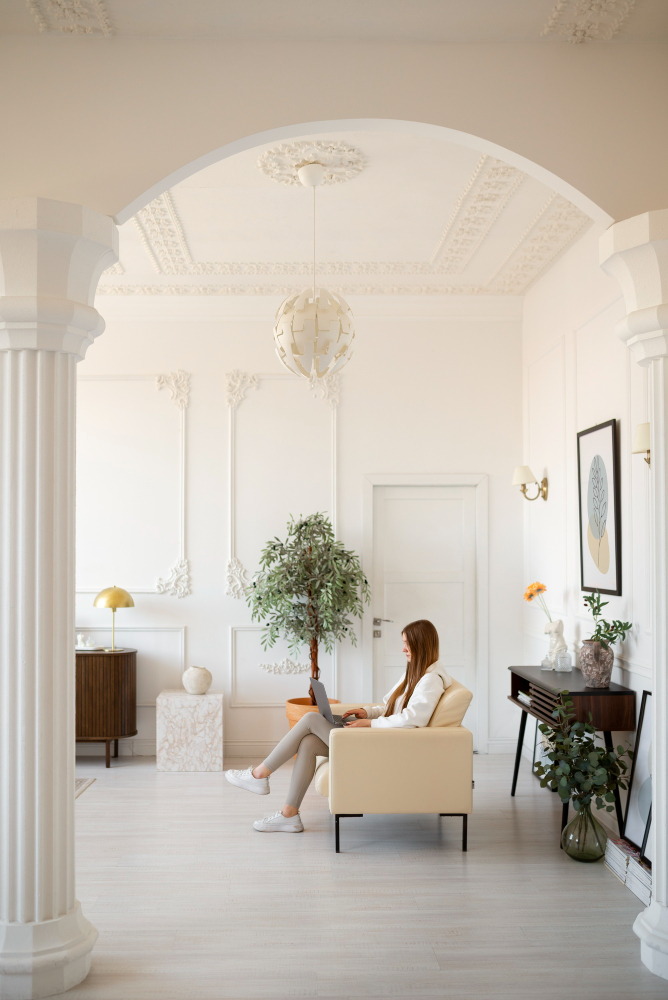
At its core, emotional architecture is the practice of designing spaces that prioritize mental health and sensory engagement. It is the antithesis of the “look but don’t touch” museum-style home.
Recent studies in environmental psychology suggest that the built environment directly affects physiological state. Factors like sharp corners, harsh lighting, and echoey rooms can subconsciously trigger our “fight or flight” response, raising cortisol (stress) levels without us even realizing it. Conversely, soft curves, natural materials, and coherent layouts can signal safety to our nervous systems, lowering blood pressure and inducing calm.
While traditional architecture focuses on function, stability, and budget, emotional architecture adds a critical third layer: empathy. It treats the home not as a machine for living, but as a partner in your emotional life. It recognizes that after a chaotic day, your home should be the place that helps you put yourself back together.
The 3 Pillars of Sensory Home Design
To bring this concept into your own home, you need to engage more than just the eyes. A truly emotional space engages all the senses.
1. Lighting for Mood (The Circadian Approach)
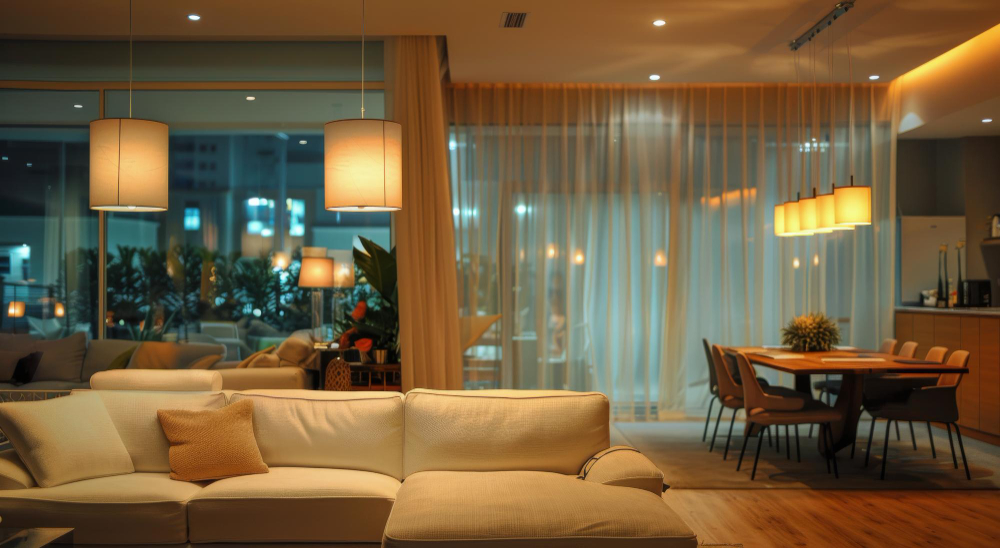
Lighting is arguably the most critical factor in emotional design because it directly regulates our sleep-wake cycles. The era of the single, harsh, overhead “big light” is ending. It is being replaced by layered, “human-centric” lighting schemes.
- The Science: Our bodies are hardwired to respond to the sun. Bright, blue-tinted light wakes us up, while soft, amber light signals the brain to produce melatonin (the sleep hormone).
- The Strategy: Use a “three-layer” approach. Start with ambient light (general illumination), add task light (for reading or cooking), and finish with accent light (to highlight art or plants).
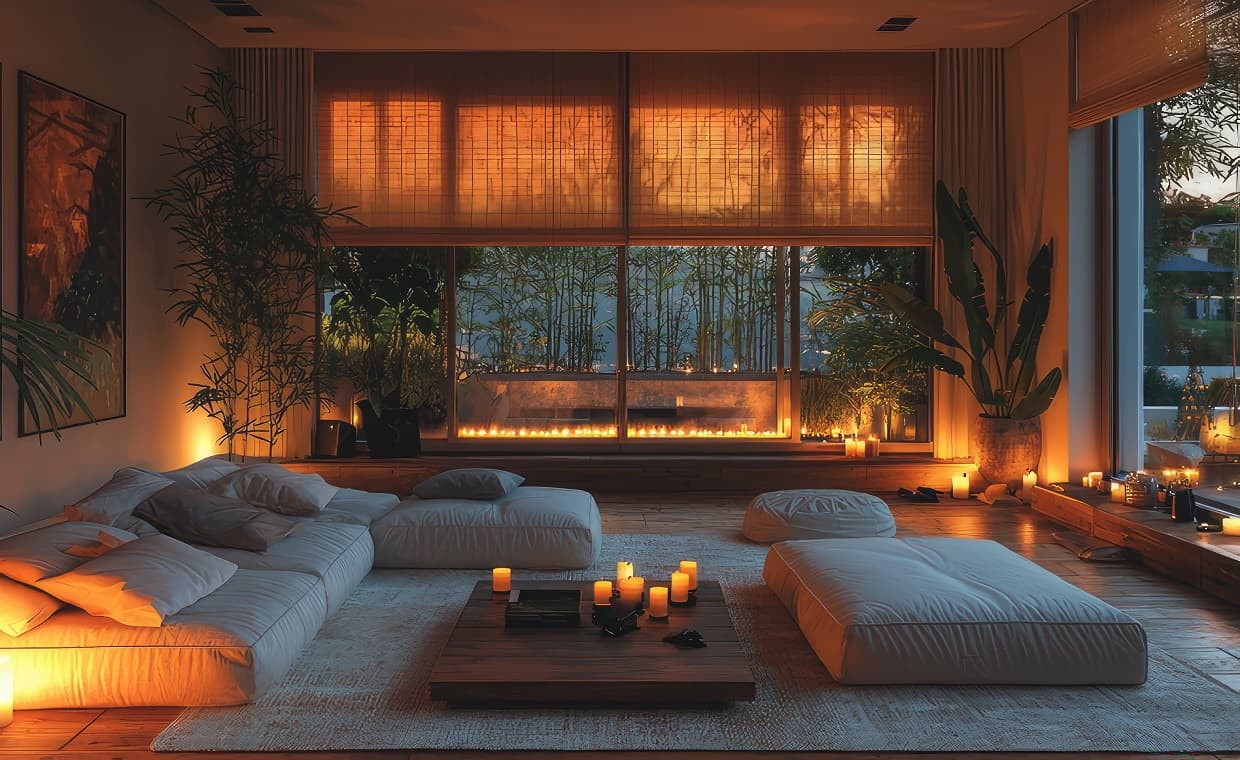
- Actionable Tip: If you can’t install a smart system, switch your bedroom and living room bulbs to a warm spectrum (2700K or lower). In the evening, turn off overhead lights entirely and rely on floor lamps and sconces to create a “campfire” effect that naturally winds you down.
2. Tactile Textures (The Touch Factor)
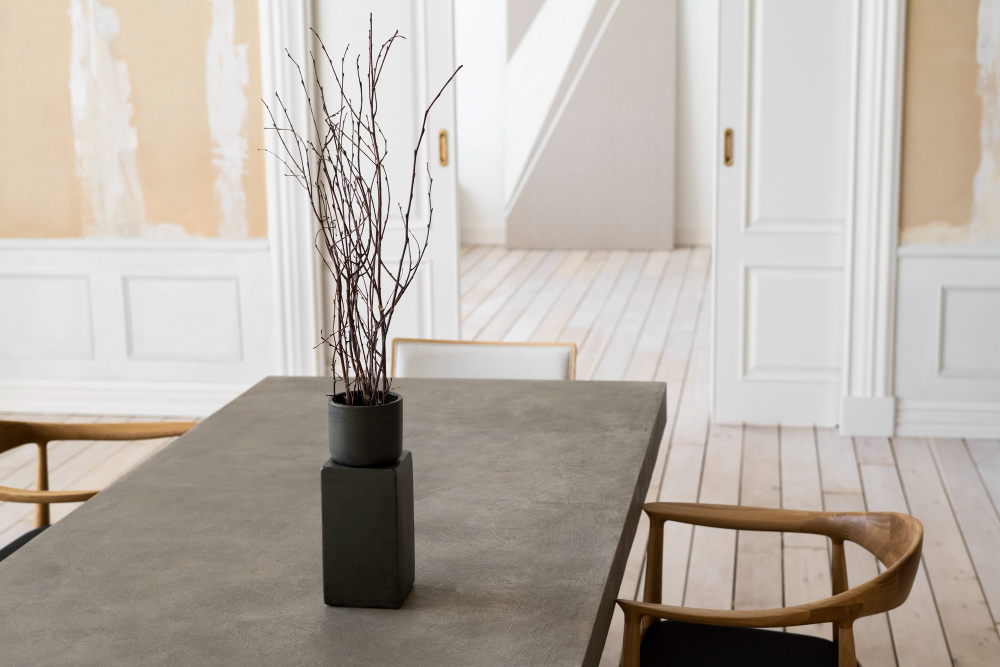
We are currently witnessing a “tactile rebellion” in design. Because we spend so much time touching smooth, cold glass screens (phones, tablets, and laptops), our bodies crave contrasting textures in our physical environment. This is often called “haptic design.”
- Materials to Use: We are moving away from glossy lacquer, chrome, and plastic. Instead, look for “imperfect” and honest materials. Raw unpolished wood, boucle fabrics, tumbled stone, and linen wallpapers are excellent choices.
- Why It Matters: These textures offer “friction.” When your hand brushes against a velvet sofa or a wooden table, it grounds you in the physical world, offering a micro-moment of mindfulness that smooth surfaces cannot provide.
3. Acoustics and Sound Scaping

A truly emotional space sounds as good as it looks. Minimalist homes often suffer from poor acoustics, creating a subtle layer of stress caused by echoes, footsteps, and appliance hums.
- Soft Architecture: To combat noise pollution, incorporate “sound dampeners” that double as decor. Heavy velvet curtains, large high-pile wool rugs, and upholstered wall panels can mute the sharpness of a room.
- The Result: A room with good acoustics feels “closer” and more intimate. It encourages lower speaking voices and deeper relaxation, creating a subconscious sense of safety.
The Psychology of Color: Designing for Emotion

Color is not just decoration; it is a vibration that affects our mood. While white walls have been the standard for developers for years, emotional architecture embraces the therapeutic power of color.
The Shift to “Warm Minimalism”
The stark, gallery-white walls of the 2010s are being replaced by “emotional neutrals.” These are colors that feel enveloping rather than expansive.
- Warm Beiges and Greiges: These tones mimic natural earth and sand, providing a neutral backdrop that feels warm rather than clinical.
- Terracotta and Clay: These reddish-brown hues are grounding. They evoke a sense of stability and connection to the earth, making them perfect for dining rooms or communal spaces.
Cool Tones for Restoration
For spaces dedicated to rest, such as the bedroom or bathroom, look to the cooler side of the spectrum.
- Sage and Forest Green: The human eye strains less to perceive green than any other color. It is naturally restorative and links us to the outdoors.
- Dusty Blue: Soft blues lower blood pressure and heart rate, making them the ideal choice for high-stress individuals looking to create a sleep sanctuary.
Pro Tip: Don’t forget the ceiling. Painting the ceiling a shade darker than the walls can create a cozy, “cocooning” effect that is perfect for media rooms or libraries.
The Rise of the “Social Sanctuary” (Living Room Trends)
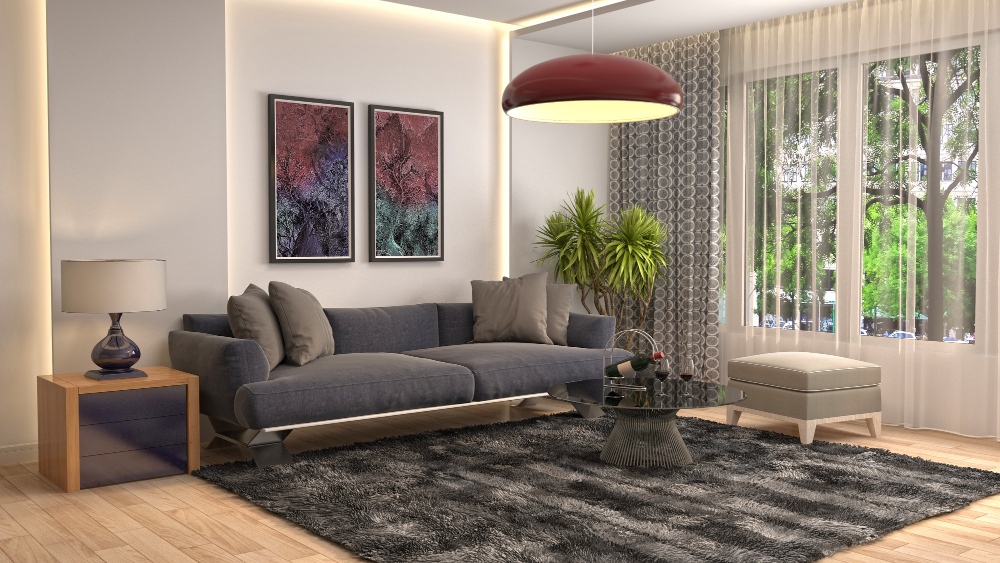
Perhaps the biggest shift in emotional architecture is occurring in the living room. For decades, the living room was oriented around a single electronic focal point: the television. Today, the focus is shifting back to human connection.
This shift is reflected in a real-life experience shared by V.M.Vishwakarma, Civil Engineer: “The moment I redesigned my living room for conversation instead of the television, evenings felt different. We talked more, stayed longer, and the space finally felt alive.”
We are seeing a resurgence of “clubhouse” style layouts. This involves moving furniture away from the walls and creating “conversation pits” or circular seating arrangements that encourage eye contact and interaction. The goal is to create a space that feels safe and enclosing a social sanctuary where the layout itself facilitates bonding rather than parallel isolation.
It can be difficult to predict how these new layouts will feel before you invest in new furniture. To stay ahead of the curve and visualize these changes, designers often consult forecast reports to identify which moods will define the coming seasons. For specific examples of these emerging layouts, you can explore the latest living room trends on Hackrea, which breaks down the shift toward these “emotional” and connectivity-focused spaces.
Also Read: Living Room Design Ideas
Biophilic Design: More Than Just Plants
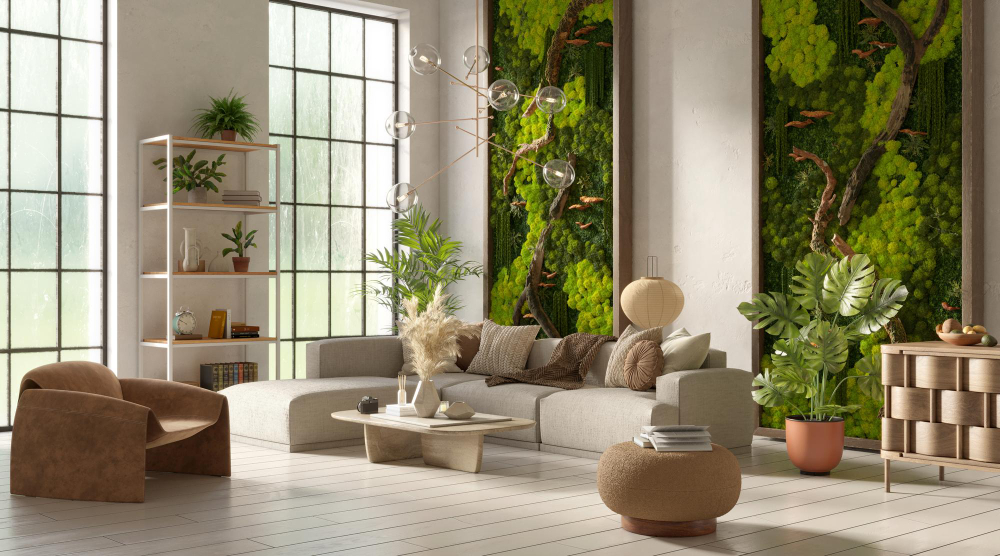
Biophilia (the love of nature) is a cornerstone of emotional architecture, but it goes beyond simply placing a potted plant in the corner. It is about mimicking the logic of nature.
- Fractals and Organic Shapes: Nature rarely builds in straight lines. Emotional architecture adopts “organic modernism” using curved sofas, arched doorways, and rounded coffee tables. These shapes are easier for the human brain to process than sharp rectangles, reducing cognitive load.
- Deep Nature: Try to blur the line between indoors and outdoors. If you can’t knock down walls for larger windows, use mirrors to reflect garden views, or use “biomorphic” patterns (shapes that mimic leaves, waves, or clouds) in your artwork and rugs.
The Invisible Dimension: Scent Scaping
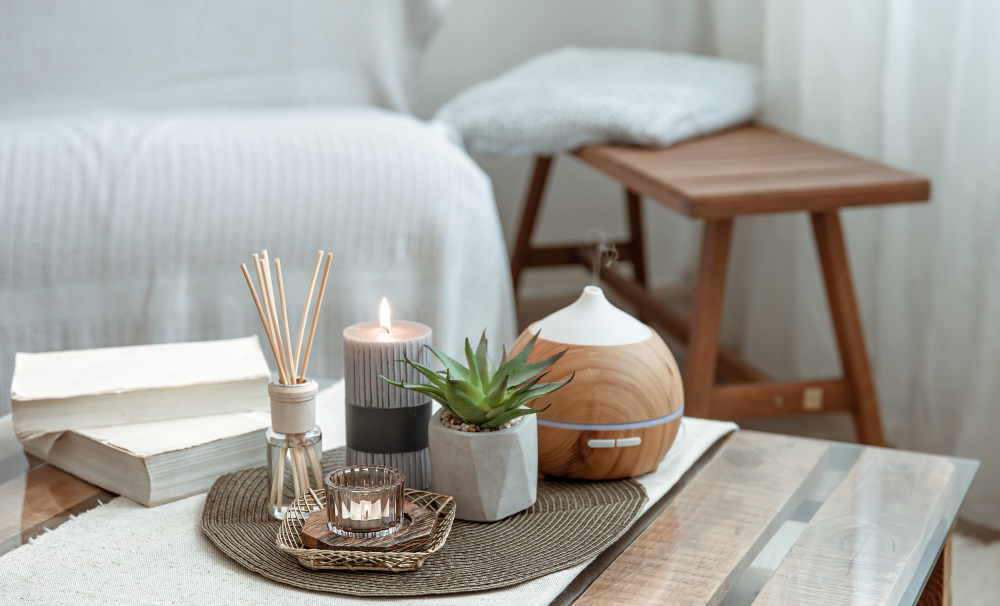
The sense of smell is the only sense with a direct pathway to the brain’s emotional and memory centers (the amygdala and hippocampus). Emotional architecture uses “scent scaping” to shape a room’s mood.
Zoning with Scent: Just as you use different lighting for different rooms, use different scents to trigger specific behaviors.
- Home Office: Use Lemon, Rosemary, or Peppermint. These sharp, fresh scents are proven to enhance concentration and cognitive performance.
- Bedroom: Use Lavender, Chamomile, or Sandalwood. These woody and floral scents trigger the parasympathetic nervous system to relax.
- Living Area: Use Vanilla, Cinnamon, or Cedar. These “warm” scents evoke feelings of nostalgia and social comfort.
How to Apply Emotional Architecture (Actionable Tips)
You don’t need a complete renovation to apply these principles. Start with these small adjustments:
- Create a “Reset” Corner: Designate a small nook a window seat or a comfortable armchair that is strictly tech-free. This teaches your brain that this specific physical space is for decompression only.
- Lower Your Eye Level: Low-slung furniture (closer to the ground) typically makes a room feel more casual and relaxed, whereas high-backed, stiff furniture signals formality. Swapping a high sofa for a lower, deeper modular piece can instantly change the room’s vibe.
- Declutter for Mental Clarity: Visual clutter equals mental clutter. However, don’t just hide everything. Display items with emotional value (family heirlooms, travel souvenirs) and hide purely functional items (cords, remotes, paperwork).
Also Read: Ways To Make Your Apartment Look Bigger
Conclusion
A home is one of the few environments we have total control over. It is the backdrop to our most intimate moments and the container for our daily lives. By applying the principles of emotional architecture prioritizing soft lighting, tactile materials, social layouts, and calming colors you transform your house from a mere shelter into a tool for well-being.
The most impressive home isn’t the one that looks the most expensive; it’s the one that makes you exhale the moment you walk through the door. As you plan your next renovation or redecoration, remember to design for the feeling, not just the photo.
Also Read: 8 Remarkable Parametric Designs in Sustainable Architecture
Frequently Asked Questions – Emotional Architecture
1. What is emotional architecture in home design?
Emotional architecture focuses on designing spaces that positively influence mood, comfort and mental wellbeing rather than just appearance.
2. How does emotional architecture improve wellbeing?
It reduces stress by using calming lighting, tactile materials, balanced acoustics and colours that support the nervous system.
3. Is emotional architecture the same as neuroarchitecture?
They are closely linked. Neuroarchitecture uses neuroscience to understand how spaces affect the brain, while emotional architecture applies those insights to lived experiences.
4. Can emotional architecture be applied without renovating?
Yes. Changes like warmer lighting, softer textures, decluttering and rearranging furniture can significantly improve emotional comfort.
5. Which rooms benefit most from emotional architecture?
Living rooms and bedrooms benefit the most, as they are key spaces for relaxation, connection and emotional recovery.
Author & Expert Review
Written By:  Gaurav Mishra | Civil Engineer & Content Writer
| Credentials: B.E. (Mahavir Swami College, Surat), Registered with Bhagwan Mahavir University (BMU). Experience: Civil Engineer with 5+ years of content writing experience, currently writing impactful articles for Gharpedia, part of SDCPL. Expertise: Specializes in writing well-researched content on residential construction, construction materials, design planning, on-site practices, and safety, blending technical accuracy with everyday clarity. Find him on: LinkedIn |
Verified By Expert:  Ravin Desai – Co Founder – Gharpedia | Co Founder – 1 MNT | Director – SDCPL
This article has been reviewed for technical accuracy by Ravin Desai, Co-Founder of Gharpedia and Director at Sthapati Designers & Consultants Pvt. Ltd. With a B.Tech. in Civil Engineering from VNIT Nagpur and an M.S. in Civil Engineering from Clemson University, USA, and over a decade of international and Indian experience in the construction and design consultancy sector, he ensures all technical content aligns with industry standards and best practices.
Find him on: LinkedIn