




Table of Contents
Quick Summary
- This article explains why hotel AC duct cleaning is essential for maintaining healthy indoor air quality in guest rooms and common areas.
- It highlights how dust, allergens, and pollutants in HVAC ducts can negatively affect guest comfort and satisfaction.
- The content discusses how dirty ducts reduce energy efficiency and increase operational costs for hotels.
- It also covers how mould, bacteria, and debris in AC systems can cause unpleasant odours and complaints.
- The article emphasises the importance of HVAC system maintenance for compliance with health and safety standards.
Professional duct cleaning is presented as a long-term solution for cleaner air, improved efficiency, and better guest experiences.
In the hospitality industry, guest comfort is a top priority, and one factor that significantly impacts this is air quality. For hotels, ensuring a clean and efficient air conditioning system is critical to providing a pleasant stay for guests. That’s why hotel AC duct cleaning is a vital service. Without regular cleaning and maintenance, hotel AC systems can accumulate dust, dirt, and allergens, leading to poor air quality and inefficient performance.
Pain Point 1: Dust and Allergens Affecting Guest Experience
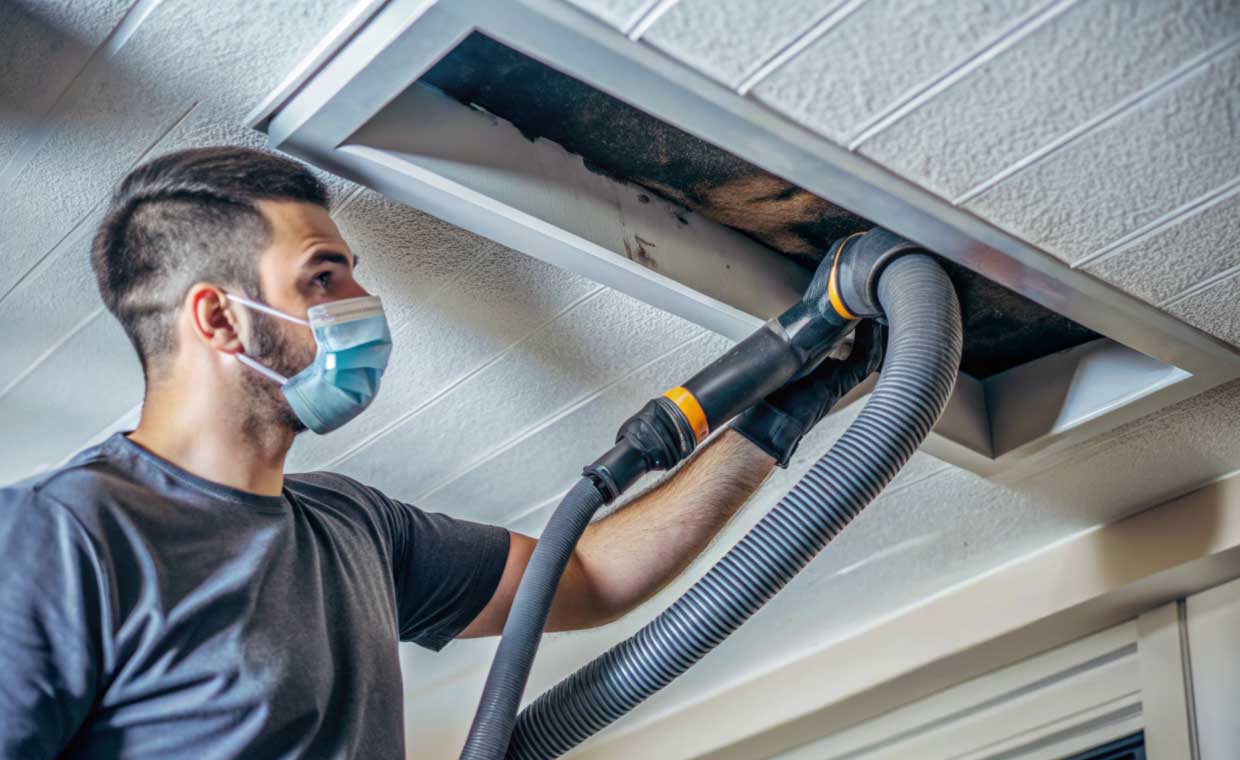
The Problem: Over time, hotel AC ducts collect dust, allergens, and other particles that circulate throughout guest rooms. This not only impacts air quality but can also lead to discomfort, allergies, or respiratory issues for guests, resulting in complaints and negative reviews.
The Solution: Hotel AC duct cleaning services focus on removing dust and allergens from your HVAC system. Our expert team uses advanced cleaning methods to ensure your AC ducts are thoroughly cleaned, improving air quality and creating a healthier environment for your guests.
Pain Point 2: Decreased Energy Efficiency

The Problem: Dirty AC ducts force HVAC systems to work harder, leading to increased energy consumption and higher utility bills. For hotels with large-scale air conditioning systems, this can result in significant operational costs.
The Solution: By investing in regular hotel AC duct cleaning, you can keep your system running efficiently. Clean ducts reduce the strain on your HVAC system, allowing it to cool rooms more effectively while consuming less energy. Professional cleaning helps your hotel cut down on energy costs while ensuring optimal performance of your AC system.
Pain Point 3: Guest Room Complaints About Unpleasant Odors

The Problem: Accumulated dust, mold, and bacteria in AC ducts can create musty or unpleasant odors that are difficult to ignore. When guests walk into their room and notice bad smells, it can leave a negative impression and affect their overall experience.
The Solution: Hotel AC duct cleaning services are designed to eliminate these odors by thoroughly cleaning and sanitizing your ducts. Our process not only removes the dirt and dust that cause bad smells but also ensures that your hotel rooms remain fresh and welcoming.
Pain Point 4: Compliance with Health and Safety Standards

The Problem: Hotels must adhere to strict health and safety standards, especially when it comes to air quality. Failing to maintain clean air ducts can result in inspections that highlight issues, potentially leading to penalties or reputational damage.
The Solution: ShineOn’s hotel AC duct cleaning services help hotels stay compliant with air quality regulations. Our team ensures that your HVAC system is cleaned to the highest standard, providing peace of mind that your hotel meets health and safety requirements.
Conclusion
When it comes to hotel AC duct cleaning, a comprehensive solution that enhances air quality, boosts energy efficiency, and keeps your guests comfortable. Our professional cleaning services are designed to meet the unique demands of the hospitality industry, ensuring that your hotel remains a top choice for guests seeking comfort and cleanliness. Book your AC duct cleaning with ShineOn today and give your guests the fresh air they deserve.
Also Read: How to hide outdoor air conditioner unit?
FAQs – Hotel AC Duct Cleaning
01. How often should hotel AC ducts be cleaned?
Hotels should typically schedule AC duct cleaning every 6 to 12 months, depending on usage, location, and environmental conditions.
02. Why is AC duct cleaning important for hotels?
It improves air quality, enhances guest comfort, reduces energy consumption, and helps maintain HVAC system performance.
03. Can dirty AC ducts affect guest health?
Yes. Dust, allergens, mould, and bacteria in ducts can trigger allergies, breathing issues, and discomfort for guests.
04. Does duct cleaning reduce hotel energy costs?
Clean ducts allow the HVAC system to run more efficiently, which can lower electricity consumption and maintenance costs.
05. Is AC duct cleaning necessary for regulatory compliance?
Yes. Regular HVAC cleaning helps hotels meet air quality and health standards required in the hospitality industry.
Author & Expert Review
Written By:  Gaurav Mishra | Civil Engineer & Content Writer

| Credentials: B.E. (Mahavir Swami College, Surat), Registered with Bhagwan Mahavir University (BMU). Experience: Civil Engineer with 5+ years of content writing experience, currently writing impactful articles for Gharpedia, part of SDCPL. Expertise: Specializes in writing well-researched content on residential construction, construction materials, design planning, on-site practices, and safety, blending technical accuracy with everyday clarity. Find him on: LinkedIn |
Verified By Expert: Farhan Shaikh – Senior Manager – Architect, SDCPL | Associate Member – IIA

This article has been reviewed for architectural and interior design accuracy by Farhan Shaikh, Senior Manager – Architect at Sthapati Designers & Consultants Pvt. Ltd. As the lead for all architectural and interior projects at SDCPL and an Associate Member of the Indian Institute of Architects (IIA), he brings hands-on experience in architectural planning, interior design, project coordination, and sustainable strategies. His review ensures the content reflects practical design considerations, industry best practices, and real-world applicability across both architecture and interior spaces.
Find him on : Linkedin