Table of Contents
Quick Overview
Here is the quick overview of stair height measurement:
- A good stair height is essential for safety, comfort, and accessibility for every human being.
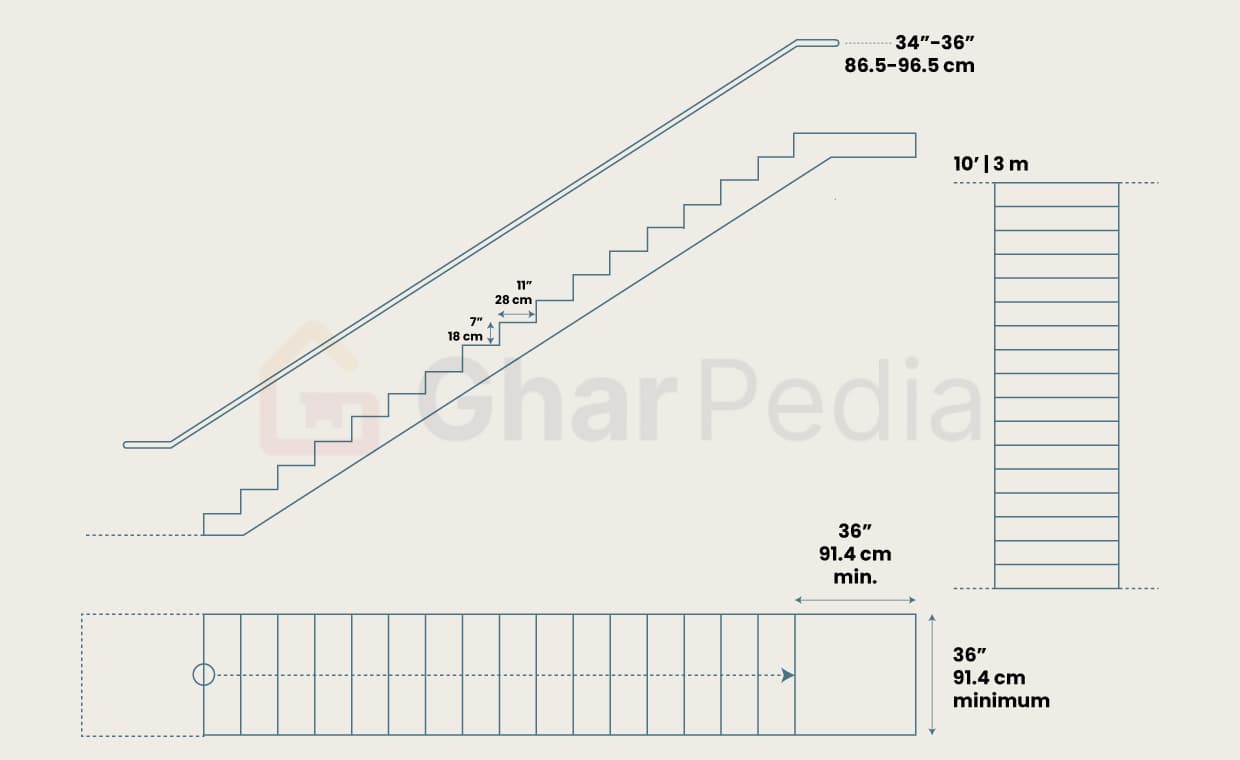
- Standard riser height ranges from 150 to 180 mm, with 175 mm being common.
- Tread depth should be between 250 to 300 mm, and all steps must be uniform.
- Handrails should be between 850 to 1000 mm high and securely placed.
- A good stair design should have non-slip surfaces, proper lighting, and enough headroom (min. 2000 mm).
- Well-planned stairs prevent accidents and support all the persons, including children and the elderly.
Stairs form a space and shape comfort, accessibility, and aesthetics. For typical residential homes or larger commercial spaces, the appropriate stair sizes are required for function and safety. Stair height is often the most ignored dimension. A poorly designed staircase not only poses a safety hazard but is simply impractical.
Carefully measured stair height makes it easy going up and down, and ensures the space is balanced and easy to use. Whether you live in a small house or have a commercial space with a high ceiling, each staircase has to be adapted to the configuration, height, structure, and quality bases on the needs of the users. In case the height of individual steps is not consistent or done with poor calculations, then it may cause discomfort, accidents, and even long-term fatigue of joints and muscles.
Here in this blog, you will learn about the recommended height of stair rails, handrail positions, and some handy ideas when it comes to designing a stairway that can be both safe and fashionable. Whether you are renovating, building a new house, or you just like to learn about how to optimise your home design, one of the first building blocks in the design process is to know about basic stair height calculations.
Importance of Proper Stair Height in Construction
The stair height refers to the vertical distance each riser covers between steps. It affects how comfortably and safely a person can ascend or descend a staircase. If risers are too high, users may struggle or experience strain. If too low, they can disrupt walking rhythm and require additional steps. Consistency in riser height is also essential to avoid tripping hazards. In both residential and commercial settings, correct stair dimensions ensure smooth navigation and reduce the risk of accidents, especially for children and older adults.
Proper stair height also contributes to long-term accessibility. Individuals with mobility concerns may find it difficult to use stairs that are too steep or uneven. Builders and designers should ensure that staircases are not only code-compliant but also functional for all members of the household. Taking time to plan appropriate stair measurements can save money on future modifications and improve quality of life.
Standard Stair Height Guidelines
The standard stair height or riser measurement typically ranges from 150 to 180 millimetres in residential buildings. For commercial spaces, it often varies slightly based on building codes and safety standards. A riser height of around 175 millimetres is commonly used as a balanced standard, offering comfort and stability. Each riser in a flight of stairs must be the same height to avoid missteps. When calculating total staircases, divide the total vertical distance (floor-to-floor) by your preferred riser height to determine how many steps are required.
It is equally important to balance riser height with tread depth. A comfortable stair tread should ideally be between 250 and 300 millimetres. The riser and tread dimensions work together to create a staircase that feels natural to use. Builders often apply the formula: 2R + T = 600 to 630 millimetres, where R is the riser height and T is the tread depth. This guideline ensures ergonomic proportions for safe and comfortable movement.
Recommended Stair Height for Different Ceiling Heights
The height of your ceiling will directly influence the number of risers needed and the overall layout of your staircase. Below are recommended configurations for common ceiling heights:
1. 10 Feet Height Staircase
On a staircase with a height of 10 feet, the total vertical run is about 3050 millimetres. At 175 millimetres riser height, you would require between 17 and 18 risers. Such an arrangement leads to a smooth slope and suits most typical home architectures. Another aspect to remember is to give the stair flight adequate horizontal room (run), and allow it to fit comfortably into your floor plan.
2. 11 Feet Height Staircase
The total rise of an 11-foot-high staircase can be approximately 3350 millimetres. You will need about 19-20 risers if the height of the risers is also 175 millimetres. This height is more appropriate for houses having high ceilings or split-level designs. Since stair height helps in determining the tread depth, make sure that the tread depth is maintained as the height of the stairs increases to avoid inconvenience or imbalance of steps.
3. 12 Feet Height Staircase
A 12-foot-high staircase uses a vertical rise of nearly 3660 millimetres. It would involve 20-21 risers. On this level, you may take into consideration the integration of the middle landing, particularly in case your stairs are straight and prolonged. The landings enhance safety, ease the climb, and offer design flexibility, like L-shape or U-shape.
Stair Railing Height and Hand Rail Requirements
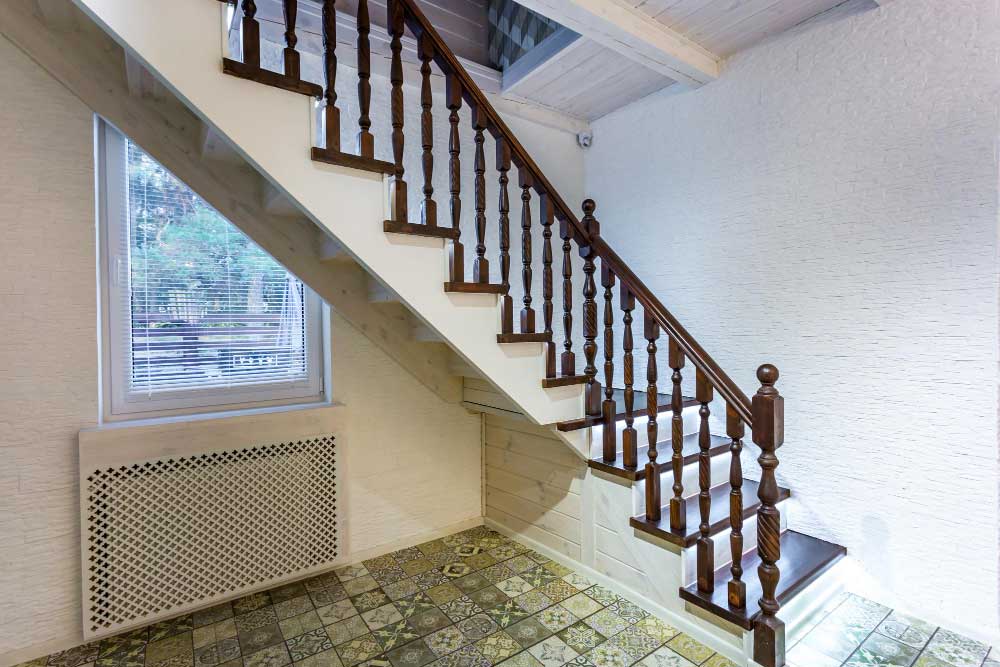
Handrails are a mandatory safety element and are normally placed on one or both sides of the stairs. According to the NBC guidelines, the given height of the standard stair railing must be between 850 and 1000 millimetres above the tread nosing. This makes it comfortable to accommodate the various heights of the users. Local building codes define other requirements in public or commercial spaces.
The height of the handrail on steps around the stairway should be the same. The railing should also be continuous and should be very firm, particularly where the staircase has more than one flight or bends. The handrails should be rounded or at least ergonomically shaped so that they can be gripped better, especially in households where the elderly live or children are present.
Also Read:
Best Stair Handrail Design Guide For Your Staircase!
Safety Tips for Staircase Design and Construction
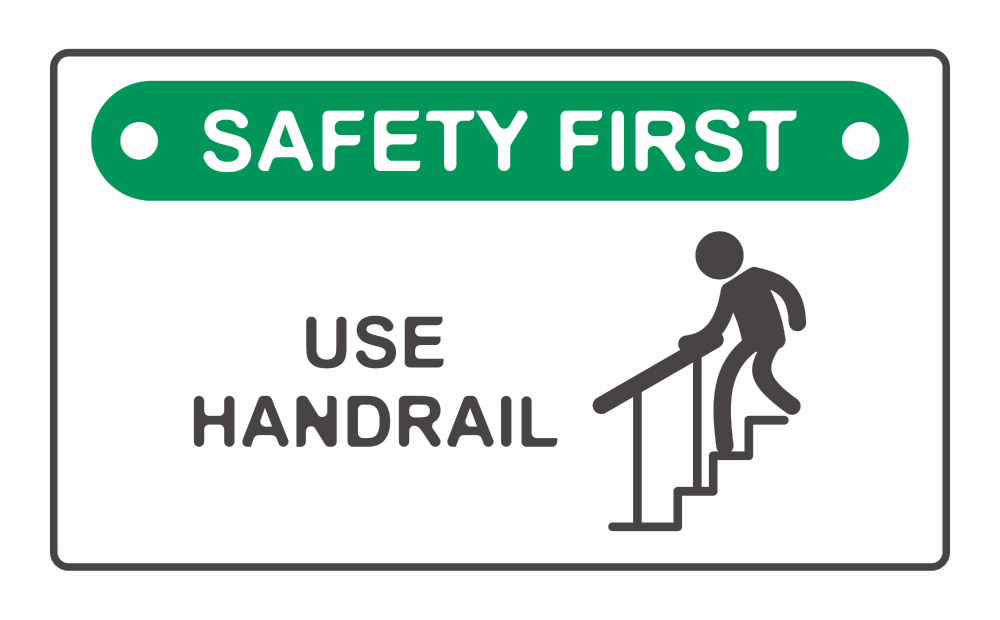
When designing stairs, safety should never be compromised. Begin by ensuring that each riser and tread is uniform throughout the staircase. Use anti-slip materials or finishes on treads to reduce slipping, especially in wet-prone areas like entrances or outdoor staircases. Adequate lighting is essential. Recessed lighting or motion-activated lights can significantly enhance visibility, particularly during night-time use.
Rounded nosing on treads reduces tripping risks and also wear better over time. In homes where space allows, consider wider staircases to provide more walking room and a sense of openness. For households with elderly individuals, children, or pets, additional handrails or even tactile indicators can make staircases more user-friendly.
Well-planned stair design also takes into account headroom clearance. The minimum vertical clearance above each step should be at least 2000 millimetres to prevent users from bumping their heads. If your layout involves spiral or curved staircases, consult a structural engineer to ensure that all elements from the stair height to the radius and railings meet both design and safety requirements.
Also Read: Standard Stair Riser Height: Guidelines and Best Practices
FAQs on Stair Height Measurement
1. What is the Standard Stair Height for Residential Buildings?
The standard stair height in most homes’ ranges from 150 to 180 millimetres, with 175 millimetres being the most commonly recommended riser height.
2. How Do I Calculate the Number of Steps For a 10, 11, or 12-foot Staircase?
Divide the total vertical height (in millimetres) by your chosen riser height. For example, a 10-foot staircase (3050 millimetres) with 175-millimetre risers will need approximately 17 to 18 steps.
3. What is the Ideal Stair Railing Height for Safety?
The stair railing height should be between 850 and 1000 millimetres above the tread nosing. This ensures proper support during use.
4. Are There Different Stair Height Requirements for Commercial and Residential Buildings?
Yes. Commercial buildings often follow stricter building codes. Residential staircases usually allow for slightly steeper or compact designs, while commercial codes focus more heavily on accessibility and safety compliance.
References
Bureau of Indian Standards (1983), SP 7 Group 1, National Building Code of India (1983), New Delhi, BIS.
Author & Expert Review
Written By:  Kinjal Mistry | Civil Engineer & Senior Content Writer
| Credentials: B.E. (Dharmsinh Desai University, Nadiad, Gujarat). Experience: Civil Engineer with 9 years of content writing experience, currently writing impactful articles for Gharpedia, part of SDCPL. Expertise: Specializes in writing well-researched content on home improvement, sustainability, building materials, home interior, DIY, and plumbing technology with everyday clarity. Find her on: LinkedIn |
Verified By Expert:  Ravin Desai – Co Founder – Gharpedia | Co Founder – 1 MNT | Director – SDCPL
This article has been reviewed for technical accuracy by Ravin Desai, Co-Founder of Gharpedia and Director at Sthapati Designers & Consultants Pvt. Ltd. With a B.Tech. in Civil Engineering from VNIT Nagpur and an M.S. in Civil Engineering from Clemson University, USA, and over a decade of international and Indian experience in the construction and design consultancy sector, he ensures all technical content aligns with industry standards and best practices.
Find him on: LinkedIn