Table of Contents
Quick Overview
- Removable wallpaper gives a refreshing look to your interiors without permanent changes.
- It is an ideal option for renters and homeowners who want a quick and easy makeover.
- Peel-and-stick wallpapers are easy to install, reposition, and remove.
- They are suitable for feature walls, ceilings, furniture, shelves, stair risers, and even décor accents.
- For modern design trends in 2026, choose wallpapers with soft geometrics, botanicals, murals, and tonal patterns.
- The best results can be achieved through proper surface preparation. Smooth, clean, and primed walls perform best.
- Coated and vinyl wallpapers are best suited for kitchens and bathrooms.
- The lifecycle of temporary wallpaper is nearly 3–7 years in dry indoor spaces.
- Temporary wallpapers are a budget-friendly makeover option without dust, fumes, or repainting cycles.
- Panels can be removed, reused, or relocated easily.
Do you want to change the mood of your room but not make any permanent changes? Then removable wallpaper is your best option. A few panels of removable wallpaper can shift colour, light, and scale. If you want a low-risk update, Wallmur makes it easy to try a new look.
This guide shares twelve practical uses, plus advice on materials, patterns, and installation. You will learn where temporary wallpaper performs well, and where it fails.
Why Removable Wallpaper Took Over in 2026
Homes now flex all day. People are looking for changes that are meaningful, yet avoid dust, fumes, or long clean-up. Removable wallpaper is the saviour. It fits to the need of people as it transforms a space quickly.
Removable wallpaper is a one stop solution for both renters and homeowners. Renters get to change the room as per their needs and homeowners does not have to bear any permanent changes. Removable wallpapers give you the flexibility to test a strong pattern for a season, then swap it later. It also saves you form endless repaint cycles that hardly meet perfection.
How Removable Wallpaper Works and What to Expect
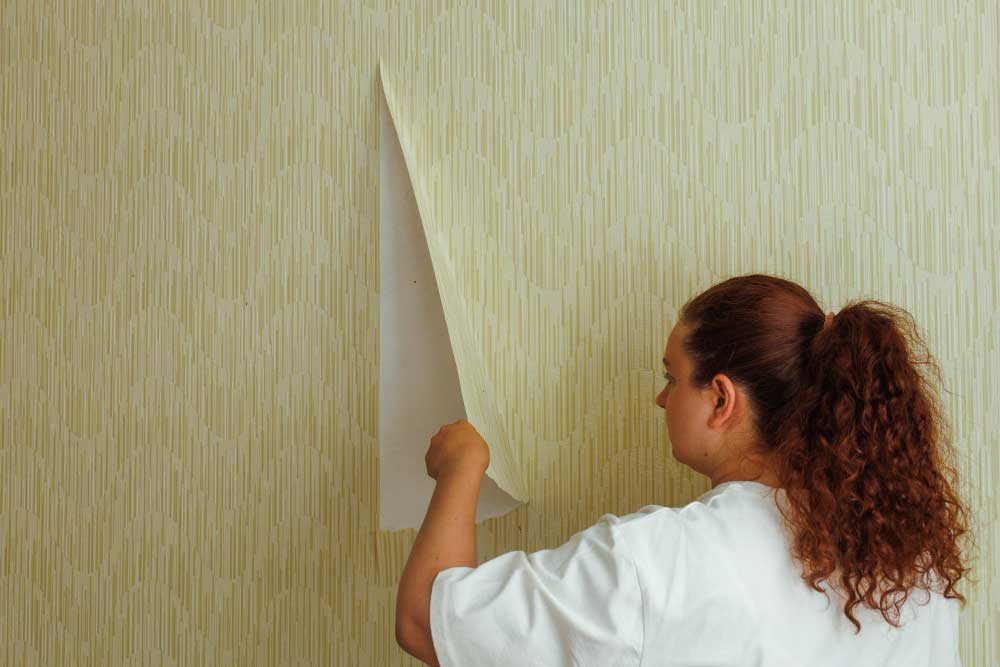
Removable wallpapers work on the mechanism of pressure-sensitive adhesive. You press it, smoothen it out, your job is done here. To remove or reposition simply peel it off. Overtime heat, steam, and dust can weaken grip. However, a smooth surface will make your wallpaper last longer and cause less damage on removal.
A smooth wall surface gives clean and best finish over a textured wall surface. If your wall surface is smooth but has chalky paint then in might lift during removal. Moreover, a semi-gloss paint can reduce adhesion so it is always advisable to test first.
When applying a temporary wallpaper plan for three to seven years in dry room with no direct sunlight. In kitchens and bathrooms steam and direct heat can shorten its lifespan. Before applying the entire wallpaper, place a small test patch for 24 hours. Check if the edges stick properly and paint is not peeled off on removal. Then apply it in the entire space.
Ceiling Wallpaper in 2026
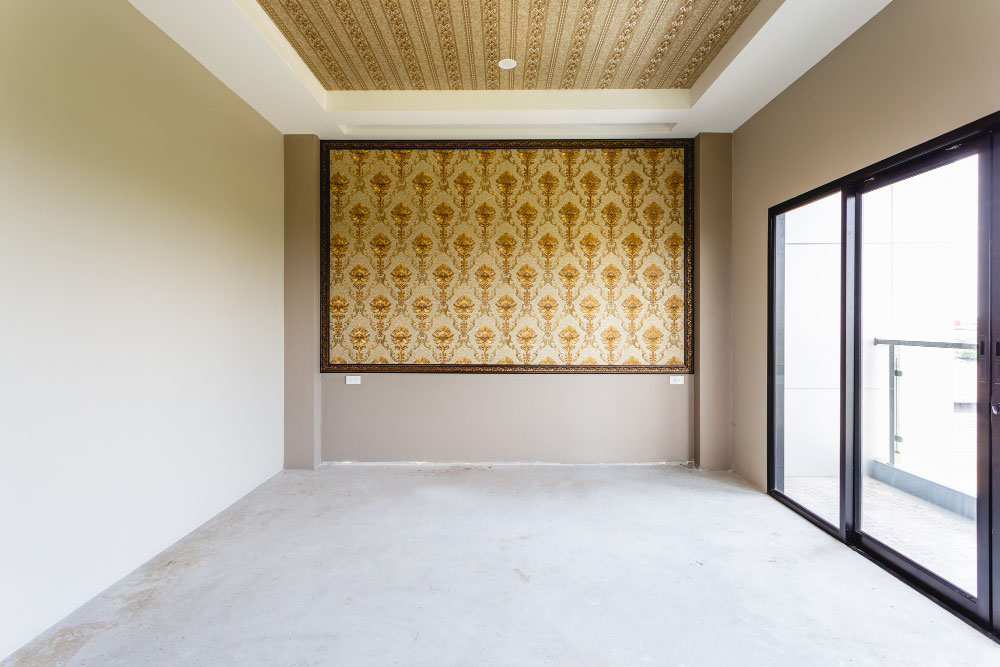
Ceiling paper adds personality without taking floor space. It can make a plain room feel designed, especially in bedrooms and dining rooms. Still, the ceiling should support the room, not dominate it.
Choose patterns that are not loud and blend in well with the room. Tonal geometrics, soft clouds, and small botanicals work well. High contrast can feel intense above a bed. If steam is frequent, choose a coated surface and keep ventilation strong.
Work in short sections and plan seams around lights. Keep blades sharp, smooth, and steady. Lastly, keep walls calmer so the ceiling reads intentional.
12 Unexpected Ways to Use Peel-and-Stick
These ideas go beyond a single feature wall. They work with wallpaper peel-and-stick products and basic tools.
- Line cabinet backs for a hidden detail when doors open.
- Add a pattern inside a closet for a quick visual lift.
- Wrap a dresser front to refresh second hand furniture.
- Cover a door panel to create a simple focal point.
- Paper the back of open shelves to add depth.
- Style stair risers with a small repeat for rhythm.
- Camouflage a rental appliance while avoiding vents and heat.
- Cover a folding screen for instant privacy in studios.
- Use sheets as drawer liners for a clean finish.
- Customise a lampshade for a softer glow at night.
- Dress a cornice board or valance with a matching print.
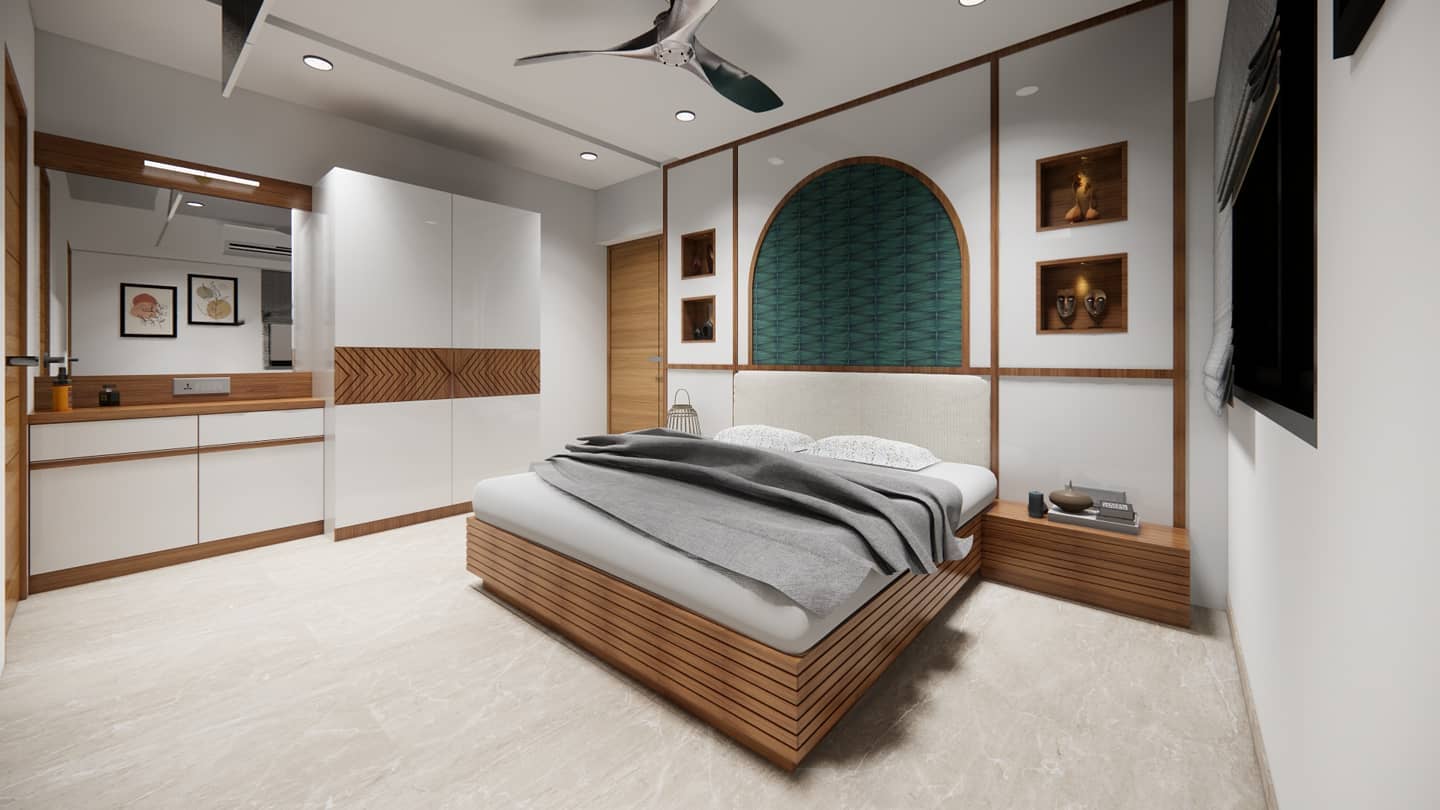
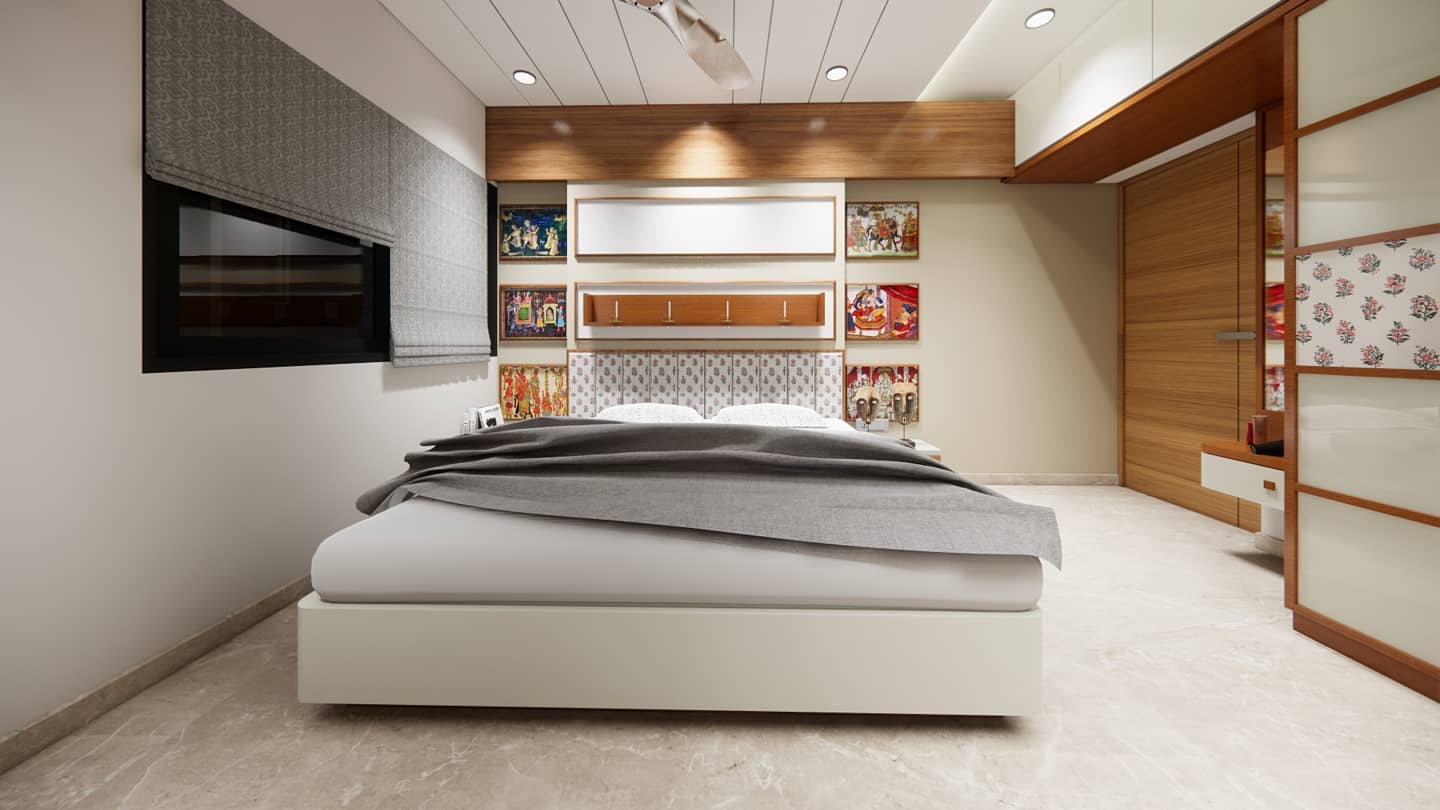
- Create a headboard effect with wall murals behind the bed.
Patterns That Look Current, Not Chaotic
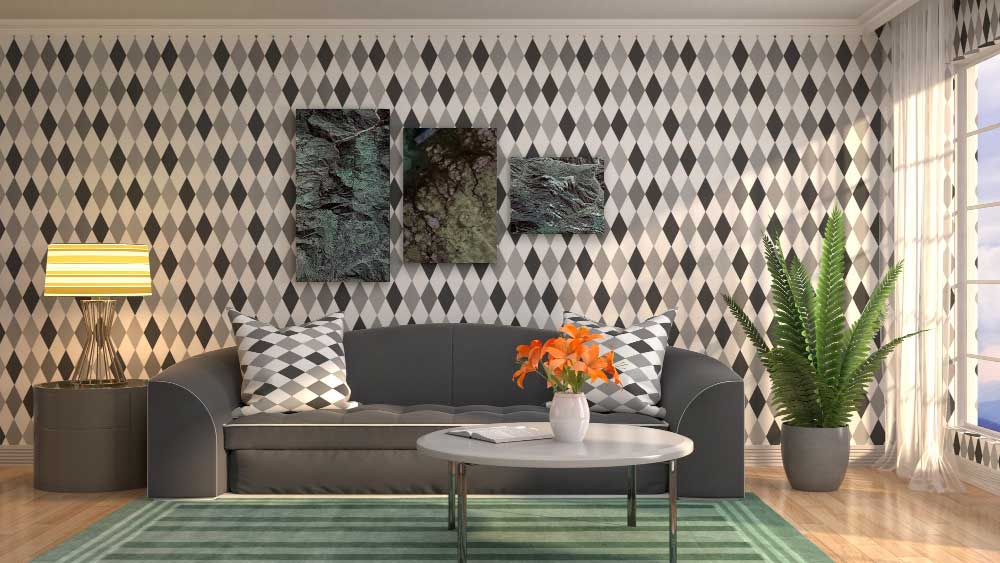
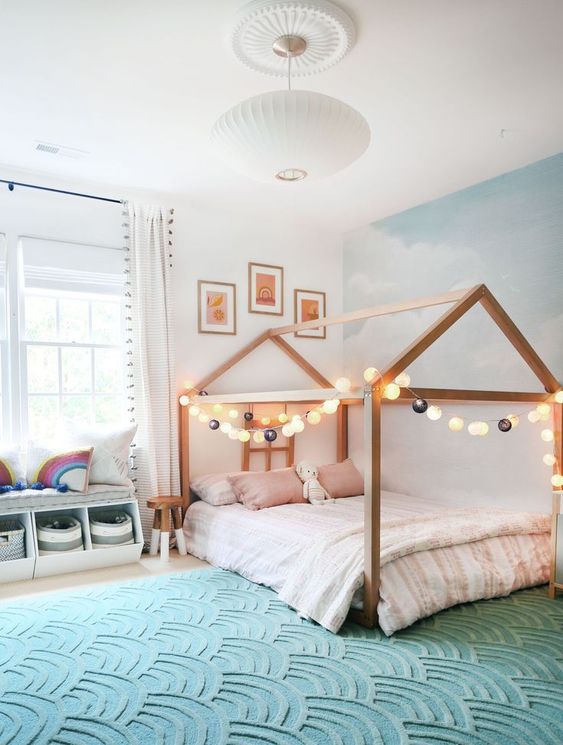
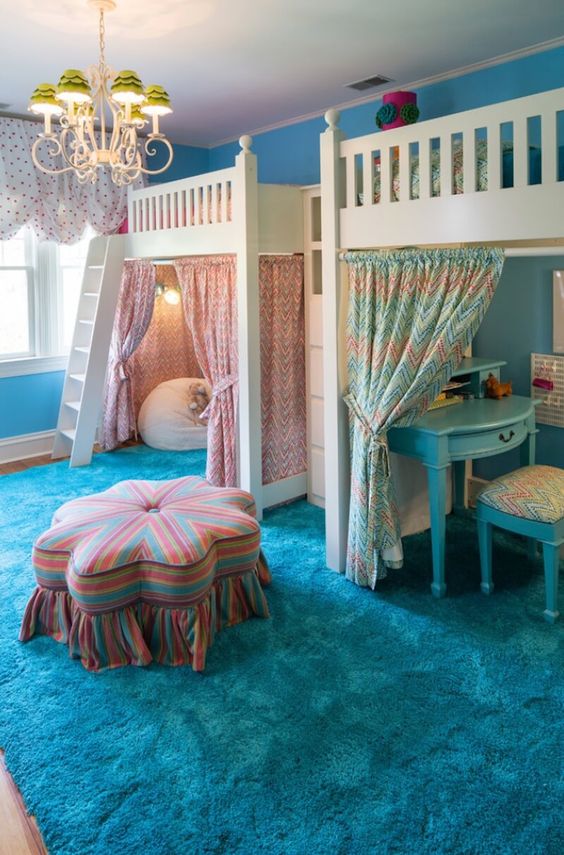
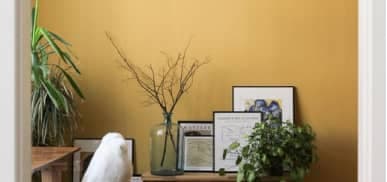
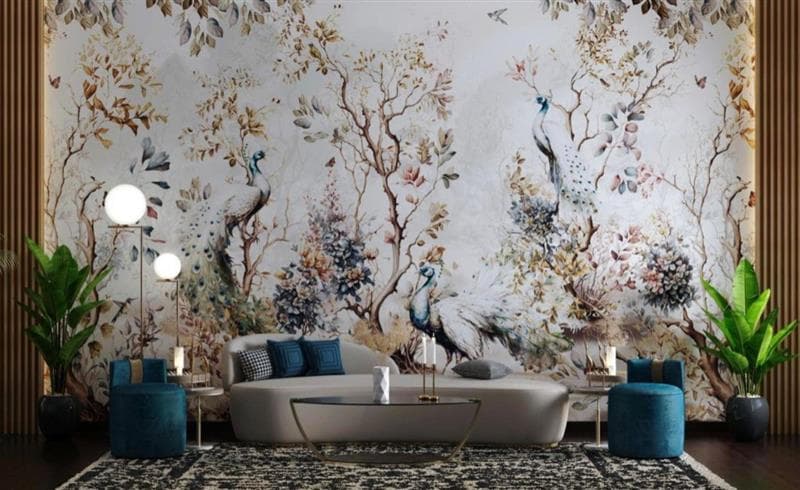
Bold rooms are in trend for 2026, yet restrains keeps them liveable. Minimize the colour palette and repeat or focus on one key colour. For example, in the above photo the colour palette if repeated in wallpaper and cushion. This makes a room feel connected.
Scenic prints feel calm when furniture stays simple. Abstracts and geometrics suit clean-lined spaces. Rounded shapes often feel softer than sharp angles. Micro-patterns add texture without noise, which helps in shared homes.
If you want pattern drenching, choose one print family. Use the same motif at two scales, then add solids so your eyes can rest.
Materials for Real Homes
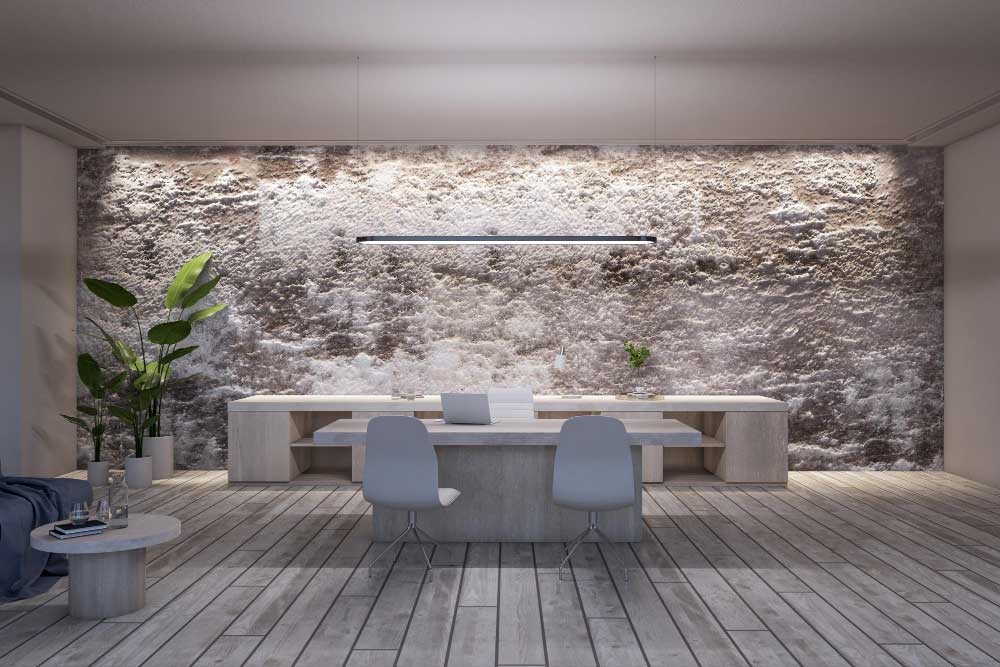
Choose material based on moisture, friction, and sunlight. A great print will still fail on the wrong surface. Coated and vinyl options are easy to clean and are best suited in kitchens and powder rooms. If you are a beginner then opt for fabric-backed sheets as they are easy to reposition.
For low-traffic room choose from paper-based. If you want to add depth then textured finishes are best, however, they collect dust if applied in busy corridors. Humidity is a governing factor to choose a wallpaper for damp areas.
Room-by-Room Playbook
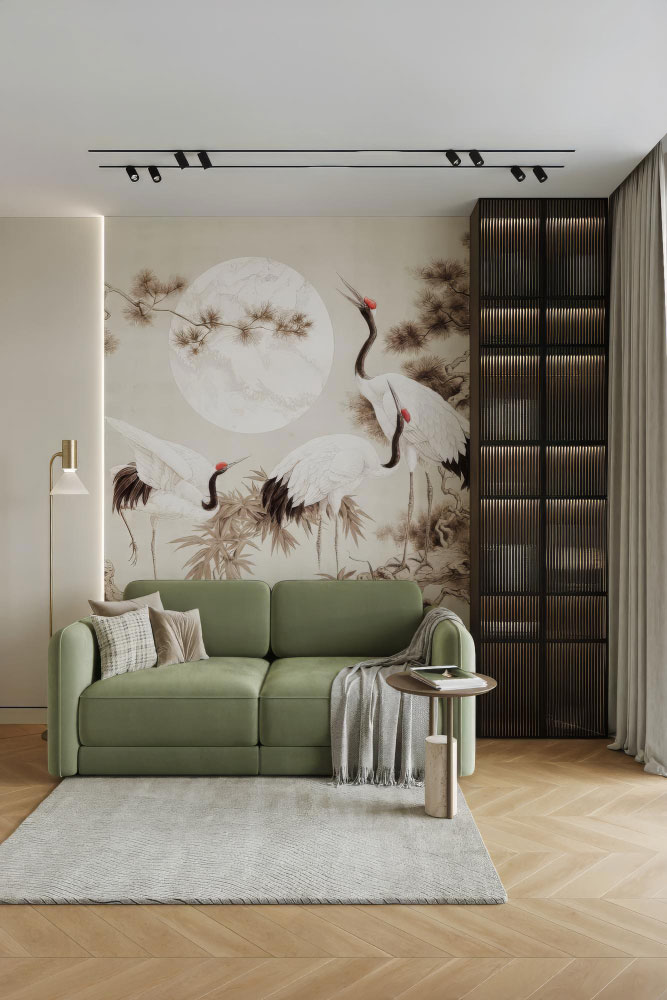
In living rooms, anchor the sofa wall or the fireplace wall. Keep other walls quieter to avoid visual overload. If the room has strong art, go tonal wall pattern.
In bedrooms, place a pattern behind the bed and keep the contrast moderate. Warm lighting softens cool colours at night. In kitchens, use it on pantry walls, shelf backs, or cabinet interiors, where steam and grease stay lower.
For home offices, opt for a clean background. A mid-scale print is just fine for taking work calls. Entryways and laundry areas can be given a touch of boldness, since you pass through them quickly.
Also Read: Tips for Choosing Wallpapers for Home
Installation Checklist for Smooth Results
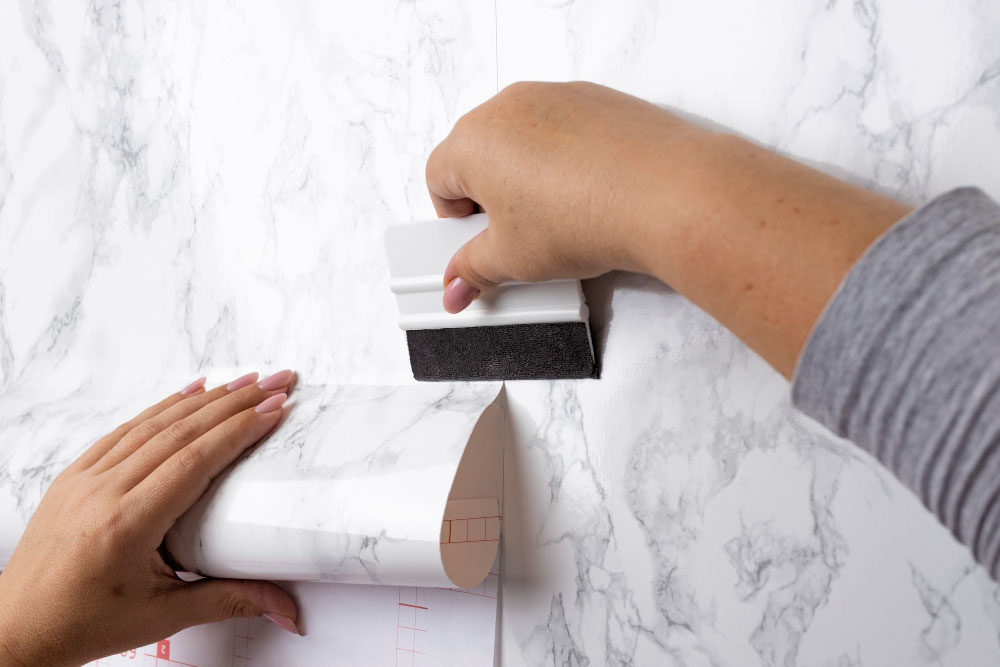
Great results come from prep, not luck. Keep tools simple: a level, measuring tape, smoothing tool, sharp blades, and a microfiber cloth. Add painter’s tape for planning seams.
- Clean walls to remove grease and dust.
- Patch dents and sand until smooth.
- Prime if paint feels chalky or stains show through.
- Mark a plumb line for the first panel.
- Smooth from the centre outward to push air out.
- Trim with a sharp blade and replace it often.
- Press seams and corners firmly, then recheck after one hour.
If bubbles appear later, lift and reset the section. A clean lift beats pinholes.
Mixing Patterns Without Regret
Mix one large print with one small print. Add one solid texture as a break. That three-part mix reads balanced in most rooms. Stay in one colour family across connected spaces and shift shade, not the whole palette.
Keep the boldest wall behind solid upholstery. Watch sightlines so two strong patterns do not clash. When a room already has busy surfaces, keep the wall pattern calmer.
Cleaning, Removal, and Reuse
Wipe coated surfaces with mild soap and a soft cloth. Dust matte finishes with microfiber. Skip abrasive pads on printed ink. Press corners down during routine cleaning, since tiny lifts grow over time.
For removal, warm the room slightly and start pulling from a low angle. Work slowly from a top corner and support the wall with your free hand. If adhesive still remains, use warm water and gently rub it. Touch up small scuffs with matching paint.
Store clean panels flat if they come off intact. Reuse temporary wallpaper in a closet, behind shelving, or on a screen.
Budget Moves That Give the Biggest Impact
Spend on the wall you see most, then go simpler elsewhere. Order samples and check them in day and evening light. Measure twice and buy a buffer for matching and repairs.
DIY saves money on simple walls. Hire help for ceilings and stairwells if you want cleaner seams. If you plan to move soon, choose smaller projects first, such as closet backs and shelf panels.
Final Thoughts
Removable wallpaper lets you try a bold pattern without a long-term commitment. Pick one focal area, prep the surface well, and keep the palette controlled. Add small upgrades, like shelf backs or drawer liners, for a finished feel. With good placement and gentle care, the update can move with you and still feel personal.
Also Read: Benefits and Solutions of Peel-and-Stick Wallpapers
Removable Wallpaper FAQs
01. Why is removable wallpaper safe for renters?
Removable wallpaper can be applied to walls without causing any damage and can be removed easily. Hence, it is a safe option for renters who want to change the look of a room without making any permanent changes.
02. What is the durability of peel-and-stick wallpaper?
The durability of peel-and-stick wallpaper is nearly 3-7 years.
03. Can removable wallpaper be applied in kitchens and bathrooms?
Yes, removable wallpaper that is moisture-resistant or has a vinyl coating can be applied in kitchens and bathrooms.
04. Is wall paint damaged during the removal of temporary wallpaper?
If the wall surface was not properly prepared before applying the wallpaper, it may peel off the wall paint during removal.
05. Are temporary wallpapers reuseable?
Yes, temporary wallpapers are reuseable when removed carefully and stored flat.